💊 Advil works faster for short-term pain, while ⏳ Aleve lasts longer for all-day relief and inflammation control.
Many people search for the difference between Advil and Aleve when dealing with headaches, muscle pain, arthritis, fever, or body aches. At first, both medicines seem almost identical because they are over-the-counter pain relievers. But the truth is, they work differently inside the body.
The difference between Advil and Aleve mainly comes down to active ingredients, how long they last, dosing frequency, and side effects. In simple words, Advil works faster for short-term pain, while Aleve lasts longer and is often preferred for ongoing inflammation or joint pain.
People also wonder which medicine is safer, stronger, or better for back pain, period cramps, or sports injuries. This complete guide explains the difference between Advil and Aleve clearly with real-life examples, safety insights, comparison tables, and expert explanations so you can make smarter choices.
Difference Between Advil and Aleve
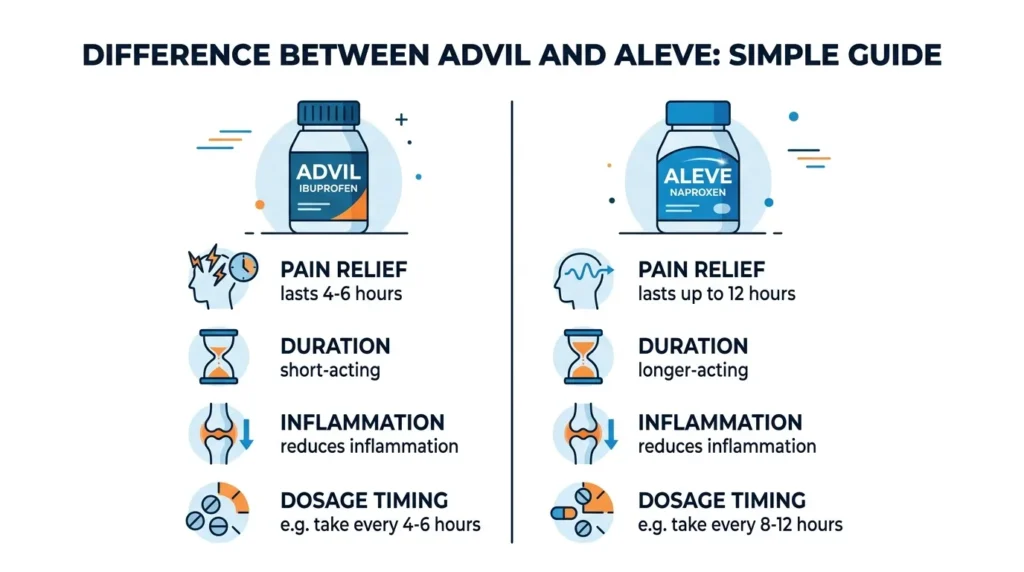
Advil contains ibuprofen, while Aleve contains naproxen sodium. Both are NSAIDs (nonsteroidal anti-inflammatory drugs), but Aleve lasts longer in the body.
Example:
- Advil may help faster after a workout injury.
- Aleve may work better for all-day arthritis pain because it lasts longer.
Definition of Difference Between Advil and Aleve
- Advil: A pain reliever containing ibuprofen that reduces pain, fever, and inflammation for about 4–6 hours.
- Aleve: A pain reliever containing naproxen sodium that reduces pain and inflammation for about 8–12 hours.
Example: Both help with headaches, but Aleve usually requires fewer doses per day.
Pronunciation
- Advil
- US: /ˈæd.vɪl/
- UK: /ˈæd.vɪl/
- Aleve
- US: /əˈliːv/
- UK: /əˈliːv/
Now that the basic meanings are clear, let’s understand how these medications actually differ in real-world use.
Advil vs Aleve Comparison
| Feature | Advil | Aleve |
| Active Ingredient | Ibuprofen | Naproxen sodium |
| Drug Class | NSAID | NSAID |
| Duration | 4–6 hours | 8–12 hours |
| Onset Speed | Faster relief | Slightly slower |
| Dosing Frequency | More often | Less often |
| Best For | Quick pain relief | Long-lasting pain |
| Common Uses | Headaches, fever, sports pain | Arthritis, chronic pain |
| Stomach Risk | Moderate | Slightly higher with long-term use |
| Prescription Versions | Yes | Yes |
KEY DIFFERENCES EXPLAINED BETWEEN ADVIL AND ALEVE
1. Active Ingredients Are Different
The biggest difference between Advil and Aleve is the medicine inside them.
- Advil uses ibuprofen.
- Aleve uses naproxen sodium.
Both reduce inflammation, but they stay active in the body for different lengths of time.
2. Aleve Lasts Longer
Aleve usually works for up to 12 hours, while Advil works around 4–6 hours.
In practical use, someone with arthritis pain overnight may prefer Aleve because it requires fewer doses.
3. Advil Often Works Faster
Many users feel Advil starts working slightly quicker for headaches or sudden pain.
For example, athletes commonly use ibuprofen-based medicines after intense workouts for quicker relief.
4. Dosing Schedules Are Different
Advil is usually taken more frequently during the day. Aleve is often taken once every 8–12 hours.
This matters for busy users who do not want repeated dosing.
5. Risk of Side Effects
Both medications can irritate the stomach and increase bleeding risk if overused.
Long-term NSAID use may affect:
- Stomach lining
- Kidneys
- Blood pressure
This is why doctors recommend using the lowest effective dose.
6. Best Use Cases Vary
Advil is commonly used for:
- Fever
- Toothaches
- Minor injuries
- Headaches
Aleve is commonly preferred for:
- Arthritis
- Joint inflammation
- Chronic back pain
7. Duration Changes User Preference
Many people choose based on convenience rather than strength.
Someone needing all-day pain management may prefer Aleve, while someone wanting flexible short-term relief may choose Advil.
Difference and Similarity Between Advil and Aleve
| Feature | Advil | Aleve | Similarity |
| Drug Type | Ibuprofen NSAID | Naproxen NSAID | Both reduce inflammation |
| Main Purpose | Fast pain relief | Long-lasting relief | Both treat pain and fever |
| Dosing | Every 4–6 hours | Every 8–12 hours | Both require safe dosing |
| Common Users | Athletes, headache sufferers | Arthritis patients | Both used by adults |
| Availability | OTC and prescription | OTC and prescription | Both widely available |
| Inflammation Relief | Effective | Often longer lasting | Both reduce swelling |
| Side Effects | Stomach irritation risk | Similar stomach risks | Both can affect kidneys |
| Popularity | Very common globally | Also widely trusted | Both are recognized brands |
This table clearly shows the difference and similarity between Advil and Aleve for quick understanding.
Why Does the Difference Between Advil and Aleve Exist?
The difference exists because pharmaceutical companies developed medications with different chemical structures and durations.
Ibuprofen was designed for shorter-term relief with flexible dosing. Naproxen was created to provide longer-lasting anti-inflammatory action.
In real scenarios:
- Quick headache relief needs faster action.
- Arthritis pain benefits from long duration.
That is why both medicines remain popular even in 2026.
Which Is Better for Headaches, Back Pain, and Fever?
For Headaches
Many users prefer Advil because it may act faster.
For Back Pain
Aleve often helps longer with inflammation-related pain.
For Fever
Advil is commonly chosen because ibuprofen reduces fever effectively.
For Arthritis
Aleve is frequently recommended because long-lasting relief reduces repeated dosing.
The “better” option depends on your pain type and medical history.
How Do Advil and Aleve Work Inside the Body?
Both medicines block chemicals called prostaglandins that trigger:
- Pain
- Swelling
- Fever
This is why both drugs belong to the NSAID category.
However, naproxen stays active longer in the bloodstream, which explains why Aleve lasts longer.
Many beginners think stronger means “more powerful,” but duration and dosing frequency matter more than brand popularity.
Difference Between Advil and Aleve for Sports Injuries
Athletes and gym users often compare these medicines.
Advil for Sports Recovery
- Faster short-term relief
- Useful after workouts
- Common for muscle soreness
Aleve for Long-Term Inflammation
- Longer joint pain relief
- Useful for repeated strain
- Better for ongoing discomfort
Sports medicine discussions on YouTube and fitness communities on Instagram often compare recovery timing and inflammation management between the two medicines.
Common Mistakes with Advil and Aleve
1. Taking Both Together Without Guidance
Many users incorrectly combine NSAIDs.
Fix: Avoid mixing without medical advice.
2. Taking Them on an Empty Stomach
This can increase stomach irritation.
Fix: Take with food or milk when possible.
3. Using Them for Too Many Days
Long-term NSAID use may increase health risks.
Fix: Follow dosage instructions carefully.
4. Assuming Aleve Is “Stronger”
Longer-lasting does not always mean stronger.
Fix: Match the medicine to the pain type.
5. Ignoring Existing Medical Conditions
People with ulcers, kidney disease, or heart risks need extra caution.
Fix: Speak with a healthcare professional before frequent use.
Real-Life Examples with Advil and Aleve
Personal Use
A student with a sudden migraine may choose Advil for quicker relief.
Office Workers
Someone with all-day lower back pain may prefer Aleve because it lasts longer.
Athletes
Gym users often use Advil after intense workouts for short-term muscle soreness.
Older Adults
People managing arthritis often choose Aleve for fewer daily doses.
Healthcare and Workplace Settings
Medical professionals may recommend one medication over the other depending on inflammation duration and patient history.
WHEN TO USE EACH
| Situation | Best Option |
| Fast headache relief | Advil |
| Long-lasting arthritis pain | Aleve |
| Fever reduction | Advil |
| Overnight pain control | Aleve |
| Sports soreness | Advil |
| Ongoing inflammation | Aleve |
| Flexible short-term dosing | Advil |
WHY PEOPLE GET CONFUSED IN ADVIL AND ALEVE
Several reasons create confusion:
Both Are NSAIDs
People assume all NSAIDs work the same way.
Similar Packaging and Branding
Store shelves often place them side by side.
Online Advice Conflicts
Searches on Google and discussions across social media platforms can provide mixed recommendations.
Pain Type Differences
One medicine may work better for certain users depending on inflammation levels and metabolism.
How Search Engines Understand Advil vs Aleve User Intent
Search engines analyze searches like:
- “which is better Advil or Aleve”
- “difference between Advil and Aleve”
- “Aleve vs ibuprofen”
Google’s helpful content systems prioritize:
- Clear medical explanations
- Accurate dosage context
- User safety information
- Trustworthy health guidance
Health-related content also benefits from strong EEAT signals because medication advice affects real-world decisions.
Platforms owned by Meta influence health discussions through wellness groups, while YouTube reviews and pharmacist videos shape public understanding.
Expert Insight
In practical use, neither medication is universally “better.”
Healthcare professionals often choose based on:
- Duration needed
- Patient history
- Stomach sensitivity
- Existing medical conditions
Most beginners focus only on pain relief speed, but experienced clinicians look at total exposure over time. Longer-lasting drugs reduce repeat dosing, while shorter-duration drugs allow more flexibility.
That distinction matters more than brand reputation alone.
FAQs
What is the main difference between Advil and Aleve?
Advil contains ibuprofen and lasts 4–6 hours, while Aleve contains naproxen sodium and lasts 8–12 hours.
Is Aleve stronger than Advil?
Not necessarily. Aleve simply lasts longer in the body.
Which is better for inflammation?
Both reduce inflammation, but Aleve often provides longer-lasting relief.
Can you take Advil and Aleve together?
Generally, combining NSAIDs is not recommended unless advised by a healthcare professional.
Which works faster for headaches?
Many users feel Advil works faster for sudden headaches.
Is Aleve better for arthritis?
Yes, many arthritis sufferers prefer Aleve because fewer doses are needed.
Which medicine is safer for the stomach?
Both can irritate the stomach, especially with long-term use.
Can children take Advil or Aleve?
Advil products are commonly used in children under guidance, while Aleve is usually for older children and adults.
Conclusion
Understanding the difference between Advil and Aleve helps people choose the right pain reliever for their needs instead of relying only on brand familiarity. While both medications belong to the NSAID family and reduce pain, swelling, and fever, their duration and practical use cases are different.
Advil is often preferred for fast, flexible short-term relief, especially for headaches, fever, and sports soreness. Aleve is commonly chosen for longer-lasting relief, particularly for arthritis, chronic inflammation, and all-day pain control.
In real-world situations, the best option depends on the type of pain, health conditions, dosing preference, and how long relief is needed. Understanding those differences makes medication use safer and more effective.
If you were confused about the difference between Advil and Aleve, you now have a clear and complete understanding of how both medicines work, when to use them, and what makes each one unique.
Read more about!
Difference Between Roast and Bake: Easy Guide