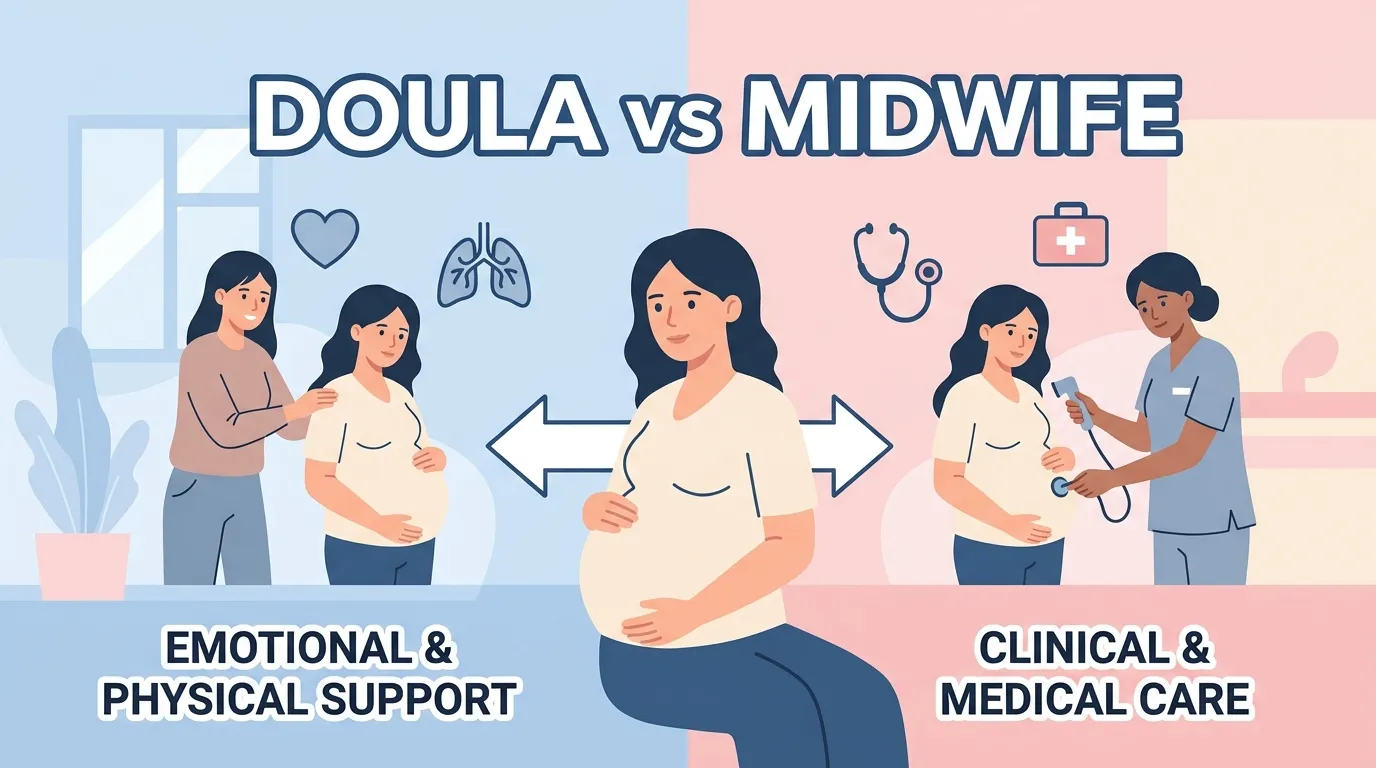
💖 A doula gives emotional support, while a midwife provides medical care and helps deliver the baby 👶
Many parents get confused about the difference between doula and midwife because both support women during pregnancy and childbirth. In simple words, a doula mainly gives emotional and physical support,
while a midwife provides medical care during pregnancy, labor, and delivery. Understanding the difference between doula and midwife helps families choose the right birth support for their needs.
Today, more people search terms like “what is a doula,” “how does a midwife work,” and “doula vs midwife comparison” because natural birth options and personalized maternity care are becoming more popular.
Platforms like Google, YouTube, and Instagram are filled with birth stories, pregnancy education videos, and parenting discussions that increase awareness about birth professionals.
In this guide, you will learn:
- what doulas and midwives actually do
- key differences and similarities
- when to choose each
- real-life examples
- common mistakes parents make
By the end, you will have a complete understanding without needing another article.
Difference Between Doula and Midwife
A doula gives emotional, mental, and physical support during pregnancy and childbirth but does not perform medical procedures.
A midwife is a trained healthcare professional who provides medical care, monitors the baby and mother, and can deliver the baby.
Example:
- A doula may help a mother stay calm during contractions.
- A midwife may check the baby’s heartbeat and safely deliver the baby.
Definition of Difference Between Doula and Midwife
- Doula: A trained birth support professional who helps mothers emotionally and physically before, during, and after childbirth.
- Midwife: A licensed healthcare provider trained to manage pregnancy, labor, birth, and postpartum medical care.
Example:
A doula may guide breathing exercises, while a midwife can medically monitor labor progress.
Pronunciation
- Doula
- US: DOO-luh
- UK: DOO-lah
- Midwife
- US: MID-wife
- UK: MID-wife
Now that the basic meaning is clear, let’s understand the real differences in a deeper and practical way.
Difference Between Doula and Midwife Comparison
| Feature | Doula | Midwife | Similarity |
| Main Role | Emotional and physical support | Medical pregnancy and birth care | Both support mothers during childbirth |
| Medical Training | Usually non-medical certification | Licensed healthcare training | Both require specialized education |
| Can Deliver Baby? | No | Yes | Both stay involved during labor |
| Pain Support | Breathing, massage, comfort methods | Medical and non-medical pain management | Both help reduce birth stress |
| Prenatal Care | Emotional preparation only | Full prenatal medical care | Both assist before birth |
| Postpartum Help | Emotional recovery and newborn guidance | Medical recovery checks | Both support after childbirth |
| Work Location | Hospitals, homes, birthing centers | Hospitals, clinics, birth centers | Both may attend home births |
| Focus Area | Comfort and advocacy | Health and safety | Both improve birth experience |
This table clearly shows the difference and similarity between difference between doula and midwife for quick understanding.
Key Differences Explained Between Difference Between Doula and Midwife
1. Medical vs Non-Medical Support
The biggest difference is medical authority.
A midwife can:
- check blood pressure
- monitor fetal health
- handle delivery complications
A doula cannot perform medical procedures.
In real scenarios, many beginners assume doulas deliver babies, but they mainly focus on comfort and emotional reassurance.
2. Training and Certification
Midwives go through formal medical education and licensing requirements.
Doulas usually complete support-based training programs focused on childbirth coaching and communication skills.
This is why hospitals treat midwives as healthcare providers while doulas are considered support professionals.
3. Role During Labor
A doula stays near the mother continuously, offering:
- breathing techniques
- massage
- emotional encouragement
A midwife manages:
- labor progress
- baby monitoring
- delivery process
Many families use both together because their roles complement each other.
4. Decision-Making Authority
Midwives can make medical decisions during childbirth.
Doulas cannot diagnose or prescribe treatment. Instead, they help mothers understand options and communicate preferences.
5. Insurance Coverage
In many countries, midwife services may be partially covered by insurance.
Doula services are often paid privately, though some modern healthcare systems are slowly expanding coverage.
6. Postpartum Care Style
Doulas often help with:
- breastfeeding support
- emotional recovery
- newborn adjustment
Midwives focus more on:
- medical healing
- physical recovery checks
- maternal health monitoring
What Does a Doula Actually Do?
Many users search “what does a doula do during labor?”
A doula mainly provides continuous emotional and physical support. Their work includes:
- calming anxiety
- helping with labor positions
- encouraging the mother
- supporting partners
- creating a comfortable birth environment
In practical use, doulas are especially valuable during long labors where emotional exhaustion becomes difficult.
Some doulas also specialize in:
- postpartum recovery
- fertility journeys
- pregnancy loss support
This growing awareness is one reason social platforms like Meta and parenting communities on Instagram discuss doulas more frequently today.
What Does a Midwife Do?
A midwife is a licensed maternity care professional.
Their responsibilities include:
- prenatal checkups
- monitoring baby growth
- labor management
- delivering babies
- postpartum medical care
Midwives often work in:
- hospitals
- birthing centers
- home birth settings
In many countries, midwives play a major role in reducing unnecessary medical interventions while still maintaining safety.
Most beginners are surprised to learn that many healthy pregnancies can be managed primarily by a midwife instead of an obstetrician.
Why Do People Choose a Doula?
People usually hire doulas for emotional comfort and personalized support.
Common reasons include:
- fear of childbirth
- first pregnancy anxiety
- desire for natural birth
- need for continuous support
Research and real-world experiences often show mothers feel more confident and less stressed when supported by a doula.
A doula also helps partners feel included instead of overwhelmed during labor.
Why Do People Choose a Midwife?
Midwives are often chosen because they provide a more personalized pregnancy experience compared to large hospital systems.
Parents may prefer midwives because:
- appointments feel less rushed
- birth plans receive more attention
- natural birth options are encouraged
- continuity of care feels stronger
In practical scenarios, many women say midwives create a calmer and more relationship-based experience.
Can You Have Both a Doula and a Midwife?
Yes and many families do.
This is actually becoming more common in modern maternity care.
Here’s how it works:
- The midwife handles medical safety.
- The doula handles emotional and physical comfort.
Together, they create a balanced birth support team.
Many experienced parents believe this combination provides both emotional reassurance and professional medical oversight.
Difference Between Doula and Midwife in Hospitals vs Home Births
Hospital Birth
In hospitals:
- midwives work closely with doctors and nurses
- doulas support emotional comfort
A hospital midwife may manage labor medically while a doula helps with relaxation and communication.
Home Birth
In home births:
- midwives bring medical expertise into the home
- doulas create calming support environments
Home birth families often choose both for a complete support system.
Difference and Similarity Between Doula and Midwife
| Feature | Doula | Midwife | Similarity |
| Birth Support | Emotional care | Medical care | Both help during childbirth |
| Communication | Encourages mother | Explains medical updates | Both improve confidence |
| Pregnancy Guidance | Comfort-focused | Health-focused | Both educate parents |
| Labor Presence | Continuous emotional support | Active medical supervision | Both stay involved during labor |
| Postpartum Help | Emotional adjustment | Physical recovery care | Both assist after birth |
| Goal | Positive birth experience | Safe delivery | Both prioritize mother and baby |
Common Mistakes with Difference Between Doula and Midwife
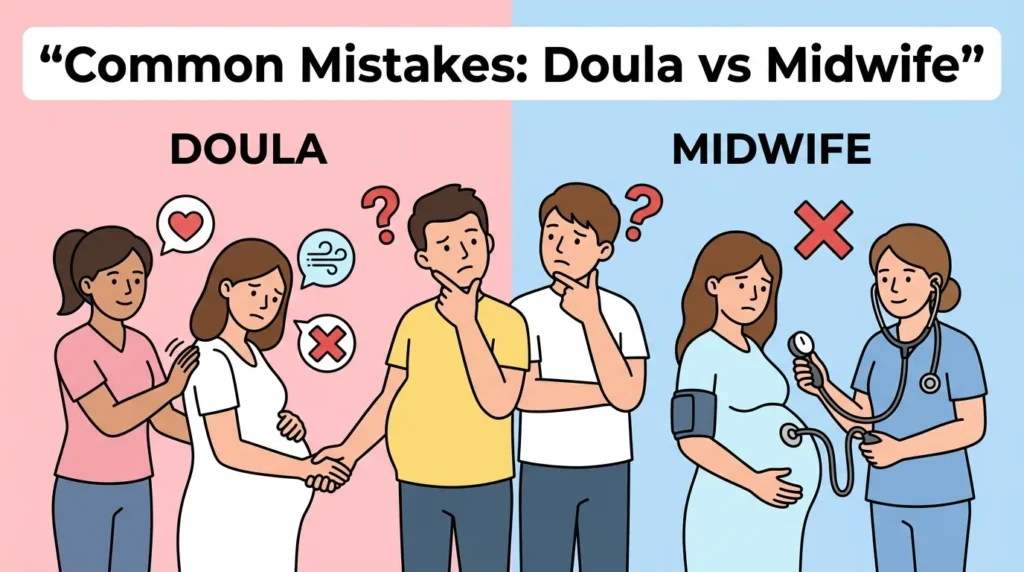
Mistake 1: Thinking Doulas Deliver Babies
Correction:
Doulas do not perform medical deliveries.
Mistake 2: Assuming Midwives Are Not Medically Trained
Correction:
Licensed midwives are trained healthcare professionals.
Mistake 3: Believing You Must Choose Only One
Correction:
Many families successfully use both.
Mistake 4: Thinking Doulas Replace Doctors
Correction:
Doulas support communication but do not replace medical providers.
Mistake 5: Assuming Midwives Only Handle Home Births
Correction:
Many midwives work in hospitals and clinics too.
Real Life Examples with Difference Between Doula and Midwife
Example 1: First-Time Mother
A first-time mom hires a doula for emotional reassurance during labor while using a hospital midwife for medical care.
Example 2: Natural Home Birth
A family planning a home birth chooses a certified midwife for delivery and a doula for comfort support.
Example 3: High-Stress Pregnancy
A pregnant woman with anxiety uses a doula for emotional support throughout pregnancy.
Example 4: Hospital Birth Plan
A couple uses a midwife in the hospital but adds a doula to improve communication and labor comfort.
When to Use Each
Choose a Doula If:
- you want emotional support
- you fear labor pain
- you need birth coaching
- you want continuous comfort care
Choose a Midwife If:
- you need prenatal medical care
- you want a licensed birth provider
- you prefer lower-intervention maternity care
- you want someone to medically deliver the baby
Both If:
- you want complete support
- you value both comfort and medical safety
- you want a personalized birth experience
Why People Get Confused in Difference Between Doula and Midwife
Many users confuse these roles because both are heavily involved in childbirth.
Reasons include:
- overlapping support roles
- social media misinformation
- movies and TV showing inaccurate birth scenes
- similar natural birth discussions online
Platforms like YouTube and Instagram often simplify childbirth content, which can blur the distinction between emotional support and medical care.
How Search Engines Understand Difference Between Doula and Midwife and User Intent
Search engines like Google analyze user intent carefully.
When users search:
- “doula vs midwife”
- “what does a doula do”
- “midwife meaning”
Google understands the user likely wants:
- comparison content
- quick definitions
- decision-making guidance
- beginner-friendly explanations
That’s why well-structured comparison tables, FAQs, and real-life examples perform better in modern search rankings.
Content that fully answers user questions also increases:
- engagement time
- satisfaction signals
- trust indicators
This is a major part of modern and Helpful Content systems.
Expert Insight
In professional maternity care discussions, doulas and midwives are not competitors. They solve different problems.
A midwife protects medical safety. A doula protects emotional experience.
In real childbirth scenarios, emotional stress can affect labor progress significantly. This is why many birth professionals believe emotional support and medical care work best together rather than separately.
Experienced maternity teams often encourage parents to understand the distinction early in pregnancy so expectations stay realistic and communication remains smooth during labor.
FAQs
What is the main difference between doula and midwife?
A doula gives emotional support, while a midwife provides medical care and can deliver babies.
Can a doula replace a midwife?
No. A doula cannot provide medical treatment or delivery services.
Is a midwife safer than a doula?
They have different roles. Midwives handle medical safety, while doulas focus on comfort and emotional care.
Do hospitals allow doulas?
Most hospitals allow doulas, though policies can vary by location.
Are midwives medically trained?
Yes. Licensed midwives receive formal medical education and clinical training.
Can you use both a doula and a midwife together?
Yes. Many families combine both for complete childbirth support.
Is a doula worth it for first-time moms?
Many first-time mothers find doulas helpful for emotional reassurance and labor guidance.
Are doulas only for natural births?
No. Doulas can support cesarean births, medicated births, and hospital deliveries too.
Conclusion
Understanding the difference between doula and midwife is important for making informed pregnancy and childbirth decisions.
A doula focuses on emotional comfort, physical support, and guidance during labor, while a midwife provides professional medical care throughout pregnancy and delivery.
Both roles are valuable, but they serve different purposes. In many real-world situations, families choose both because emotional support and medical expertise together create a more balanced birth experience.
As maternity care continues evolving in 2026 and beyond, more parents are looking for personalized and supportive childbirth options.
That is why searches about doulas, midwives, natural birth care, and labor support continue growing across platforms like Google, YouTube, and Meta.
The final answer is simple:
- choose a doula for emotional and physical support
- choose a midwife for medical pregnancy and childbirth care
- choose both if you want the most complete support system possible
Read more about!
Difference Between NASCAR and F1: Simple Guide