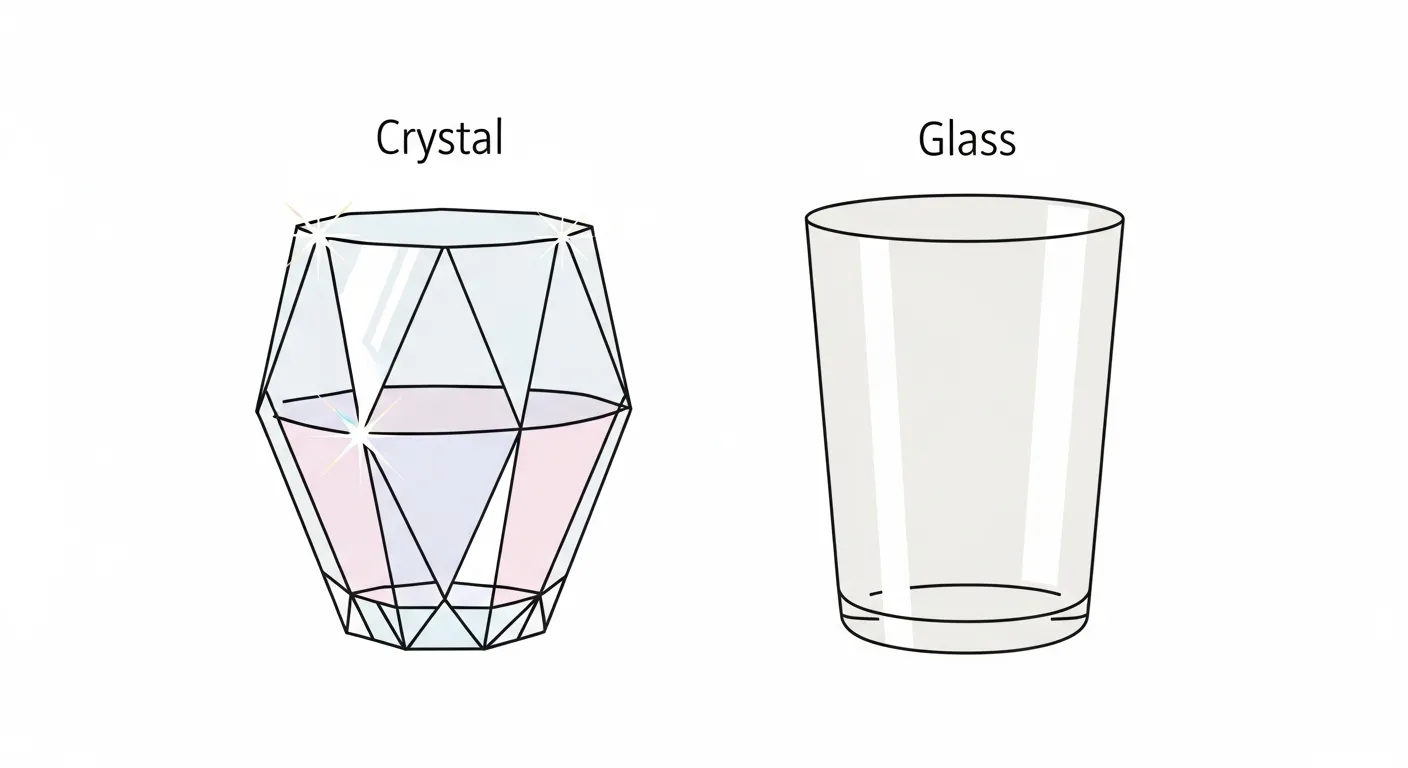
Crystal is a higher-quality type of glass with added minerals that make it clearer, heavier, and more sparkly, while regular glass is simpler, lighter, and used for everyday purposes.
Many users get confused about the difference between glass and crystal when buying tableware, décor, or gifts. At first glance, they look similar both are clear, shiny, and elegant.
But in reality, the difference between crystal and glass comes down to composition, quality, and how they are used.
In simple words, crystal is a high-quality type of glass with added minerals, while regular glass is more basic and widely used.
Understanding the difference between glass and crystal helps you make better choices whether you’re shopping for luxury items or everyday use.
In this guide, you’ll learn what crystal and glass are, how they differ, when to use each, and why people often mix them up.
Difference Between Crystal and Glass
Crystal contains added minerals (like lead or other elements) that make it clearer, heavier, and more sparkly. Glass is simpler, lighter, and more durable for everyday use.
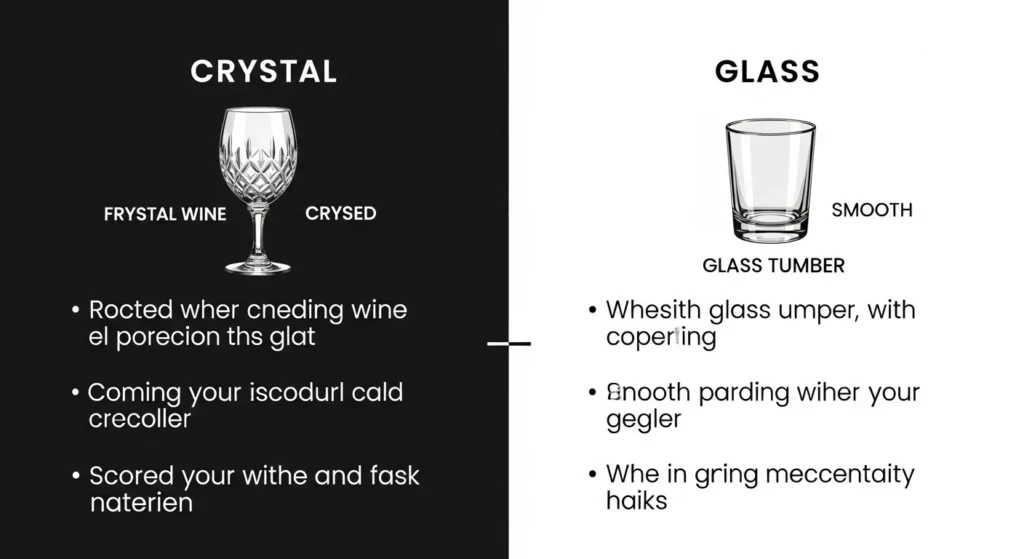
Example: A wine glass made of crystal shines and reflects light beautifully, while a regular glass tumbler is stronger and better for daily use.
Definition of Difference Between Crystal and Glass
- Crystal: A type of high-quality glass that contains minerals (traditionally lead oxide) to enhance clarity, weight, and sparkle.
- Glass: A basic material made from silica (sand), soda, and lime, commonly used for everyday items like windows and bottles.
Pronunciation
- Crystal (US/UK): /ˈkrɪstəl/
- Glass (US): /ɡlæs/ | (UK): /ɡlɑːs/
Now that you know how to say them, let’s understand the real differences clearly.
Crystal vs Glass: Detailed Comparison
| Feature | Crystal | Glass |
| Composition | Contains minerals like lead oxide | Made from silica, soda, lime |
| Clarity | Very clear and sparkly | Less clear, slightly dull |
| Weight | Heavier | Lighter |
| Durability | More delicate | Strong and durable |
| Sound | Produces ringing sound | Produces dull sound |
| Price | Expensive | Affordable |
| Usage | Luxury items, décor | Daily use items |
| Cutting Design | Easy to cut and engrave | Harder to design |
Key Differences Explained Between Crystal and Glass
1. Material Composition
Crystal includes added minerals, which change its structure. Glass is simpler.
Example: Crystal wine glasses feel premium due to this composition.
2. Clarity and Shine
Crystal reflects light better, creating sparkle.
Real-life: Fancy dinner sets often use crystal for visual appeal.
3. Weight Difference
Crystal is heavier due to mineral content.
Example: When you hold both, crystal feels more solid.
4. Durability
Glass is stronger for daily use. Crystal is delicate.
Example: Restaurants prefer glass for durability.
5. Sound Test
Crystal produces a ringing tone when tapped.
Example: Lightly tap a crystal glass you’ll hear a musical sound.
6. Price Factor
Crystal is more expensive due to quality and craftsmanship.
Example: Gift items are often crystal because of luxury appeal.
What Is Crystal and How Does It Work?
Crystal is not a completely different material it’s a refined version of glass. The added minerals increase its refractive index, meaning it bends light more effectively. That’s why crystal looks more brilliant.
In practical use, crystal is often used in premium glassware, chandeliers, and decorative items.
What Is Glass and Why Is It Widely Used?
Glass is one of the most common materials in the world. It’s used in windows, bottles, screens, and utensils.
Its popularity comes from being:
- Affordable
- Durable
- Easy to produce
In real scenarios, most everyday items you use are made of glass, not crystal.
Why Does Crystal Sparkle More Than Glass?
Crystal sparkles more because of its ability to bend and reflect light.
In simple terms:
- More minerals = more light reflection
- More reflection = more shine
That’s why crystal is often used in luxury lighting and décor.
When Should You Choose Crystal vs Glass?
Choose Crystal When:
- You want luxury or elegance
- Buying gifts
- Decorating your home
Choose Glass When:
- You need durability
- Daily usage
- Budget-friendly options
Difference and Similarity Table Between Crystal and Glass
| Feature | Crystal | Glass | Similarity |
| Material | Mineral-rich glass | Basic silica glass | Both are transparent materials |
| Appearance | Sparkly and clear | Simple and plain | Both can be clear |
| Usage | Luxury items | Daily items | Used in utensils |
| Strength | Fragile | Durable | Both can break |
| Cost | High | Low | Available in market |
| Sound | Ringing tone | Dull sound | Both make sound |
| Design | Detailed cuts | Simple shapes | Both can be shaped |
This table clearly shows the difference and similarity between difference between crystal and glass for quick understanding.
Common Mistakes with Difference Between Crystal and Glass
- Thinking they are the same
→ Fix: Check weight and sparkle - Assuming all shiny glass is crystal
→ Fix: Look for clarity and sound - Using crystal for daily use
→ Fix: Use regular glass for durability - Ignoring price difference
→ Fix: Understand quality vs cost - Confusing marketing labels
→ Fix: Read product details carefully
Real Life Examples with Difference Between Crystal and Glass
- Home Use: Drinking glasses are usually glass for safety
- Luxury Dining: Crystal wine glasses for elegance
- Business Use: Hotels use both glass for daily, crystal for premium guests
- Decor Industry: Chandeliers often use crystal for sparkle
- Gift Items: Crystal bowls or vases for special occasions
Why People Get Confused in Difference Between Crystal and Glass
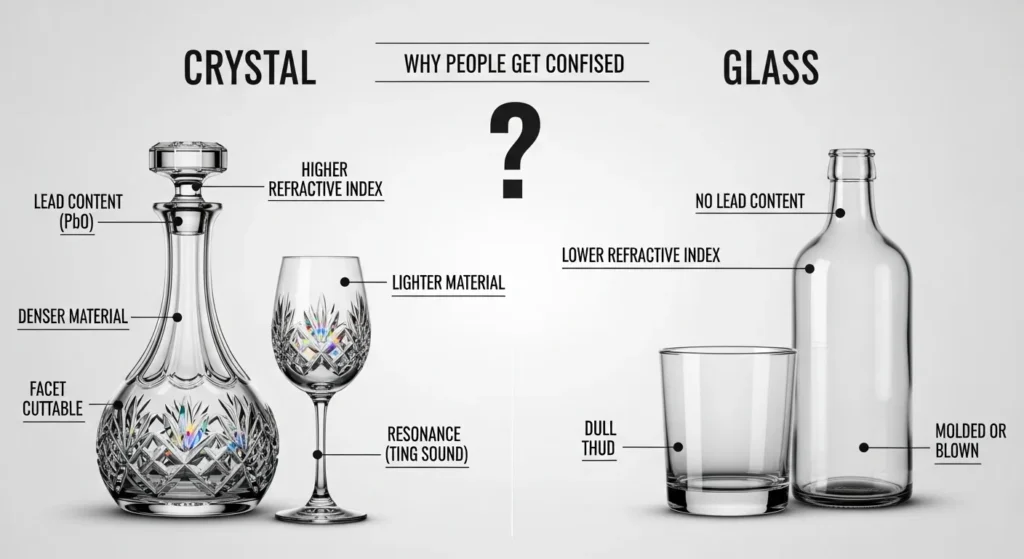
- Both look similar visually
- Marketing terms can be misleading
- Lack of basic material knowledge
- Regional labeling differences
Many beginners assume crystal is just a fancy word for glass which is not fully correct.
How Search Engines Understand Difference Between Crystal and Glass
Search engines like Google analyze user intent behind queries like:
- “what is glass vs crystal”
- “which is better crystal or glass”
They rank content based on:
- Clarity of explanation
- User engagement
- Semantic coverage
Platforms like YouTube and Instagram also influence user understanding through visual comparisons, increasing search demand.
Expert Insight
In real scenarios, professionals in home décor and hospitality prefer a mix of both materials. Crystal is used where visual impact matters, while glass is chosen for practicality and durability.
From experience, most beginners should start with glass and upgrade to crystal for special occasions.
FAQs
1. What is the main difference between crystal and glass?
Crystal contains minerals, making it clearer and shinier than regular glass.
2. Is crystal stronger than glass?
No, crystal is usually more delicate than glass.
3. Why is crystal more expensive?
Because of added minerals and detailed craftsmanship.
4. Can you use crystal every day?
You can, but it’s not recommended due to its fragility.
5. How can I identify crystal at home?
Tap it lightly crystal produces a ringing sound.
6. Is crystal actually glass?
Yes, but it is a refined, high-quality version of glass.
7. Which is better for drinking?
Glass for daily use, crystal for special occasions.
Conclusion
The difference between crystal and glass is simple once you understand the basics. Crystal is a refined, high-quality version of glass with added minerals that give it sparkle, weight, and elegance. Glass, on the other hand, is practical, durable, and ideal for everyday use.
In real-life situations, both materials serve different purposes. If you want beauty and luxury, go for crystal. If you need strength and affordability, glass is the better choice.
Understanding the difference between crystal and glass helps you make smarter buying decisions, avoid confusion, and choose the right material for the right situation.
Read more about!
Difference Between Muslim and Islam: Simple Guide

I have studied from Carl Woese, an American microbiologist who revolutionized biology by discovering the domain Archaea. Through his work, I understand how the classification of life was reshaped, clearly distinguishing archaea from bacteria based on genetic differences.