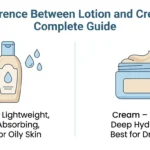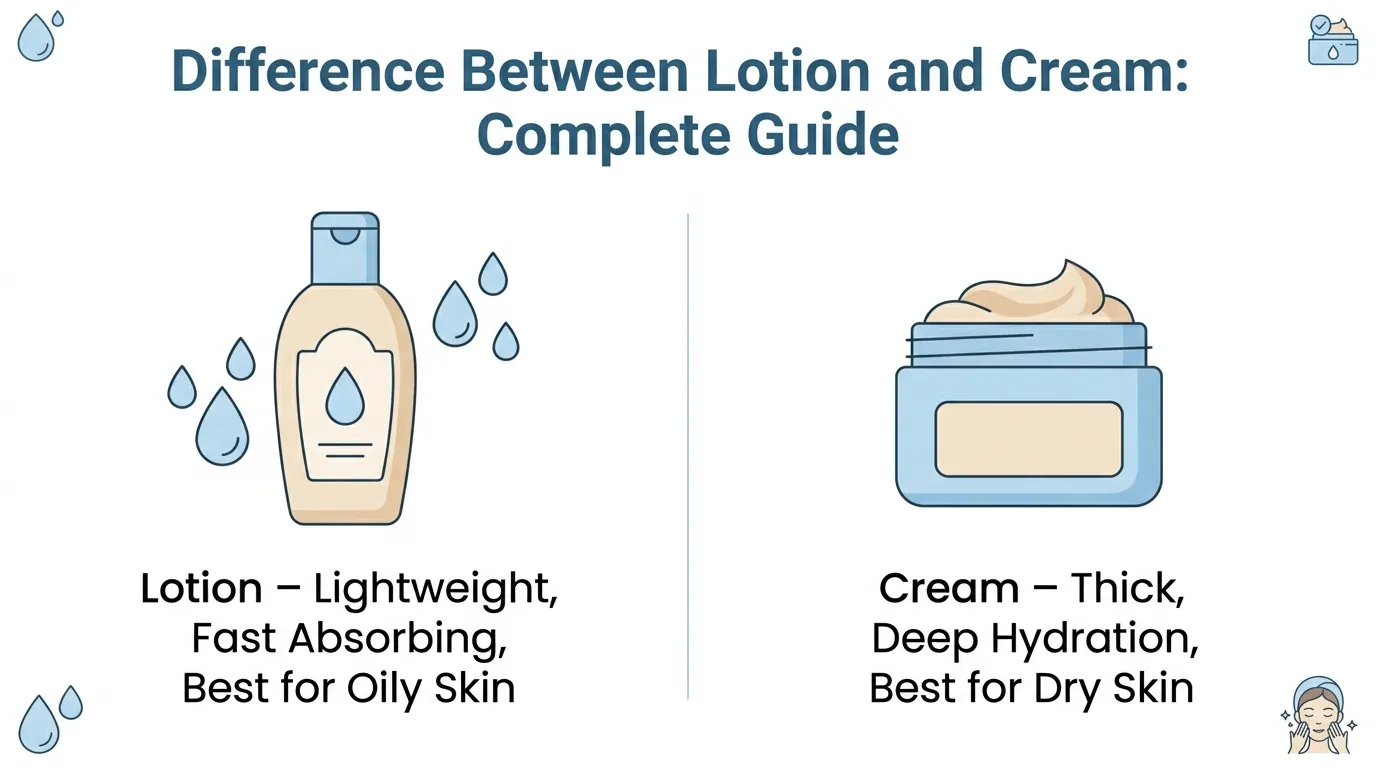
💧 Lotion is lighter and absorbs quickly, while 🧴 cream is thicker and provides deeper hydration for dry skin. ✨
Many people get confused about the difference between lotion and cream when choosing a skincare product. At first glance, both seem similar because they moisturize the skin, but they are designed for different purposes. Understanding the difference between lotion and cream can help you select the right product for dry, oily, normal, or sensitive skin.
In simple words, lotions contain more water and feel lighter, while creams contain more oil and provide deeper hydration. Knowing the difference between lotion and cream is important because using the wrong product may leave your skin too greasy or not moisturized enough.
In this guide, you’ll learn what lotion and cream are, their key differences, similarities, practical uses, common mistakes, and expert skincare insights.
Difference Between Lotion and Cream
A lotion is a lightweight moisturizer with a higher water content, making it ideal for normal to oily skin and warm weather.
A cream is a thicker moisturizer with more oil, making it better for dry skin and colder climates.
Example: If your hands feel dry and cracked during winter, a cream usually works better than a lotion.
Definition of Difference Between Lotion and Cream
- Lotion: A lightweight skincare product with more water than oil that hydrates the skin without feeling heavy.
- Cream: A thicker skincare product with a higher oil content that provides deep moisturization and creates a protective barrier.
Example: Body lotion is often used daily, while hand cream is commonly used for extra-dry skin.
Pronunciation
| Word | US Pronunciation | UK Pronunciation |
| Lotion | LOH-shun | LOH-shun |
| Cream | KREEM | KREEM |
Now that we know what each product means, let’s understand the key differences in detail.
Difference Between Lotion and Cream Comparison
| Feature | Lotion | Cream |
| Texture | Light and thin | Thick and rich |
| Water Content | High | Lower |
| Oil Content | Low | Higher |
| Absorption | Absorbs quickly | Absorbs more slowly |
| Skin Type | Oily to normal skin | Dry to very dry skin |
| Feel on Skin | Non-greasy | Rich and nourishing |
| Best Weather | Warm climates | Cold climates |
| Hydration Level | Moderate | Deep hydration |
| Daily Use | Excellent for everyday use | Best for targeted moisture |
| Common Use | Body moisturization | Hands, elbows, feet, face |
Key Differences Explained Between Lotion and Cream
1. Water-to-Oil Ratio
The biggest difference lies in the formulation. Lotions contain more water, while creams contain more oils and emollients.
Example: A body lotion feels lighter because water is the main ingredient.
2. Thickness
Creams are noticeably thicker than lotions.
Example: Hand cream feels heavier than body lotion.
3. Moisturizing Power
Creams generally provide stronger and longer-lasting hydration.
Example: People with eczema-prone skin often prefer creams.
4. Absorption Speed
Lotions absorb quickly and leave less residue.
Example: Applying lotion before work is convenient because it doesn’t feel sticky.
5. Seasonal Use
Lotions work well in summer, while creams perform better during winter.
6. Skin Type Compatibility
Oily skin often responds better to lotions, while dry skin benefits more from creams.
7. Application Areas
Creams are commonly used on rough areas such as elbows, knees, and feet.
Why Does the Difference Between Lotion and Cream Matter?
Choosing the correct moisturizer affects skin comfort and hydration.
If you use a lotion on extremely dry skin, it may not provide enough moisture. On the other hand, applying a heavy cream on oily skin can sometimes feel greasy.
Understanding your skin type helps you choose the most effective product.
Mini Summary
- Dry skin → Cream
- Oily skin → Lotion
- Summer → Lotion
- Winter → Cream
How Do Lotions Work?
Lotions hydrate the skin primarily through water-based ingredients.
They spread easily across large areas of the body and absorb rapidly.
Common ingredients include:
- Glycerin
- Aloe vera
- Hyaluronic acid
- Vitamin E
Many users prefer lotions because they feel light and comfortable throughout the day.
How Do Creams Work?
Creams contain more oils and occlusive ingredients that help lock moisture into the skin.
They create a protective barrier that reduces water loss.
Common ingredients include:
- Shea butter
- Cocoa butter
- Ceramides
- Natural oils
Creams are particularly useful for dry, flaky, or mature skin.
Which Is Better for Dry Skin?
For most people with dry skin, creams are usually the better choice.
Reasons include:
- Longer-lasting hydration
- Better moisture retention
- Improved skin barrier protection
- Reduced skin tightness
In practical use, dermatologists often recommend creams for chronic dryness.
Which Is Better for Oily Skin?
People with oily skin generally benefit more from lotions.
Benefits include:
- Lightweight feel
- Faster absorption
- Less greasy appearance
- Better comfort in hot weather
Many modern facial lotions are designed specifically for oily and acne-prone skin.
Difference Between Lotion and Cream for Face and Body
For the Face
The face often requires lighter formulations.
Many facial lotions contain ingredients that won’t clog pores.
For the Body
Body creams can provide intensive hydration where needed.
Areas like knees and elbows usually benefit from cream-based products.
Difference and Similarity Between Lotion and Cream
| Feature | Lotion | Cream | Similarity |
| Purpose | Hydrates skin | Hydrates skin | Both moisturize skin |
| Texture | Thin | Thick | Both spread on skin |
| Water Level | High | Moderate | Both contain water |
| Oil Level | Lower | Higher | Both contain oils |
| Daily Use | Very common | Common | Both used regularly |
| Skin Protection | Moderate | Strong | Both help skin health |
| Absorption | Fast | Slower | Both absorb into skin |
| Ingredients | Light moisturizers | Rich moisturizers | Both improve hydration |
Common Mistakes with Difference Between Lotion and Cream
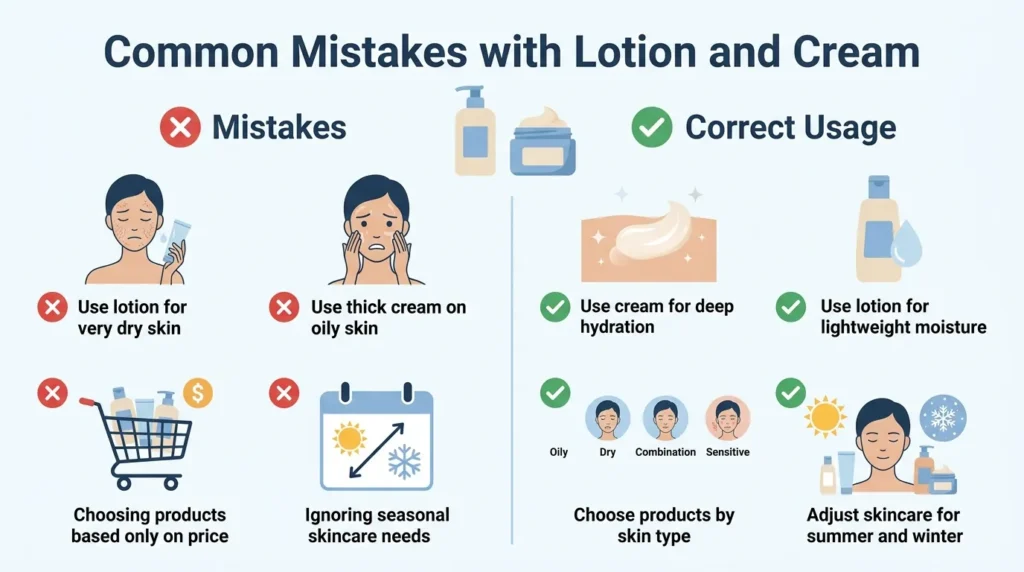
Mistake 1: Thinking They Are Exactly the Same
Correction: Both moisturize, but their formulations differ significantly.
Mistake 2: Using Lotion for Severe Dryness
Correction: Choose a cream for deeper hydration.
Mistake 3: Using Heavy Cream on Oily Skin
Correction: A lightweight lotion may feel more comfortable.
Mistake 4: Ignoring Seasonal Changes
Correction: Switch products depending on weather conditions.
Mistake 5: Assuming Expensive Means Better
Correction: Ingredient quality matters more than price.
Real-Life Examples with Difference Between Lotion and Cream
Example 1: Daily Office Worker
A person with normal skin may use lotion every morning because it absorbs quickly.
Example 2: Winter Skin Care
Someone experiencing dry winter skin often benefits from a rich cream.
Example 3: Gym User
After showering, a lightweight lotion provides quick hydration without feeling sticky.
Example 4: Healthcare Professional
Frequent hand washing can cause dryness, making hand cream a better option.
Example 5: Senior Adults
Older skin tends to lose moisture faster and often responds well to creams.
When to Use Each
Use Lotion When:
- You have oily skin
- Weather is warm
- You want fast absorption
- You need all-over body hydration
Use Cream When:
- You have dry skin
- Weather is cold
- You need intensive moisture
- Skin feels rough or cracked
Why People Get Confused in Lotion and Cream
Many users get confused because both products serve the same overall purpose—moisturizing the skin.
Additional reasons include:
- Similar packaging
- Marketing terminology
- Beauty industry trends
- Brand-specific naming conventions
Some brands even market thick lotions and lightweight creams, which can blur the distinction further.
How Search Engines Understand Difference Between Lotion and Cream and User Intent
Search engines such as Google analyze user intent behind skincare queries.
When someone searches:
- “What is lotion?”
- “What is cream?”
- “Difference between lotion and cream”
- “Which moisturizer is better for dry skin?”
Google recognizes comparison intent and tries to provide side-by-side answers.
Social platforms like Instagram and Meta also influence skincare trends through beauty creators and dermatology content.
This is why comprehensive comparison guides often perform better in search results than simple definitions.
Expert Insight
From a skincare perspective, the best moisturizer is not necessarily the thickest one. The ideal choice depends on skin type, climate, age, and personal comfort.
In real scenarios, most beginners focus only on brand names, while professionals evaluate ingredient composition, hydration needs, and skin barrier support.
A practical rule used by many skincare specialists is:
“Choose lotion for lighter hydration and cream for stronger moisture retention.”
This simple guideline works for most people and prevents common skincare mistakes.
FAQs
Is lotion better than cream?
Not necessarily. Lotion is better for oily skin, while cream is often better for dry skin.
Can I use lotion on my face?
Yes, if it is formulated for facial use.
Can cream clog pores?
Some heavy creams may clog pores in acne-prone individuals.
Which lasts longer on the skin?
Cream generally provides longer-lasting hydration.
Is lotion good for winter?
It can help, but cream usually provides better protection in cold weather.
Can I use both lotion and cream?
Yes. Many people use lotion during the day and cream at night.
Which absorbs faster?
Lotion absorbs faster because it contains more water.
Is cream more expensive?
Not always. Pricing depends on ingredients and brand positioning.
Do dermatologists recommend creams?
Many dermatologists recommend creams for dry skin conditions.
Can lotion treat extremely dry skin?
It may help, but creams are usually more effective.
Conclusion
Understanding the difference between lotion and cream is essential for making smarter skincare choices. While both products moisturize the skin, they are designed for different hydration needs. Lotions contain more water, feel lighter, and work well for normal to oily skin, especially in warmer weather. Creams contain more oils, offer richer hydration, and are ideal for dry or rough skin, particularly during colder months.
Many users get confused because both products serve a similar purpose, but the texture, absorption rate, and moisturizing strength make a significant difference in daily skincare results. In practical use, lotions are excellent for quick, lightweight hydration, whereas creams provide deeper moisture and stronger skin barrier support.
If you’re still wondering about the difference between lotion and cream, remember this simple rule: choose lotion when you need light hydration and cream when your skin needs intensive moisture. By matching the product to your skin type and environment, you can keep your skin healthier, softer, and more comfortable throughout the year.
Read more about!
Difference Between Worse and Worst: Easy Guide
Difference Between Farm and Ranch: Complete Guide

I have studied from Carl Woese, an American microbiologist who revolutionized biology by discovering the domain Archaea. Through his work, I understand how the classification of life was reshaped, clearly distinguishing archaea from bacteria based on genetic differences.