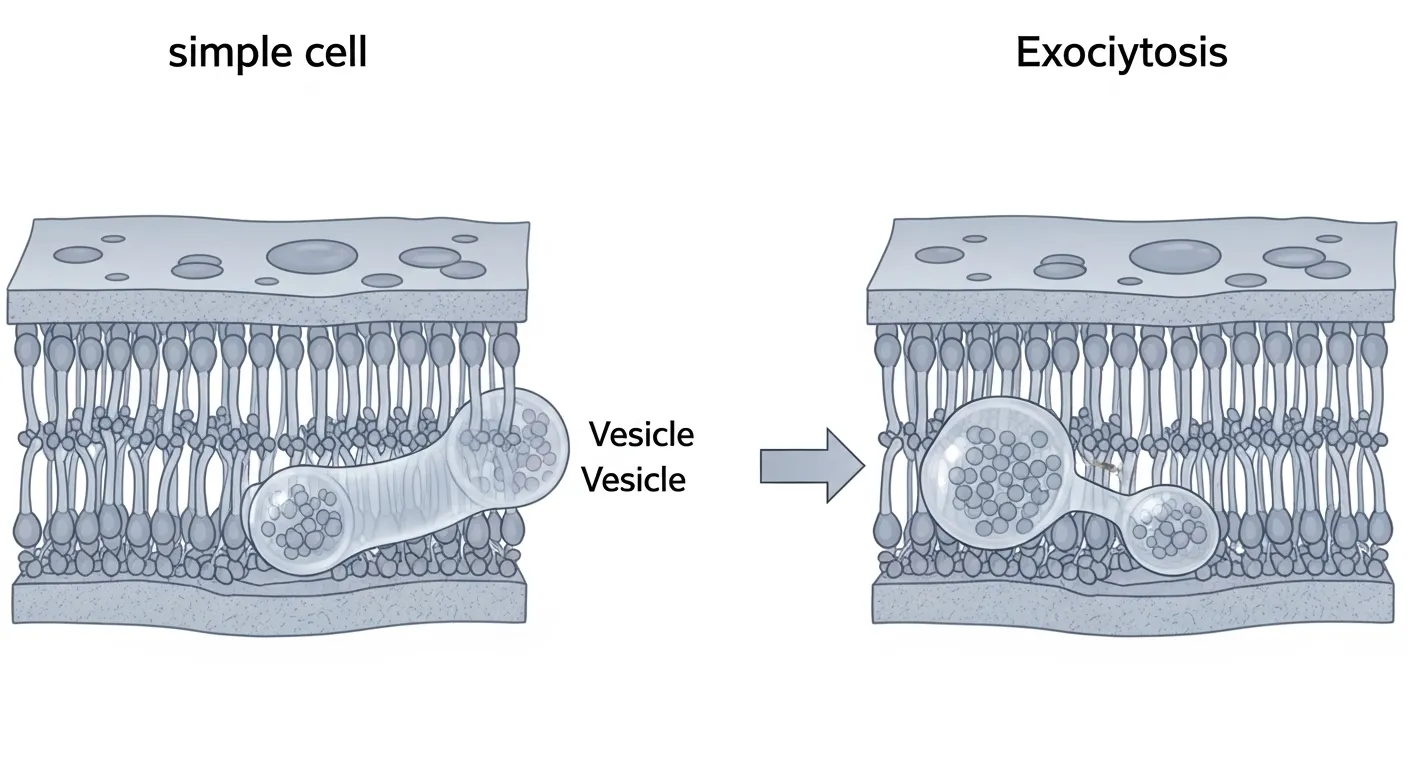
🔬 Endocytosis brings substances into the cell, while exocytosis pushes them out 😊
Imagine a busy city with trucks bringing goods into a warehouse and other trucks sending products out. A similar system exists inside living cells. Cells must take in nutrients and send out waste or useful substances. Two important processes help cells do this. These processes are endocytosis and exocytosis.
Understanding the difference between endocytosis and exocytosis helps students learn how cells work. The difference between endocytosis and exocytosis shows how cells move materials in and out through their membrane.
Scientists study the difference between endocytosis and exocytosis to understand body functions, medicine, and biology. In simple terms, the difference between endocytosis and exocytosis is about the direction of movement inside the cell.
🔑 Key Difference Between the Both
The main difference is simple.
Endocytosis: The cell takes substances into the cell.
Exocytosis: The cell sends substances out of the cell.
🌍 Why Their Difference Is Important for Learners and Experts
Learners studying biology need to understand these processes because they explain how cells survive. Experts in medicine and research also use this knowledge to study diseases, drug delivery, and immune responses. Knowing the difference helps people understand how life functions at the microscopic level.
🔊 Pronunciation
Endocytosis
- US: /ˌɛn.doʊ.saɪˈtoʊ.sɪs/
- UK: /ˌɛn.dəʊ.saɪˈtəʊ.sɪs/
Exocytosis
- US: /ˌɛk.soʊ.saɪˈtoʊ.sɪs/
- UK: /ˌɛk.səʊ.saɪˈtəʊ.sɪs/
Now let us explore the difference between endocytosis and exocytosis in detail.
⚖️ Difference Between Endocytosis and Exocytosis
1. Direction of Movement
Endocytosis: Materials move into the cell.
Examples:
- A cell takes in nutrients from outside.
- A white blood cell absorbs bacteria.
Exocytosis: Materials move out of the cell.
Examples:
- A cell releases hormones.
- A nerve cell releases neurotransmitters.
2. Function
Endocytosis: Used for intake.
Examples:
- Absorbing nutrients.
- Taking in fluid and particles.
Exocytosis: Used for secretion.
Examples:
- Releasing proteins.
- Sending waste outside.
3. Cell Membrane Activity
Endocytosis: Membrane folds inward.
Examples:
- The membrane forms a pocket.
- A vesicle forms inside the cell.
Exocytosis: Membrane merges outward.
Examples:
- Vesicle joins the membrane.
- Materials release outside the cell.
4. Vesicle Formation
Endocytosis: Vesicles form by inward folding.
Examples:
- Phagocytosis vesicles.
- Pinocytosis vesicles.
Exocytosis: Vesicles move toward the membrane.
Examples:
- Secretory vesicles.
- Hormone vesicles.
5. Purpose in Cells
Endocytosis: Brings substances needed by the cell.
Examples:
- Nutrient intake.
- Immune defense.
Exocytosis: Removes substances from the cell.
Examples:
- Waste removal.
- Chemical signaling.
6. Energy Requirement
Endocytosis: Requires cellular energy.
Examples:
- Active membrane movement.
- Formation of vesicles.
Exocytosis: Also requires energy.
Examples:
- Vesicle movement.
- Fusion with membrane.
7. Types
Endocytosis: Has several types.
Examples:
- Phagocytosis.
- Pinocytosis.
Exocytosis: Mostly occurs as secretion.
Examples:
- Hormone release.
- Enzyme secretion.
8. Biological Role
Endocytosis: Important for defense and nutrition.
Examples:
- Immune cells eating bacteria.
- Cells absorbing molecules.
Exocytosis: Important for communication.
Examples:
- Nerve cells sending signals.
- Glands releasing hormones.
9. Occurrence in Cells
Endocytosis: Occurs when cells need materials.
Examples:
- Nutrient uptake in intestine cells.
- Immune response.
Exocytosis: Occurs when cells release materials.
Examples:
- Digestive enzyme release.
- Hormone secretion.
10. Cellular Outcome
Endocytosis: Increases internal substances.
Examples:
- Nutrient storage.
- Particle intake.
Exocytosis: Decreases internal substances.
Examples:
- Waste removal.
- Signal release.
⚙️ Nature and Behaviour of Both
Nature of Endocytosis
Endocytosis acts like a cell’s intake system. It allows cells to capture useful materials and particles from their surroundings.
Nature of Exocytosis
Exocytosis acts like a cell’s delivery system. It sends substances out for communication, waste removal, and body functions.
❓ Why People Confuse Endocytosis and Exocytosis
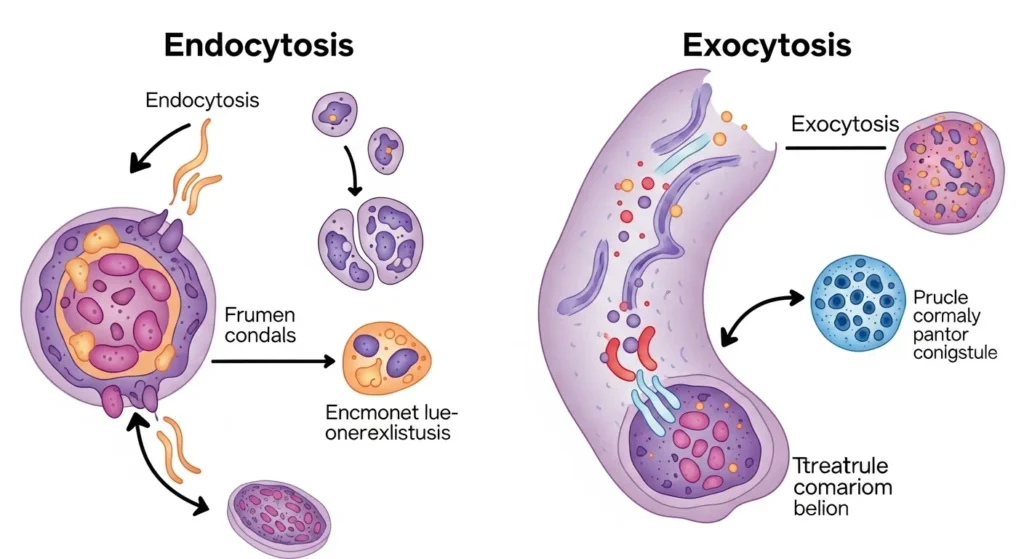
Many people confuse these processes because the names sound very similar. Both also involve vesicles and the cell membrane. The only main difference is the direction of movement, which can be easy to mix up for beginners.
📊 Difference and Similarity Between Endocytosis and Exocytosis
| Feature | Endocytosis | Exocytosis | Similarity |
| Direction | Into the cell | Out of the cell | Both involve vesicles |
| Function | Intake | Secretion | Both require energy |
| Membrane action | Membrane folds inward | Vesicle fuses outward | Both use cell membrane |
| Purpose | Nutrient uptake | Waste or signal release | Both help cell survival |
🎯 Which Is Better in What Situation?
Endocytosis
Endocytosis is better when a cell needs nutrients or particles from its environment. It allows the cell to absorb molecules and defend itself by engulfing harmful bacteria. Immune cells use endocytosis to protect the body.
Exocytosis
Exocytosis is better when a cell must release substances. It helps glands release hormones and nerve cells send signals. Without exocytosis, cells could not communicate with other cells.
🧠 Endocytosis and Exocytosis in Metaphors and Similes
Endocytosis metaphor
Example:
- Endocytosis works like a door opening to welcome supplies.
Exocytosis metaphor
Example:
- Exocytosis acts like a delivery truck sending packages out.
🎭 Connotative Meaning
Endocytosis
Neutral scientific meaning.
Example:
- Scientists study endocytosis to understand how cells absorb nutrients.
Exocytosis
Neutral scientific meaning.
Example:
- Exocytosis helps cells release hormones into the body.
💬 Idioms or Proverbs Related
These exact words do not form common idioms. However similar ideas exist.
“Take something in.”
Example:
- The cell takes nutrients in, like endocytosis.
“Send something out.”
Example:
- The gland sends hormones out, similar to exocytosis.
📚 Works in Literature
- Molecular Biology of the Cell Biology textbook, Bruce Alberts, 1983
- The Cell: A Molecular Approach Biology textbook, Geoffrey Cooper, 1997
- Essential Cell Biology Science textbook, Bruce Alberts, 1997
🎬 Movies Related to Biology and Cells
- Osmosis Jones (2001, USA)
- Fantastic Voyage (1966, USA)
- The Immortal Life of Henrietta Lacks (2017, USA)
❓ Frequently Asked Questions
1. What is the main difference between endocytosis and exocytosis?
Endocytosis moves materials into the cell, while exocytosis moves materials out.
2. Do both processes require energy?
Yes. Both processes use cellular energy.
3. Where do these processes occur?
They occur at the cell membrane.
4. Why are vesicles important?
Vesicles carry materials during these processes.
5. Are these processes important for human health?
Yes. They help cells communicate, absorb nutrients, and remove waste.
🌱 How Endocytosis and Exocytosis Are Useful for Surroundings
These processes help living organisms survive. They allow cells to absorb nutrients, remove waste, and communicate with other cells. Without them, life functions in plants, animals, and humans would not work properly.
🏁 Final Words for Both
Endocytosis represents the process of taking materials into the cell.
Exocytosis represents the process of releasing materials from the cell.
Both processes keep cells active and balanced.
🧾 Conclusion
The difference between endocytosis and exocytosis lies mainly in the direction of movement. Endocytosis brings substances into the cell, while exocytosis sends substances out. Both processes use vesicles and energy to move materials across the cell membrane.
Understanding the difference between endocytosis and exocytosis helps students and researchers learn how cells absorb nutrients, remove waste, and communicate. These two processes are essential for life because they allow cells to interact with their environment and maintain proper biological functions.
Read more about!
Difference Between Rate and APR: Simple Guide

I have studied from Carl Woese, an American microbiologist who revolutionized biology by discovering the domain Archaea. Through his work, I understand how the classification of life was reshaped, clearly distinguishing archaea from bacteria based on genetic differences.