💰 Rate vs APR: Rate is basic interest, while APR includes all extra loan costs. 📊
Ali wanted to buy a small car. He went to a bank for a loan. The bank officer showed him two numbers. One number was the rate, and the other was the APR. Ali felt confused. Both numbers looked like percentages. He asked, “Why are there two?”
This small moment shows the difference between rate and APR. The rate tells how much interest you pay on a loan. The APR shows the total yearly cost of the loan, including fees. The difference between rate and APR helps borrowers understand the real price of borrowing money.
When people know the difference between rate and APR, they can compare loans wisely. Learning the difference between rate and APR helps students, buyers, and financial experts make better decisions.
🔑 Key Difference Between the Both
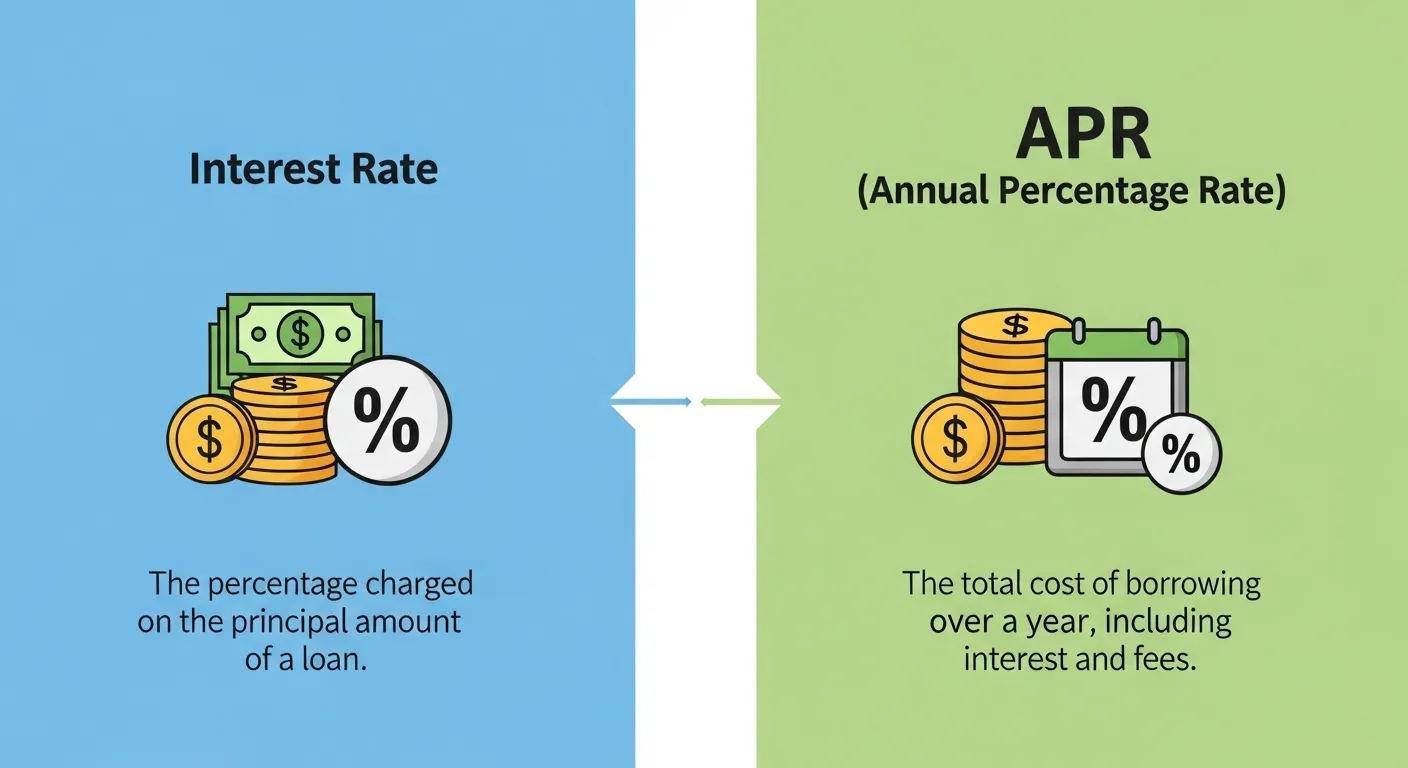
Rate: The basic interest percentage charged on a loan.
APR (Annual Percentage Rate): The total yearly cost of the loan, including interest and extra fees.
🌍 Why Their Difference Is Important for Learners and Experts
Knowing the difference helps people choose the best loan. Students studying finance learn how lending works. Experts use these terms to explain loan costs clearly. In society, understanding these terms protects people from paying hidden charges and helps them manage money wisely.
🔊 Pronunciation
Rate
- US: /reɪt/
- UK: /reɪt/
APR
- US: /ˌeɪ piː ˈɑːr/
- UK: /ˌeɪ piː ˈɑː/
Before taking a loan, it is important to understand the difference between rate and APR clearly.
⚖️ Difference Between Rate and APR
1. Definition
Rate: The interest charged on borrowed money.
Examples:
- A car loan rate of 6%.
- A home loan rate of 5%.
APR: Total yearly cost including fees.
Examples:
- Loan APR including service charges.
- Mortgage APR including closing costs.
2. Included Costs
Rate: Only interest.
Examples:
- Bank interest on a loan.
- Interest on credit cards.
APR: Interest plus fees.
Examples:
- Loan processing fee.
- Insurance or service charges.
3. Purpose
Rate: Shows basic borrowing cost.
Examples:
- Advertised loan rate.
- Initial interest offer.
APR: Shows true loan cost.
Examples:
- Full loan comparison.
- Real yearly expense.
4. Loan Comparison
Rate: Harder to compare loans using only rate.
Examples:
- Two banks showing the same rate.
- Hidden fees not visible.
APR: Easier to compare loans.
Examples:
- APR shows total cost.
- Clear comparison between lenders.
5. Transparency
Rate: Less detailed.
Examples:
- Advertised numbers in ads.
- Simple percentage shown.
APR: More transparent.
Examples:
- Includes fees.
- Shows real yearly expense.
6. Use in Advertising
Rate: Often used in marketing.
Examples:
- “Low interest rate loans.”
- “Special rate offer.”
APR: Often shown in official loan documents.
Examples:
- Credit card APR disclosure.
- Mortgage agreement.
7. Calculation
Rate: Simple interest calculation.
Examples:
- Interest on principal amount.
- Annual interest percentage.
APR: More complex calculation.
Examples:
- Includes fees in yearly cost.
- Spread across loan term.
8. Impact on Borrowers
Rate: Shows interest only.
Examples:
- Lower interest payment.
- Basic loan cost.
APR: Shows full payment impact.
Examples:
- Total cost including charges.
- True borrowing expense.
9. Common Use
Rate: Common in simple loan talks.
Examples:
- Personal loan discussions.
- Advertisements.
APR: Common in financial analysis.
Examples:
- Mortgage comparisons.
- Credit card agreements.
10. Financial Understanding
Rate: Basic financial knowledge.
Examples:
- Beginner finance learning.
- Basic loan explanation.
APR: Advanced understanding.
Examples:
- Financial planning.
- Professional loan analysis.
⚙️ Nature and Behaviour of Both
Nature of Rate
Rate is simple and direct. It focuses only on the interest applied to borrowed money.
Nature of APR
APR is more complete. It reflects the total yearly cost of borrowing, including fees and extra charges.
❓ Why People Confuse Rate and APR
People confuse these terms because both appear as percentages. Banks often show them together in loan offers. Since they look similar, borrowers may think they represent the same thing.
📊 Difference and Similarity Between Rate and APR
| Feature | Rate | APR | Similarity |
| Meaning | Interest percentage | Total yearly loan cost | Both shown as percentages |
| Includes fees | No | Yes | Both relate to loans |
| Use | Basic interest | Full cost comparison | Both used by lenders |
| Complexity | Simple | More detailed | Both measure borrowing cost |
🎯 Which Is Better in What Situation?
Rate
Rate is useful when someone wants to know the basic interest on a loan. It gives a quick idea of how much interest will apply. Banks often show rates in advertisements because they are simple and easy to understand.
APR
APR is better when comparing loans. It shows the true yearly cost because it includes fees and extra charges. Borrowers who want a clear financial picture should focus more on APR.
🧠 Rate and APR in Metaphors and Similes
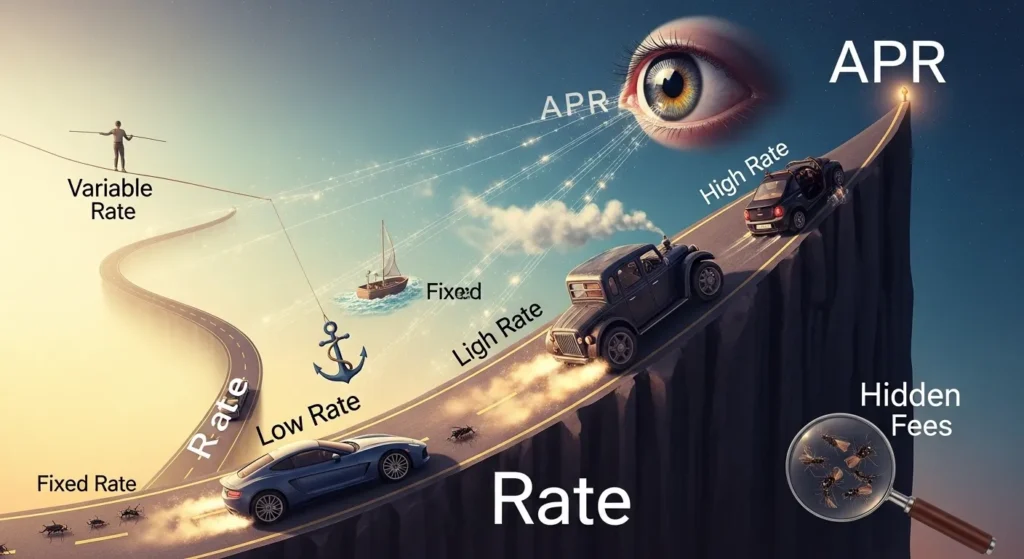
Rate metaphor
Example:
- The rate is like the speed of a car showing how fast interest grows.
APR metaphor
Example:
- APR is like the total travel cost including fuel, tolls, and tickets.
🎭 Connotative Meaning
Rate
Neutral financial meaning.
Example:
- The bank offered a lower interest rate.
APR
Neutral financial meaning.
Example:
- The APR showed the real cost of the loan.
💬 Idioms or Proverbs Related
“At any rate.”
Example:
- At any rate, he decided to compare loan options.
“Pay the price.”
Example:
- If you ignore APR, you may pay the price later.
📚 Works in Literature
- Rich Dad Poor Dad Personal finance book, Robert Kiyosaki, 1997
- The Intelligent Investor Finance book, Benjamin Graham, 1949
- Your Money or Your Life Finance guide, Vicki Robin, 1992
🎬 Movies Related to Finance
- The Big Short (2015, USA)
- Wall Street (1987, USA)
- Moneyball (2011, USA)
❓ Frequently Asked Questions
1. What is the main difference between rate and APR?
Rate shows interest only, while APR includes interest and fees.
2. Which is more accurate for loan comparison?
APR is more accurate.
3. Do all loans show APR?
Most loans and credit cards disclose APR.
4. Is APR always higher than the rate?
Yes, because it includes extra costs.
5. Why do banks advertise rates more than APR?
Rates look smaller and attract customers.
🌱 How Rate and APR Are Useful for Surroundings
Rate and APR help people understand borrowing costs. They guide financial decisions for homes, cars, and education. These concepts support responsible lending and borrowing in modern society.
🏁 Final Words for Both
Rate shows the basic interest percentage on a loan.
APR shows the full yearly borrowing cost including fees.
Both are important for smart financial decisions.
🧾 Conclusion
The difference between rate and APR lies in the level of detail they provide about loan costs. Rate represents only the interest charged on borrowed money. APR includes both interest and additional fees, giving a more accurate picture of the total yearly expense.
Understanding the difference between rate and APR helps borrowers compare loan options and avoid hidden charges. if someone is buying a house, car, or using a credit card, knowing the difference between rate and APR leads to smarter financial choices and better money management.
Read more about!
Difference Between Lager and Ale: Simple Guide