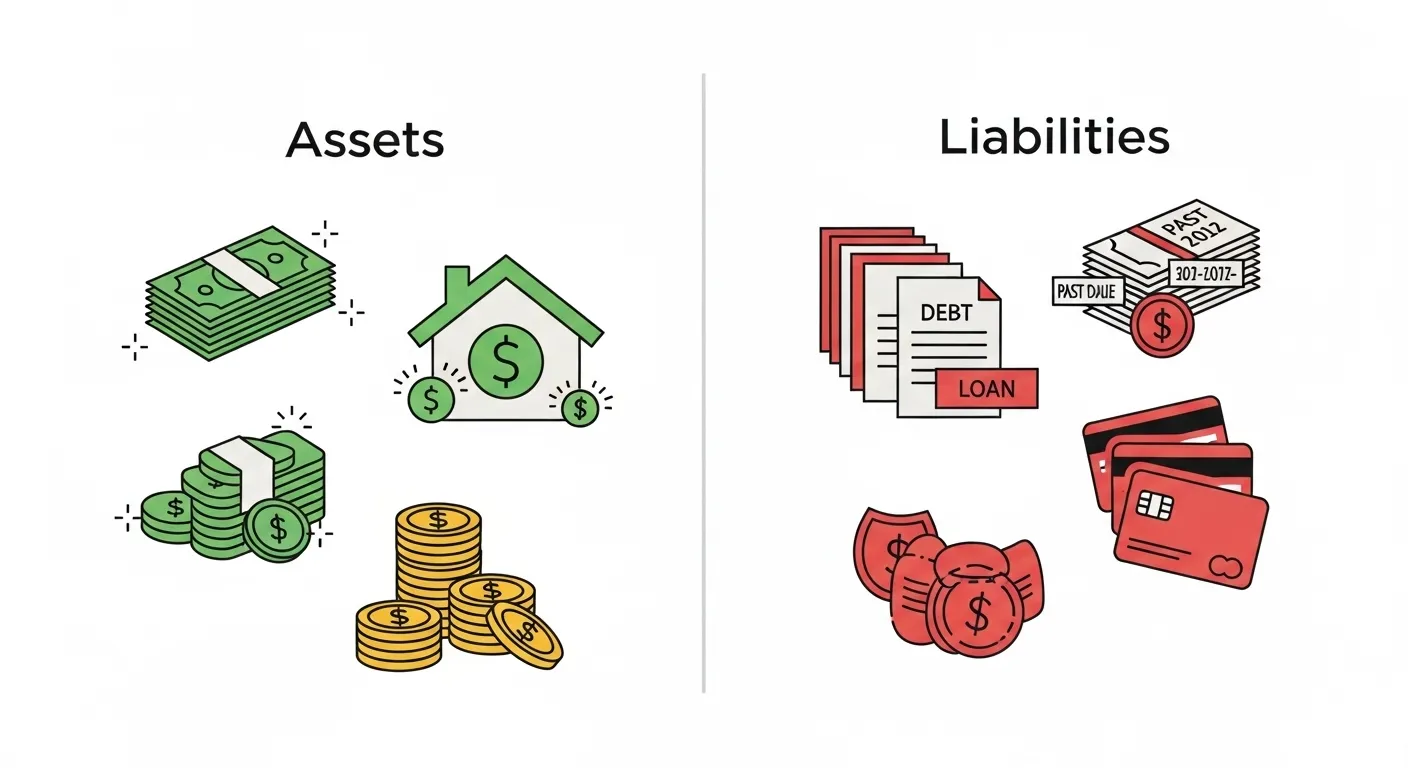
Assets are things you own that bring value 💰, while liabilities are debts or obligations you owe 📉
Many people struggle to understand the difference between assets and liabilities, especially when learning personal finance or accounting for the first time.
If you’ve ever wondered what is the difference between assets and liabilities or why financial experts emphasize them so much, you’re not alone.
In simple words, the difference between assets and liabilities is what you own versus what you owe. Assets bring money or value into your life, while liabilities take money out.
This concept is the foundation of financial literacy, used everywhere from personal budgeting to corporate balance sheets.
Understanding the difference between assets and liabilities helps you make smarter money decisions, avoid debt traps, and build long-term wealth.
In this guide, we’ll break it down in a very simple, real-world way so you never get confused again.
Let’s understand it clearly step by step.
Difference Between Assets and Liabilities
The difference between assets and liabilities is simple:
- Assets put money into your pocket.
- Liabilities take money out of your pocket.
Example: A rented house (asset) earns you income, while a car loan (liability) costs you monthly payments.
Definition of Assets and Liabilities
- Asset: Anything you own that has value and can generate income or be sold for money.
- Liability: Anything you owe that requires you to pay money in the future.
Assets increase wealth, while liabilities reduce it.
Pronunciation
Understanding pronunciation helps in business and academic discussions:
- Asset
- US: /ˈæs.et/
- UK: /ˈæs.et/
- Liability
- US: /ˌlaɪ.əˈbɪl.ə.ti/
- UK: /ˌlaɪ.əˈbɪl.ə.ti/
Now let’s go deeper into the difference between assets and liabilities in real life.
Comparison: Assets vs Liabilities
| Feature | Assets | Liabilities | Similarity |
| Meaning | Things you own with value | Money you owe | Both are financial terms |
| Cash flow | Brings money in | Takes money out | Both affect finances |
| Examples | House, stocks, business | Loans, credit cards | Both can be large or small |
| Impact | Increases wealth | Decreases wealth | Both affect net worth |
| Accounting role | Recorded on asset side | Recorded on liability side | Both appear in balance sheets |
| Risk | Usually low risk | Can increase debt risk | Both require financial management |
| Ownership | You fully own them | You must repay them | Both influence financial status |
Key Differences Between Assets and Liabilities
1. Money Flow Direction
Assets bring money in, liabilities take money out.
Example: Rental income vs loan EMI payments.
2. Wealth Creation
Assets build wealth over time, while liabilities reduce savings.
Example: Investing in stocks vs credit card debt.
3. Financial Position
Assets strengthen financial stability; liabilities weaken it.
Example: Owning property vs owing bank loans.
4. Risk Level
Assets may appreciate or depreciate; liabilities always create repayment pressure.
Example: Gold investment vs personal loan.
5. Business Perspective
Companies like those tracked by Google Finance or Meta investors analyze both to measure health.
Assets show growth potential; liabilities show obligations.
6. Long-Term Impact
Assets help financial freedom, liabilities can create long-term stress if unmanaged.
Example: Business ownership vs high-interest debt.
What Are Assets and How Do They Work?
Assets function like financial engines. They generate income or appreciate over time.
Examples:
- Real estate
- Stocks
- Business ownership
- Intellectual property
In real life, wealthy individuals focus heavily on building assets instead of increasing liabilities.
What Are Liabilities and Why They Matter?
Liabilities represent financial responsibility. They are not always bad, but they must be managed properly.
Examples:
- Home loans
- Credit card debt
- Car loans
Used wisely, liabilities can help growth. For example, business loans can expand companies featured on platforms like YouTube startups or Instagram businesses.
Difference Between Assets and Liabilities in Real Life
- Buying a house → Asset (if rented) or liability (if loan-heavy)
- Car ownership → Liability due to maintenance and fuel cost
- Business → Asset if profitable
- Credit card → Liability if unpaid balance exists
- Investments → Assets when generating returns
This is where many beginners get confused, especially in personal finance.
Common Mistakes People Make
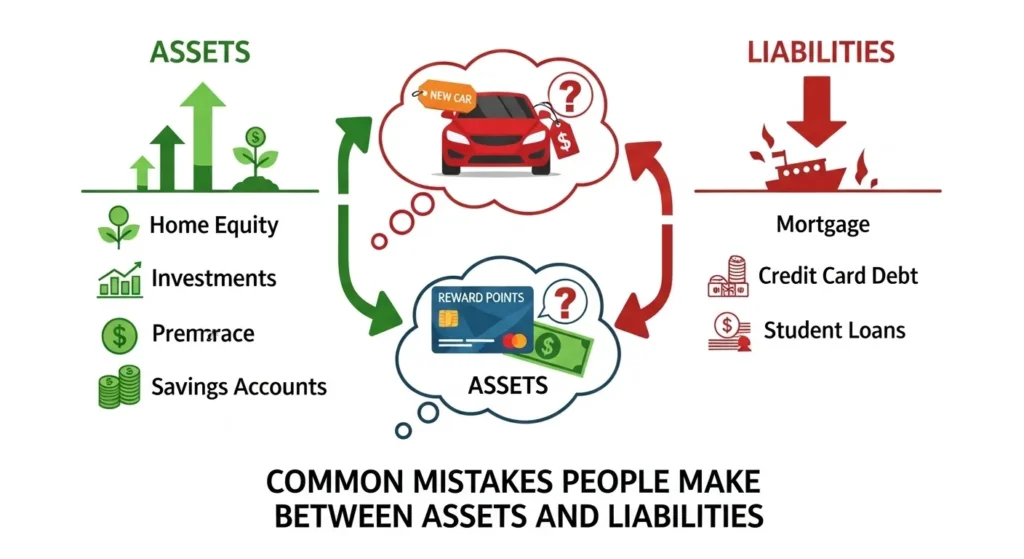
- Thinking everything they own is an asset
- Ignoring hidden liabilities like interest
- Overusing credit cards
- Buying expensive items as “assets”
- Not tracking cash flow properly
Fix: Always check whether something generates income or costs money.
Real-Life Examples
- Personal finance: Salary savings vs loan EMIs
- Business: Company equipment vs corporate debt
- Investment: Stocks vs margin loans
- Lifestyle: Rental property vs car lease
- Digital economy: Online business income vs software subscriptions
When to Use Assets vs Liabilities Concept
- Budgeting personal finances
- Starting a business
- Investing in stocks or real estate
- Financial planning
- Loan decision-making
Why People Get Confused
People often confuse these terms because:
- Both appear in accounting sheets
- Both involve money movement
- School explanations are too technical
- Real-life examples are not clear
Even financial content on Instagram or YouTube sometimes oversimplifies them.
How Search Engines Understand This Topic
Search engines like Google interpret this query as financial education intent.
They prioritize:
- Simple definitions
- Comparison tables
- Real-life examples
- Beginner-friendly explanations
This is why structured content ranks higher in finance topics.
Expert Insight
From a financial education standpoint, understanding assets and liabilities is the foundation of wealth building.
In real advisory practice:
- Wealthy individuals focus on asset accumulation
- Financial stress often comes from unmanaged liabilities
- Balanced financial planning is key
Most beginners fail not because of low income, but because of poor classification of money flow.
FAQs
1. What is the simple difference between assets and liabilities?
Assets give money; liabilities take money.
2. Is a house an asset or liability?
It depends income-generating houses are assets, loans make them liabilities.
3. Can liabilities become assets?
Yes, if they generate income indirectly.
4. What are examples of assets?
Cash, property, stocks, and business ownership.
5. What are examples of liabilities?
Loans, credit cards, and unpaid bills.
6. Why are assets important?
They build long-term financial security.
7. Are all debts bad?
No, productive debts can help growth.
8. How do businesses use this concept?
They analyze balance sheets to measure financial health.
Conclusion
The difference between assets and liabilities is one of the most important concepts in finance. Assets increase your wealth by generating income or value, while liabilities reduce your wealth by creating financial obligations.
If you truly understand the difference between assets and liabilities, you can make smarter decisions about saving, investing, and spending.
In real life, financial success depends less on income and more on how well you manage these two categories.
In simple terms, build more assets and control your liabilities. This mindset alone can transform your financial future.
Read more about!
Difference Between Direct and Indirect: Complete Expert Guide