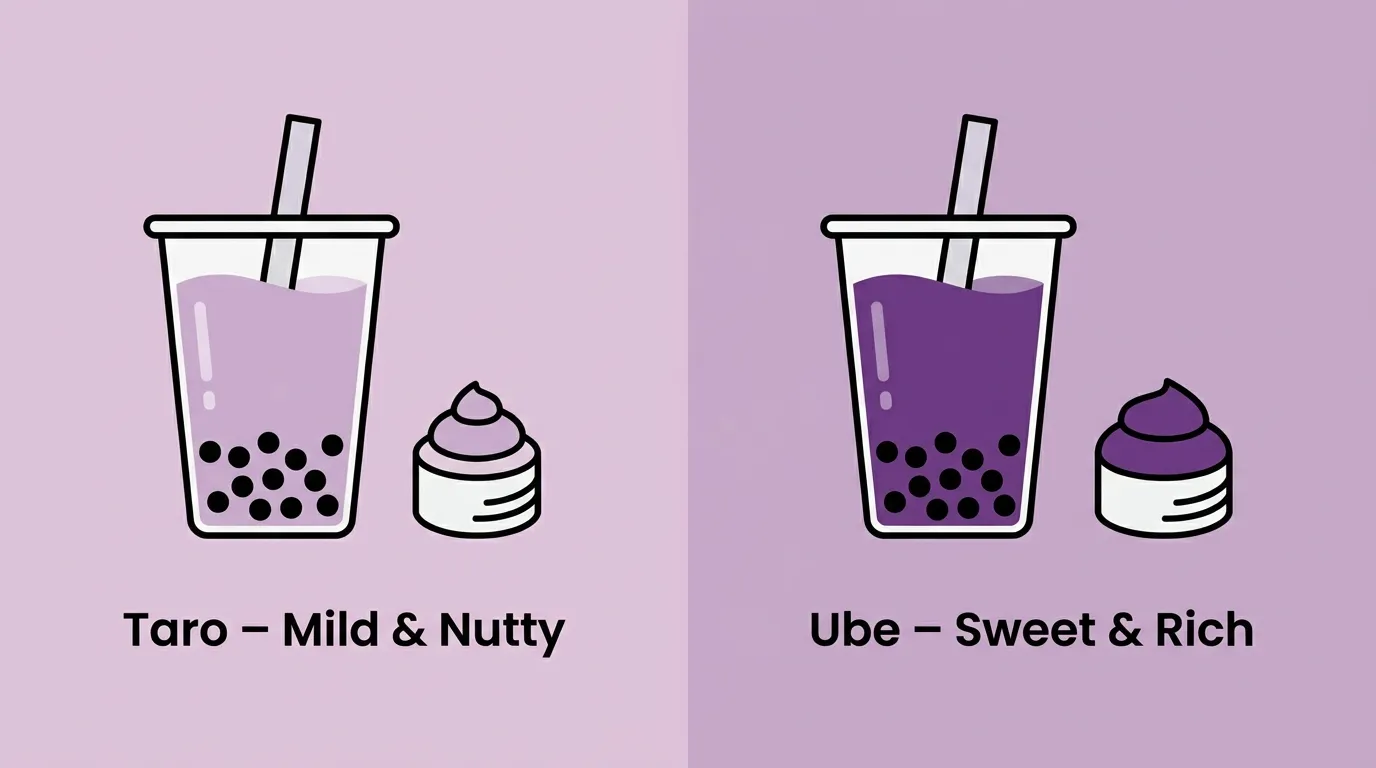
Taro 🤍 = mild, nutty & starchy 🥔, Ube 💜 = sweet, creamy & dessert-like 🍠😋
Many people see purple desserts online and wonder is that taro or ube? The difference between taro and ube is one of the most searched food comparisons today, especially with trending desserts on Instagram and YouTube.
In simple terms, the difference between taro and ube lies in color, taste, and origin. Taro is a mild, nutty root with white or light purple flesh, while ube is a naturally vibrant purple yam with a sweet, vanilla-like flavor. But many users get confused because both are used in similar desserts.
In this guide, you’ll clearly understand the difference between taro and ube, how they taste, where they come from, and which one you should choose for cooking or desserts.
Difference Between Taro and Ube
The difference between taro and ube is that taro is a starchy root with a mild, nutty flavor, while ube is a sweet purple yam with a rich, dessert-like taste.
Example: Taro is often used in bubble tea, while ube is used in cakes and ice cream.
Definition of Difference Between Taro and Ube
- Taro: A starchy root vegetable with pale white or light purple flesh, commonly used in savory and mildly sweet dishes.
- Ube: A purple yam native to the Philippines, known for its bright color and naturally sweet flavor.
Pronunciation
- Taro: US /ˈtɑːroʊ/ | UK /ˈtærəʊ/
- Ube: US /ˈuːbeɪ/ | UK /ˈuːbeɪ/
Now let’s move beyond basics and explore the real differences that matter in cooking and everyday use.
Taro vs Ube: Side-by-Side Comparison
| Feature | Taro | Ube | Explanation |
| Color | White with purple specks | Deep vibrant purple | Ube is visually more striking |
| Taste | Mild, nutty, slightly sweet | Sweet, creamy, vanilla-like | Ube is dessert-focused |
| Texture | Dry and starchy | Soft and creamy | Ube feels smoother |
| Origin | Southeast Asia | Philippines | Different cultural roots |
| Usage | Bubble tea, savory dishes | Desserts, cakes, ice cream | Different culinary roles |
| Sweetness | Low | High | Ube is naturally sweeter |
| Popularity | Common in Asian cuisine | Trending globally | Ube is social media famous |
| Processing | Often powdered | Often mashed or jammed | Preparation differs |
Key Differences Explained Between Taro and Ube
1. Taste Profile
Taro has a mild, slightly nutty flavor. Ube is sweet and almost dessert-like.
👉 Example: Taro tea tastes subtle, while ube ice cream tastes rich and sweet.
2. Color Difference
Ube has a naturally bright purple color. Taro is pale with light purple flecks.
👉 Real-life insight: Many “purple taro drinks” are artificially colored.
3. Culinary Use
Taro works in both savory and sweet dishes. Ube is mostly used in desserts.
👉 Example: Taro chips vs ube cake.
4. Texture When Cooked
Taro becomes firm and starchy. Ube turns soft and creamy.
👉 Example: Ube halaya (jam) is smooth, while taro remains dense.
5. Cultural Importance
Taro is widely used across Asia. Ube is deeply tied to Filipino cuisine.
👉 Example: Ube is central to many traditional Filipino desserts.
6. Processing and Availability
Taro is often available fresh or powdered. Ube is commonly sold as jam or extract.
👉 Example: Bubble tea shops often use taro powder.
7. Nutritional Differences
Both are rich in carbs, but taro has more fiber, while ube offers antioxidants due to its purple pigment.
Difference and Similarity Between Taro and Ube
| Feature | Taro | Ube | Similarity |
| Type | Root vegetable | Yam | Both are underground tubers |
| Taste | Mild | Sweet | Both slightly sweet when cooked |
| Color | Light | Deep purple | Both can appear purple |
| Use | Savory + sweet | Mostly sweet | Used in desserts |
| Texture | Starchy | Creamy | Both soften when cooked |
| Region | Asia-wide | Philippines | Both Asian ingredients |
What Is the Difference Between Taro and Ube in Flavor and Cooking?
This is where most beginners struggle.
- Taro = neutral base ingredient
- Ube = flavor-rich dessert ingredient
Think of taro like a potato with a hint of sweetness, while ube is closer to vanilla-flavored sweet potato.
👉 In practical cooking:
- Use taro for versatility
- Use ube for flavor impact
Why Is Ube So Popular Online Compared to Taro?
Platforms like Meta (owner of Instagram) have boosted ube’s popularity.
- Bright purple color = eye-catching content
- Dessert appeal = higher engagement
- Visual uniqueness = viral potential
Taro doesn’t stand out visually, so it’s less “shareable.”
How to Identify Taro vs Ube in Real Life?
Visual Clues
- Bright purple → likely ube
- Pale with specks → taro
Taste Test
- Mild → taro
- Sweet → ube
Product Labels
Always check ingredients many “taro” products use flavoring.
Difference Between Taro and Ube in Bubble Tea and Desserts
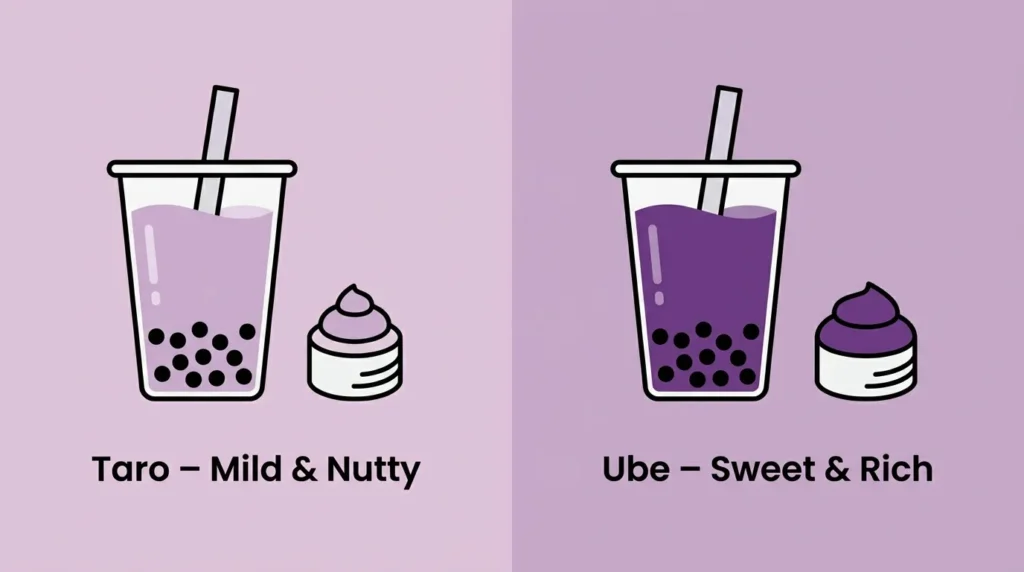
In bubble tea shops:
- Taro drinks often use powder (sometimes artificial)
- Ube drinks use real yam or syrup
👉 Important insight: Many people think they’ve tasted taro when it was actually flavored powder.
Common Mistakes with Taro and Ube
1. Assuming They Are the Same
They are completely different plants.
✔ Fix: Learn origin and taste differences.
2. Believing All Purple Desserts Are Ube
Many are artificially colored taro.
✔ Fix: Check ingredients carefully.
3. Using Taro in Place of Ube
Taro lacks sweetness for desserts.
✔ Fix: Add sugar or choose ube instead.
4. Ignoring Texture Differences
Taro is denser; ube is smoother.
✔ Fix: Match ingredient to recipe.
5. Confusing Yam and Root Terms
Not all yams are the same globally.
✔ Fix: Understand regional naming.
Real-Life Examples of Taro vs Ube
1. Personal Use
A home cook uses taro in curry but chooses ube for dessert.
2. Café Business
Bubble tea shops use taro powder for cost efficiency.
3. Bakery Industry
Bakeries use ube for cakes due to color and flavor appeal.
4. Social Media Content
Food creators on Instagram prefer ube for visual engagement.
5. Food Manufacturing
Packaged snacks may use artificial taro flavor instead of real root.
When to Use Taro vs Ube
Choose Taro If:
- You want a neutral flavor base
- You’re making savory dishes
- You need a starchy texture
Choose Ube If:
- You want sweetness and flavor
- You’re making desserts
- You want vibrant color
Why People Get Confused About Taro and Ube
- Similar purple appearance
- Overlapping usage in desserts
- Mislabeling in commercial products
- Social media trends mixing both
Many beginners assume they are interchangeable but they’re not.
How Search Engines Understand Taro vs Ube Queries
Search engines like Google analyze queries such as:
- “what is taro vs ube”
- “difference between taro and ube taste”
They prioritize:
- comparison tables
- clear definitions
- user intent satisfaction
That’s why detailed guides rank higher they fully answer the confusion.
Expert Insight
From a culinary perspective, taro and ube serve completely different roles. In real kitchen scenarios, chefs treat taro as a base ingredient similar to potatoes while ube is treated as a flavor component.
In modern food trends (2024–2026), ube has gained global popularity due to its strong visual identity and dessert compatibility. However, taro remains more versatile in traditional cooking.
Understanding this distinction helps avoid recipe mistakes and improves flavor outcomes.
FAQs
1. Are taro and ube the same thing?
No, they are different plants with different taste and uses.
2. Which is sweeter, taro or ube?
Ube is much sweeter.
3. Can I substitute taro for ube?
Not directly; you’ll need added sweetness.
4. Why are both purple?
Ube is naturally purple; taro is usually lighter.
5. Is taro healthy?
Yes, it’s rich in fiber and nutrients.
6. What does ube taste like?
Sweet, creamy, slightly vanilla-like.
7. Why is ube trending?
Its color and dessert appeal make it popular online.
8. Is taro used in desserts?
Yes, but it’s less sweet than ube.
Conclusion
The difference between taro and ube is clear once you understand their flavor, texture, and purpose. Taro is a mild, starchy root used in both savory and sweet dishes, while ube is a naturally sweet purple yam mainly used in desserts.
If you want versatility, go with taro. If you want flavor and color, choose ube. Both ingredients have their place in cooking, but they are not interchangeable.
Understanding the difference between taro and ube helps you cook better, choose the right ingredient, and avoid common mistakes whether you’re making bubble tea, desserts, or traditional dishes.
Read more about!
Difference Between Hardcover and Paperback: Simple Guide

I have learned from Hugh Johnson, a renowned British wine writer and historian, who makes wine knowledge easy for general readers. Through his influential book The World Atlas of Wine, I explore wine regions, production techniques, and the cultural significance of beverages like Champagne and Prosecco.