Hardcover 📘 = strong & premium, Paperback 📗 = light & affordable 😊
Many readers stand in a bookstore or scroll on Amazon wondering: should I buy hardcover or paperback? The difference between hardcover and paperback may seem simple, but it actually affects price, durability, reading comfort, and even collecting value.
In simple terms, the difference between hardcover and paperback comes down to binding, cost, and purpose.
Hardcover books are sturdy and long-lasting, while paperbacks are lightweight and budget-friendly. But there’s more to it than just “hard vs soft.”
In this guide, you’ll fully understand the difference between hardcover and paperback, why each exists, and which one is better for your specific needs.
Difference Between Hardcover and Paperback
The difference between hardcover and paperback is mainly the cover type and durability. Hardcover books have rigid covers and last longer, while paperbacks have flexible covers and are cheaper.
Example: A collector might buy a hardcover of Harry Potter, while a casual reader chooses paperback for easy travel.
Definition of Difference Between Hardcover and Paperback
- Hardcover: A book with a thick, rigid protective cover, usually made of cardboard wrapped in cloth or paper.
- Paperback: A book with a soft, flexible paper cover, designed to be lightweight and affordable.
Pronunciation
- Hardcover: US /ˈhɑːrdˌkʌvər/ | UK /ˈhɑːdkʌvə/
- Paperback: US /ˈpeɪpərˌbæk/ | UK /ˈpeɪpəbæk/
Now that we’ve got the basics clear, let’s break down the real differences in detail.
Hardcover vs Paperback: Side-by-Side Comparison
| Feature | Hardcover | Paperback | Explanation |
| Cover | Thick and rigid | Soft and flexible | Hardcover protects pages better |
| Durability | Long-lasting | Wears out faster | Ideal for long-term use vs casual reading |
| Price | Expensive | Affordable | Printing cost is higher for hardcover |
| Weight | Heavy | Lightweight | Paperback easier to carry |
| Appearance | Premium look | Simple design | Hardcover used for collectors |
| Release Time | Released first | Released later | Publishing strategy |
| Portability | Less portable | Highly portable | Good for travel |
| Lifespan | Years/decades | Months/years | Depends on usage |
Key Differences Explained Between Hardcover and Paperback
1. Durability and Longevity
Hardcovers are built to last. Libraries prefer them because they survive heavy use.
Paperbacks bend easily and can tear.
👉 Real-life example: A student using the same textbook for 3 years should pick hardcover.
2. Price Difference
Hardcovers cost more due to materials and printing quality. Paperbacks are budget-friendly.
👉 Example: A new novel might cost $25 hardcover vs $10 paperback.
3. Reading Comfort
Paperbacks are lighter and easier to hold for long periods. Hardcovers can feel bulky.
👉 Example: Reading in bed is easier with paperback.
4. Aesthetic and Collectibility
Hardcovers look elegant on shelves. Collectors prefer them for display.
👉 Example: Special editions and signed copies are usually hardcover.
5. Portability
Paperbacks fit easily into bags. Hardcovers are heavier and less travel-friendly.
👉 Example: Travelers often choose paperback for flights.
6. Publishing Strategy
Publishers release hardcover first to maximize profit, then paperback later.
👉 Example: Bestsellers often debut in hardcover before cheaper versions.
7. Resale Value
Hardcovers often retain value better, especially rare editions.
👉 Example: First editions can become collector items.
Difference and Similarity Between Hardcover and Paperback
| Feature | Hardcover | Paperback | Similarity |
| Purpose | Premium reading | Casual reading | Both deliver same content |
| Material | Thick boards | Paper cover | Both use printed paper pages |
| Cost | High | Low | Both sold commercially |
| Usage | Libraries, collectors | Everyday readers | Both used for reading |
| Design | Durable binding | Flexible binding | Both follow publishing standards |
| Availability | First release | Later release | Both widely available |
This table clearly shows the difference and similarity between hardcover and paperback for quick understanding.
Why Do Hardcover and Paperback Versions Exist?
The publishing industry uses a strategy similar to how Netflix releases premium content before wider access.
- Hardcover targets early buyers willing to pay more
- Paperback targets mass readers later
This model increases revenue while serving different reader types.
When Should You Choose Hardcover?
Choose hardcover if:
- You want long-term durability
- You collect books
- You prefer premium aesthetics
- You plan to reread or display
👉 Best for: collectors, libraries, serious readers
When Should You Choose Paperback?
Choose paperback if:
- You want affordability
- You travel often
- You prefer lightweight books
- You read casually
👉 Best for: students, travelers, everyday readers
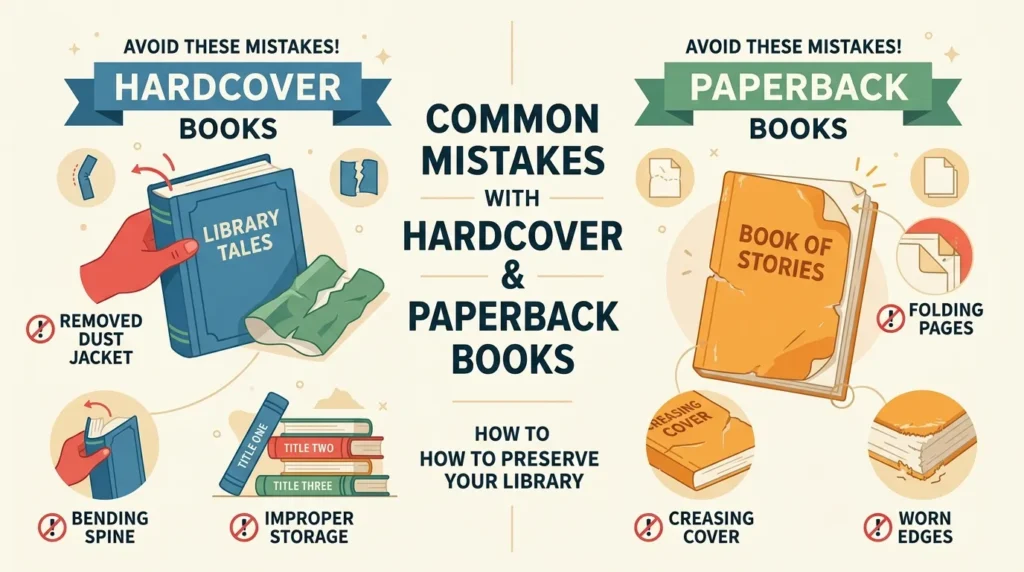
Common Mistakes with Hardcover and Paperback
1. Thinking Content Is Different
Both versions have the same text.
✔ Fix: Choose based on format, not content.
2. Assuming Paperback Is Always Low Quality
Some paperbacks are high quality.
✔ Fix: Check publisher and edition.
3. Ignoring Usage Needs
Buying hardcover for travel is inconvenient.
✔ Fix: Match format to lifestyle.
4. Overpaying for Hardcover
Not every book needs a premium version.
✔ Fix: Buy hardcover only when needed.
5. Misunderstanding Release Timing
People think paperback is “less important.”
✔ Fix: It’s just a later release strategy.
Real-Life Examples of Hardcover vs Paperback
1. Personal Use
A reader buys paperback novels for daily commuting.
2. Academic Use
Students often choose paperback textbooks for cost savings.
3. Collector Scenario
A fan buys hardcover first editions for shelf display.
4. Business Use
Libraries invest in hardcover for durability.
5. Digital Comparison Insight
Just like people choose between free vs premium apps on Google platforms, readers choose format based on value vs cost.
Why People Get Confused About Hardcover vs Paperback
- Both look similar in stores
- Same content inside
- Pricing differences seem random
- Lack of awareness of publishing strategy
Many beginners assume hardcover is “better,” but it depends on usage.
How Search Engines Understand Hardcover vs Paperback
Search engines like Google analyze queries like:
- “what is hardcover book”
- “paperback vs hardcover which is better”
They prioritize:
- clear comparisons
- structured tables
- user intent satisfaction
That’s why comparison articles rank well they match real user questions.
Expert Insight
In real publishing scenarios, format choice is less about “better” and more about purpose. Hardcover is designed for longevity and perceived value, while paperback is optimized for accessibility.
Professionally speaking, publishers use hardcover releases to recover upfront costs quickly, then expand reach through paperback editions. This dual-format system has been standard in global publishing for decades.
FAQs
1. Which is better, hardcover or paperback?
It depends. Hardcover is durable; paperback is affordable and portable.
2. Why are hardcover books more expensive?
They use stronger materials and higher production costs.
3. Do hardcover and paperback have the same content?
Yes, the content is usually identical.
4. Why do books release in hardcover first?
To maximize early sales revenue.
5. Is paperback good for long-term use?
Not ideal; it wears out faster.
6. Which is best for students?
Paperback, due to lower cost and portability.
7. Are hardcover books worth collecting?
Yes, especially first editions or special prints.
8. Do libraries prefer hardcover or paperback?
Mostly hardcover due to durability.
Conclusion
The difference between hardcover and paperback is not just about the cover it reflects how you read, store, and value books. Hardcover offers durability, premium feel, and long-term value, while paperback provides affordability, flexibility, and convenience.
If you’re someone who collects books or wants them to last years, hardcover is the better choice. But if you read casually, travel often, or want to save money, paperback is the smarter option.
In the end, the best choice depends on your purpose. Understanding the difference between hardcover and paperback helps you make a practical, informed decision every time you pick your next book.
Read more about!
Difference Between Polenta and Grits: Simple Guide