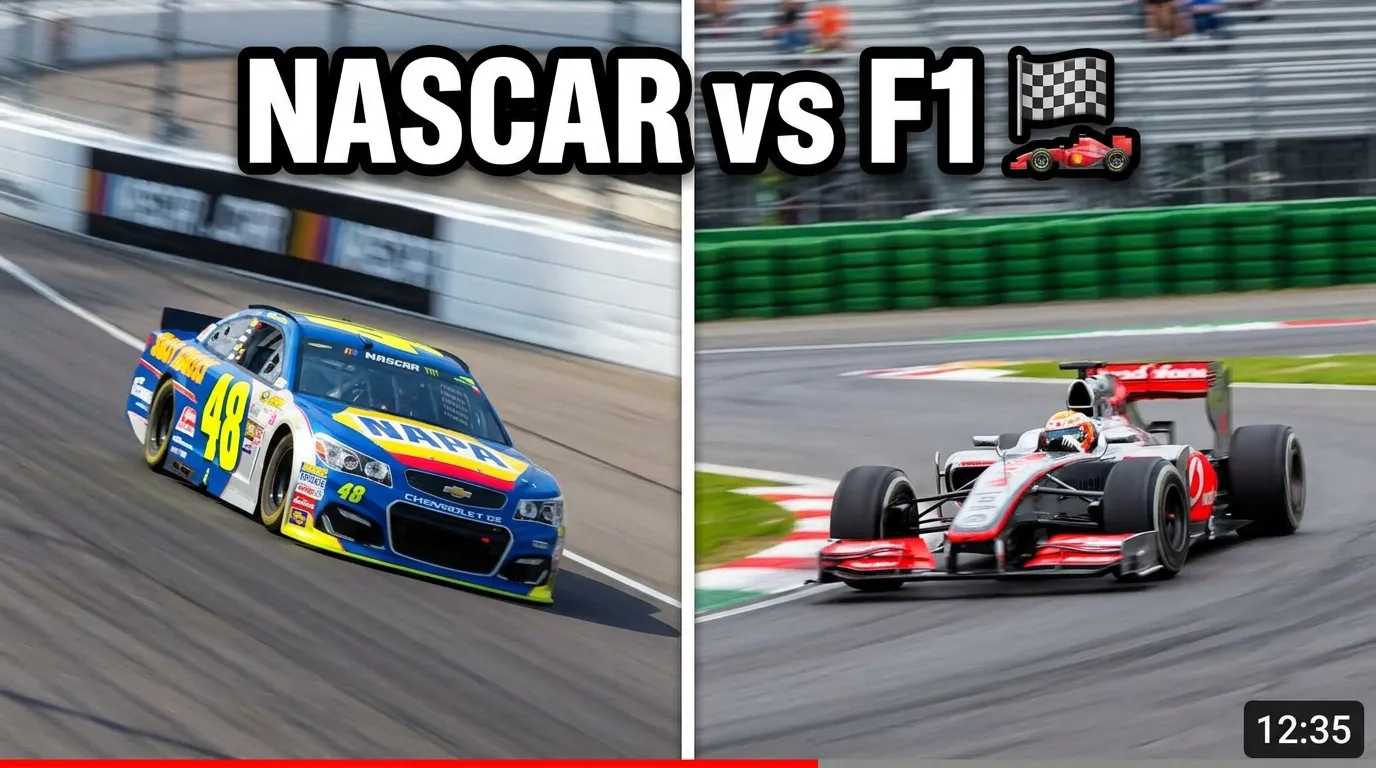
🏁 NASCAR uses heavier stock cars on oval tracks, while F1 features ultra-fast open-wheel cars on technical road circuits 🏎️🔥
Many new motorsport fans get confused about the difference between NASCAR and F1 because both involve fast cars, elite drivers, and global racing audiences. But once you look closely, the two sports are completely different in speed, car design, race strategy, track style, and even fan culture.
In simple words, NASCAR focuses on stock car racing mainly on oval tracks, while Formula One commonly called F1 uses lightweight open-wheel cars built for maximum speed and precision on road circuits.
People search for the difference between NASCAR and F1 because they want to know:
- Which is faster?
- Which is harder to drive?
- Why do the cars look so different?
- Which racing format is more dangerous or technical?
This guide explains everything clearly with real examples, expert insights, comparison tables, and beginner-friendly explanations so you do not need another article afterward.
Difference Between NASCAR and F1
The main difference between NASCAR and F1 is the racing style and car engineering.
- NASCAR uses heavier stock cars racing mostly on oval tracks.
- F1 uses ultra-light open-wheel cars designed for high-speed cornering and advanced aerodynamics.
Real Example
A NASCAR race often involves close bumper-to-bumper battles for hundreds of laps. An F1 race focuses more on precision braking, tire strategy, and aerodynamic efficiency.
Definition of NASCAR and F1
- NASCAR: An American stock car racing series where modified production-style cars compete mainly on oval tracks.
- F1 (Formula One): An international open-wheel racing championship featuring technologically advanced single-seat race cars.
Example
NASCAR races are common in the United States, while F1 races happen globally in cities like Monaco, Singapore, and Austin.
Pronunciation
| Term | US Pronunciation | UK Pronunciation |
| NASCAR | NASS-car | NASS-car |
| F1 | Eff-One | Eff-One |
Now let’s understand why these two motorsports feel so different despite both being professional racing competitions.
NASCAR vs F1 Comparison
| Feature | NASCAR | F1 | Similarity |
| Car Style | Stock car body | Open-wheel design | Both are purpose-built race cars |
| Average Speed | Lower corner speed | Higher overall speed | Both are extremely fast |
| Track Type | Mostly oval tracks | Road and street circuits | Both use professional race tracks |
| Race Strategy | Drafting and endurance | Tire and pit strategy | Both rely heavily on teamwork |
| Technology | Simpler engineering | Advanced aerodynamics | Both use racing innovation |
| Driver Skill | Close-contact control | Precision handling | Both require elite talent |
| Audience | Mostly US-based | Global audience | Both have passionate fans |
| Pit Stops | Fast refueling focus | Tire-change precision | Both involve pit crews |
This table clearly shows the difference and similarity between NASCAR and F1 for quick understanding.
Key Differences Explained Between NASCAR and F1
1. Car Design Is Completely Different
F1 cars are lightweight and open-wheel, built for aerodynamics and speed.
NASCAR cars are heavier with enclosed wheels and stronger body contact tolerance.
Real-Life Example
An F1 car can lose performance from small aerodynamic damage, while NASCAR drivers often continue racing after minor collisions.
2. Racing Tracks Change the Entire Experience
F1 races happen on:
- road circuits
- street tracks
- technical corners
NASCAR mainly races on:
- oval tracks
- superspeedways
- short tracks
This changes how drivers overtake and manage tires.
3. Speed Difference
F1 cars are generally faster overall because of advanced aerodynamics and lighter weight.
Many users search “Is NASCAR slower than F1?” because NASCAR engines sound powerful. But cornering speed matters more than engine noise.
Example
F1 cars can corner at extremely high speeds due to aerodynamic downforce.
4. Driver Technique
NASCAR drivers focus heavily on:
- drafting
- endurance
- traffic management
F1 drivers focus more on:
- braking precision
- cornering lines
- tire conservation
Both require skill, but the techniques differ dramatically.
5. Technology and Budget
F1 teams invest massive amounts in engineering, simulation, and aerodynamics.
Teams like Scuderia Ferrari and Mercedes-AMG Petronas Formula One Team use advanced wind tunnel testing and AI-driven data analysis.
NASCAR technology is more regulated to maintain close racing competition.
6. Race Length and Format
NASCAR races are usually longer in distance and laps.
F1 races are shorter but more technically intense.
This affects driver fatigue and race pacing.
7. Fan Culture
NASCAR culture is deeply rooted in American motorsports tradition.
F1 has become highly global due to streaming platforms and social media growth.
Series like Formula 1: Drive to Survive helped attract millions of new fans worldwide.
Why NASCAR and F1 Exist as Separate Racing Formats
The two sports evolved differently based on culture and engineering priorities.
NASCAR Origins
NASCAR grew from American stock car racing traditions, especially in the southern United States.
The focus became:
- entertainment
- endurance
- aggressive racing
F1 Origins
F1 developed in Europe with emphasis on:
- precision engineering
- international competition
- technological innovation
This difference still shapes both sports today.
Difference Between NASCAR and F1 in Car Technology
F1 Technology
F1 cars use:
- hybrid power units
- advanced aerodynamics
- energy recovery systems
- lightweight carbon fiber
Teams constantly analyze data using AI systems and advanced simulations.
NASCAR Technology
NASCAR emphasizes:
- durability
- mechanical balance
- drafting efficiency
- close-contact racing
Cars are intentionally more standardized.
Which Is Harder: NASCAR or F1?
This debate creates massive discussion online.
Why F1 Is Considered Extremely Difficult
F1 drivers manage:
- intense G-forces
- complex steering controls
- rapid braking zones
- high-speed cornering
Reaction times are incredibly important.
Why NASCAR Is Also Extremely Challenging
NASCAR drivers race:
- inches apart
- for hundreds of laps
- at sustained high concentration
Mental endurance becomes critical.
Practical Insight
In real racing scenarios, switching from one series to another is very difficult because the required driving styles are so different.
Difference Between NASCAR and F1 Race Strategy
NASCAR Strategy
Key focus areas:
- fuel mileage
- drafting partners
- caution timing
- tire wear
F1 Strategy
F1 strategy includes:
- pit stop timing
- tire compounds
- undercut tactics
- aerodynamic setup
Even weather changes can completely alter race outcomes.
Common Mistakes About NASCAR and F1
| Mistake | Why People Believe It | Reality |
| NASCAR drivers only turn left | Oval stereotype | Many tracks include road courses |
| F1 drivers are automatically better | Global popularity | Both require different elite skills |
| NASCAR cars are regular street cars | “Stock car” confusion | They are highly modified race machines |
| F1 is only about money | Big budgets | Driver talent still matters hugely |
| NASCAR is slower therefore easier | Speed misunderstanding | Close-pack racing is extremely demanding |
Many beginners judge difficulty based only on top speed instead of racing complexity.
Real-Life Examples With NASCAR and F1
1. Family Entertainment
NASCAR events often feel like large-scale American sporting festivals with tailgating and fan interaction.
2. Global Luxury Branding
F1 races in cities like Las Vegas and Monaco attract luxury sponsors and global media attention.
3. Engineering Careers
Many motorsport engineers dream of working in F1 because of cutting-edge technology development.
4. Content Creation and Streaming
Motorsport creators on YouTube and Instagram compare NASCAR and F1 telemetry, crashes, and overtakes to engage fans.
5. Sports Business and Sponsorships
Brands use both leagues differently:
- NASCAR emphasizes loyal regional audiences
- F1 targets international luxury markets
When to Watch NASCAR vs F1
| If You Enjoy… | Better Choice |
| Close-contact racing | NASCAR |
| Technical precision | F1 |
| Oval speed battles | NASCAR |
| Global circuits | F1 |
| Aerodynamic innovation | F1 |
| Long endurance races | NASCAR |
Your preference usually depends on whether you enjoy strategy-heavy racing or aggressive pack competition.
Why People Get Confused Between NASCAR and F1
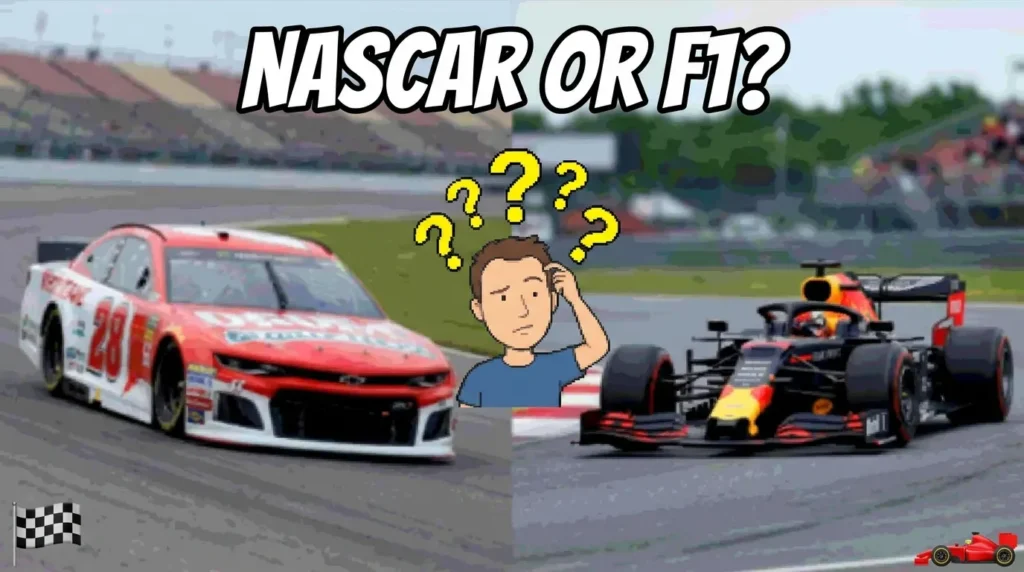
1. Both Are Professional Car Racing
At first glance, both appear similar because they involve fast cars and pit stops.
2. Social Media Highlights
Platforms like Meta and TikTok often show crashes and overtakes without explaining racing differences.
3. Misleading Speed Comparisons
People compare only straight-line speed instead of overall track performance.
4. Modern Streaming Growth
Global streaming services introduced F1 to many NASCAR fans and vice versa, increasing crossover discussions.
How Search Engines Understand “Difference Between NASCAR and F1”
Search engines like Google understand that users searching this keyword usually want:
- speed comparisons
- beginner explanations
- racing rules
- technology differences
- entertainment value
- driver skill analysis
That is why top-ranking articles often include:
- comparison tables
- FAQs
- real examples
- race strategy breakdowns
Modern systems reward content that satisfies both beginners and motorsport enthusiasts together.
Expert Insight: What Motorsport Professionals Usually Say
Professional drivers often respect both series because each requires different abilities.
In practical motorsport analysis:
- F1 rewards precision engineering and technical driving.
- NASCAR rewards consistency, racecraft, and endurance under pressure.
Many former drivers say NASCAR’s close racing is mentally exhausting, while F1’s physical demands and technical precision are unmatched.
This is why comparing them directly is difficult. They are designed for different racing philosophies.
FAQs
Is F1 faster than NASCAR?
Yes. F1 cars are generally faster overall because of advanced aerodynamics and lighter construction.
Which is more dangerous, NASCAR or F1?
Both involve serious risks, but modern safety systems have improved dramatically in both sports.
Why do NASCAR cars look heavier?
They are built for durability and close-contact racing.
Can F1 drivers race in NASCAR?
Some can, but adapting to NASCAR’s driving style is extremely challenging.
Why does NASCAR mostly race on oval tracks?
Oval racing became part of NASCAR’s historical American racing culture.
Which motorsport makes more money?
F1 generally generates larger global revenue and sponsorship value.
Are NASCAR cars street legal?
No. Modern NASCAR cars are purpose-built racing machines.
Why has F1 become more popular globally?
Streaming platforms, social media, and documentaries increased worldwide fan engagement.
Conclusion
Understanding the difference between NASCAR and F1 becomes much easier once you look beyond “cars going fast.” NASCAR focuses on endurance, close-contact racing, drafting, and oval-track strategy. F1 focuses on advanced engineering, aerodynamic precision, global circuits, and technical driving performance.
Neither sport is objectively “better.” They simply reward different skills and racing philosophies.
If you enjoy aggressive pack racing and long battles for position, NASCAR offers unmatched entertainment. If you prefer engineering innovation, technical precision, and international competition, F1 delivers a completely different experience.
In modern motorsport culture, both series continue growing through digital media, streaming, and younger global audiences. Understanding their differences helps fans appreciate why each racing format has millions of loyal supporters around the world.
Read more about!
Difference Between Advil and Aleve: Simple Guide