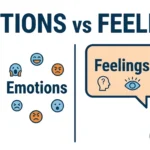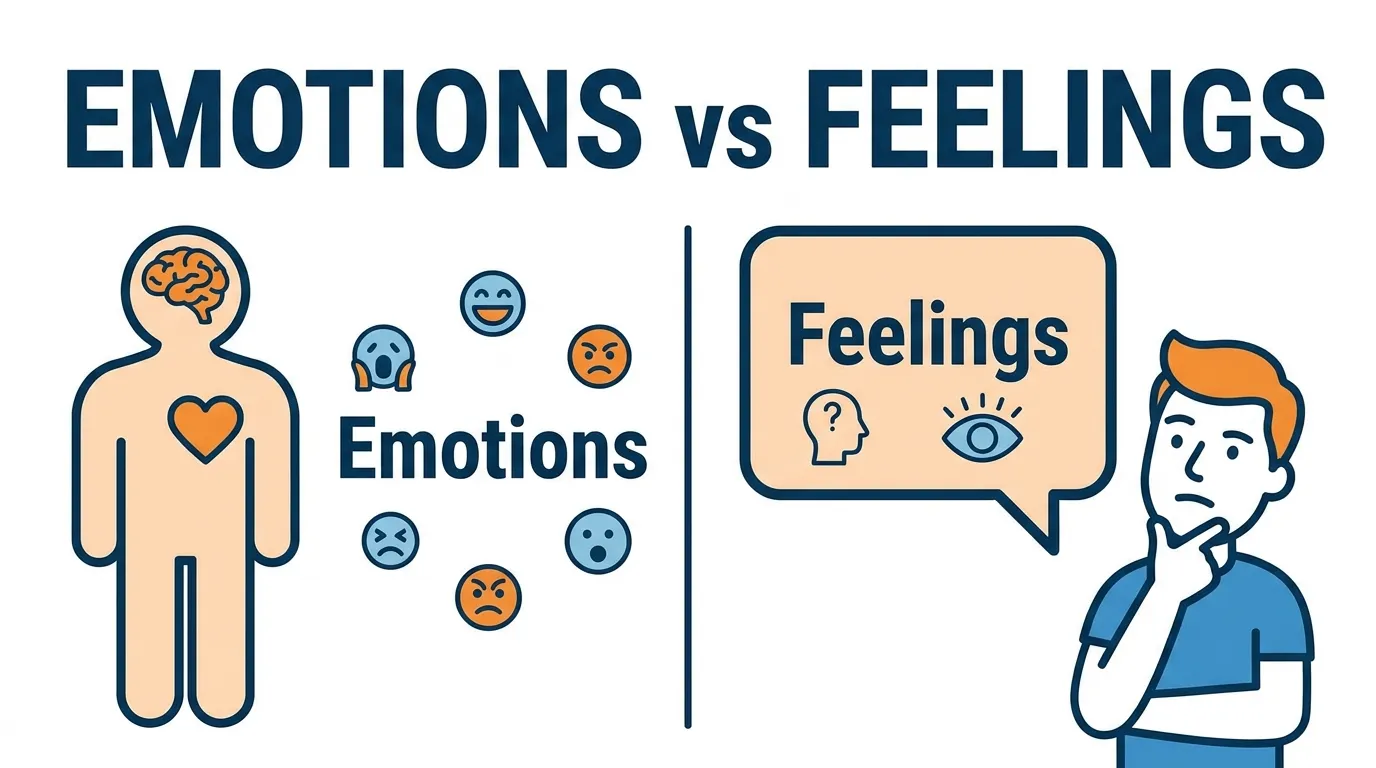
🧠 Emotions are automatic reactions from the body and brain, while feelings are the conscious experiences we create from those emotions. ❤️✨
Many users get confused about the difference between emotions and feelings because the two terms are often used as if they mean the same thing. In reality, emotions and feelings are closely connected, but they are not identical. Understanding the difference between emotions and feelings can help improve self-awareness, communication, decision-making, and emotional intelligence.
In simple words, emotions are automatic responses generated by the brain and body, while feelings are the conscious experiences that arise from those emotional responses. When people search for the difference between emotions and feelings, they usually want to know what each term means, how they work, and why the distinction matters in daily life.
In this guide, you’ll learn definitions, examples, key differences, similarities, real-world applications, expert insights, and practical scenarios all in one place.
Difference Between Emotions and Feelings
Emotions are automatic biological reactions triggered by situations, thoughts, or events, while feelings are the personal mental interpretations of those emotional reactions.
Example: Seeing a snake may trigger fear (emotion). Thinking “I am scared and want to leave” is the feeling that follows.
Definition of Difference Between Emotions and Feelings
- Emotion: An automatic psychological and physiological response to a stimulus, such as fear, anger, happiness, or surprise.
- Feeling: The conscious experience and interpretation of an emotion after the brain processes it.
Example: Fear is an emotion; feeling nervous or unsafe because of that fear is a feeling.
Pronunciation
| Term | US Pronunciation | UK Pronunciation |
| Emotion | ih-MOH-shun | ih-MOH-shun |
| Feeling | FEE-ling | FEE-ling |
Now that we know what each term means, let’s explore how they differ and why understanding both is important.
Difference Between Emotions and Feelings Comparison
| Feature | Emotions | Feelings |
| Definition | Automatic reactions to stimuli | Conscious interpretation of emotions |
| Origin | Brain and body response | Mental processing and awareness |
| Speed | Occur instantly | Develop after emotions |
| Awareness | Often unconscious at first | Fully conscious experience |
| Duration | Usually short-lived | Can last longer |
| Physical Changes | Includes heart rate, sweating, tension | May not include physical changes |
| Control | Difficult to control initially | Easier to manage and regulate |
| Universality | Similar across cultures | Influenced by personal experiences |
| Function | Survival and adaptation | Reflection and meaning-making |
| Example | Fear after seeing danger | Feeling worried about the danger |
Key Differences Explained Between Emotions and Feelings
1. Emotions Are Automatic, Feelings Are Conscious
Emotions happen instantly without deliberate thinking.
Example: You suddenly hear a loud noise and jump.
The feeling comes afterward when you recognize that you felt startled.
2. Emotions Begin in the Body
Emotions often create physical reactions.
Examples include:
- Faster heartbeat
- Sweaty palms
- Muscle tension
- Increased breathing
Feelings are the mental awareness of these reactions.
3. Feelings Last Longer
An emotion may last seconds or minutes.
A feeling can remain for hours, days, or even years depending on personal interpretation.
4. Emotions Are Universal
Research suggests basic emotions such as happiness, sadness, fear, anger, surprise, and disgust are recognized worldwide.
Feelings vary because personal experiences differ.
5. Feelings Depend on Interpretation
Two people may experience the same emotion but develop different feelings.
Example: Before a presentation, both individuals feel anxiety. One interprets it as excitement, while the other interprets it as fear.
6. Emotions Support Survival
Emotions evolved to help humans respond quickly to threats and opportunities.
Feelings help people understand and reflect on those experiences.
7. Emotions Trigger Action
Fear encourages escape.
Anger may encourage confrontation.
Feelings influence how people decide to act afterward.
What Is an Emotion and How Does It Work?
An emotion is the brain’s rapid response system.
When something significant happens, the brain evaluates the situation and triggers a reaction.
Common emotions include:
- Happiness
- Sadness
- Fear
- Anger
- Surprise
- Disgust
These reactions involve multiple systems:
- Nervous system
- Hormonal system
- Brain processing centers
The goal is simple: help humans react quickly.
What Is a Feeling and Why Does It Matter?
A feeling is your personal awareness of an emotional state.
Unlike emotions, feelings involve:
- Reflection
- Memory
- Personal beliefs
- Past experiences
For example:
You receive praise at work.
The emotion may be happiness.
The feeling may become pride, confidence, gratitude, or motivation depending on your interpretation.
This explains why feelings differ significantly between individuals.
Why Understanding the Difference Between Emotions and Feelings Matters
Understanding this distinction can improve:
Emotional Intelligence
Recognizing emotions helps people manage reactions more effectively.
Relationships
Better awareness leads to clearer communication.
Mental Well-Being
People who identify feelings accurately often cope better with stress.
Decision-Making
Separating emotional reactions from long-term feelings can improve judgment.
In real scenarios, many conflicts happen because people misunderstand their feelings and assume they are the emotions themselves.
How the Brain Processes Emotions and Feelings
The process generally follows this sequence:
- Event occurs.
- Brain detects significance.
- Emotion is triggered.
- Physical response appears.
- Conscious awareness develops.
- Feeling is formed.
For example:
- A social media post on platforms like Instagram receives criticism.
- The immediate emotion may be anger.
- After thinking about it, the person may feel hurt, disappointed, or embarrassed.
The emotion came first.
The feeling came afterward.
Difference Between Emotions and Feelings in Daily Life
At Work
A manager receives negative feedback.
- Emotion: Frustration
- Feeling: Discouragement
In Relationships
A partner forgets an anniversary.
- Emotion: Sadness
- Feeling: Feeling unappreciated
In Sports
An athlete wins a championship.
- Emotion: Joy
- Feeling: Pride
On Social Media
Platforms like YouTube,Instagram, and Meta often trigger immediate emotional responses, while feelings develop after reflection and discussion.
Difference and Similarity Generation for Difference Between Emotions and Feelings
| Feature | Emotions | Feelings | Similarity |
| Meaning | Automatic response | Conscious experience | Both relate to human psychology |
| Source | Biological processes | Mental interpretation | Both originate from experiences |
| Awareness | Often unconscious initially | Fully conscious | Both influence behavior |
| Duration | Short-term | Long-term | Both can affect decisions |
| Physical Impact | Strong bodily reactions | Less physical involvement | Both affect well-being |
| Personal Influence | Less personalized | Highly personalized | Both shape perception |
| Function | Immediate adaptation | Reflection and understanding | Both guide responses |
| Everyday Use | Instant reactions | Ongoing emotional experiences | Both are part of emotional life |
Common Mistakes with Difference Between Emotions and Feelings
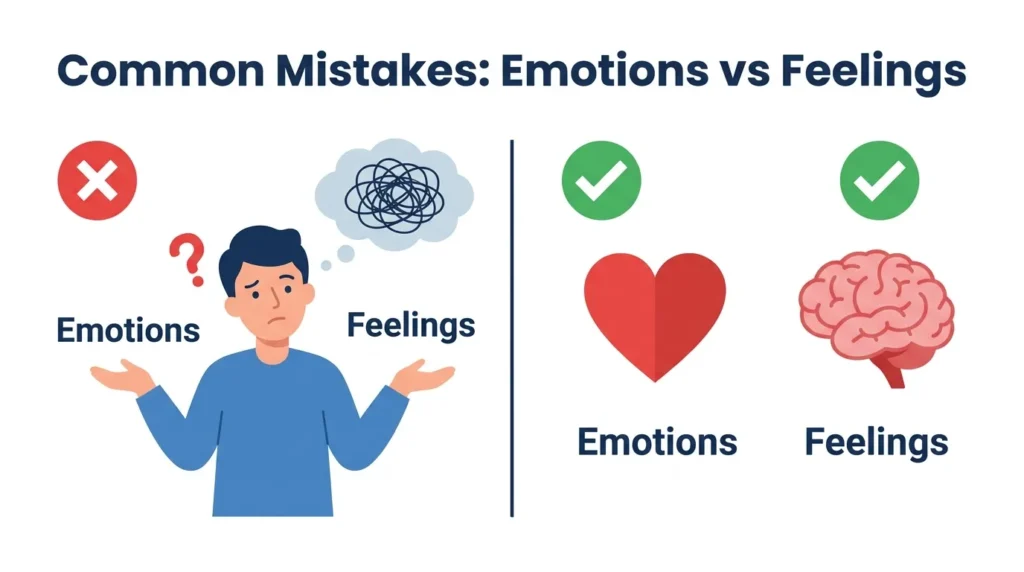
Mistake 1: Using Both Terms Interchangeably
Correction: Emotions and feelings are related but not identical.
Mistake 2: Assuming Feelings Come First
Correction: Emotions generally occur before feelings.
Mistake 3: Ignoring Physical Reactions
Correction: Physical responses are key indicators of emotions.
Mistake 4: Believing Feelings Are Universal
Correction: Feelings vary according to individual experiences.
Mistake 5: Thinking Emotions Last Forever
Correction: Emotions are often temporary; feelings may persist longer.
Mistake 6: Suppressing Emotions Completely
Correction: Understanding emotions is healthier than ignoring them.
Real Life Examples with Difference Between Emotions and Feelings
Example 1: Public Speaking
- Emotion: Anxiety
- Feeling: Fear of failure
For Example 2: Receiving a Promotion
- Emotion: Happiness
- Feeling: Pride and accomplishment
Example 3: Watching a Sad Movie
- Emotion: Sadness
- Feeling: Sympathy for characters
For Example 4: Business Negotiation
- Emotion: Frustration
- Feeling: Concern about outcomes
Example 5: Competitive Sports
- Emotion: Excitement
- Feeling: Confidence
Example 6: Social Media Feedback
- Emotion: Surprise
- Feeling: Validation or disappointment
When to Use Each
Use “Emotion” When:
- Discussing biological reactions
- Studying psychology
- Explaining immediate responses
- Talking about survival instincts
Use “Feeling” When:
- Discussing personal experiences
- Describing emotional awareness
- Reflecting on situations
- Explaining mental states
Why People Get Confused in Difference Between Emotions and Feelings
Several reasons contribute to confusion:
Everyday Language
People commonly use both words interchangeably.
Media Influence
Movies, books, and social media rarely distinguish between them.
Similar Experiences
Feelings arise from emotions, making the two seem inseparable.
Educational Gaps
Many people never receive formal education on emotional psychology.
How Search Engines Understand Difference Between Emotions and Feelings and User Intent
Modern search engines like Google analyze user intent rather than just keywords.
When someone searches:
- What is emotion?
- What is feeling?
- Difference between emotions and feelings
- Emotion vs feeling
Google recognizes comparison intent and informational intent simultaneously.
Search systems prioritize content that:
- Defines both concepts clearly
- Provides examples
- Answers common questions
- Demonstrates expertise
- Covers related psychological topics
This is why comprehensive content generally performs better than short definitions alone.
Expert Insight
From a psychological perspective, emotions act as the body’s rapid alert system, while feelings serve as the mind’s interpretation system.
In practical use, most beginners focus only on feelings because they are easier to notice. However, emotional intelligence experts often recommend identifying the underlying emotion first. Once the emotion is recognized, understanding the resulting feeling becomes much easier.
This distinction is widely used in counseling, leadership development, communication training, education, and workplace psychology because it improves self-awareness and interpersonal understanding.
FAQs
Are emotions and feelings the same thing?
No. Emotions are automatic reactions, while feelings are conscious interpretations of those reactions.
Which comes first, emotions or feelings?
Emotions generally occur first, followed by feelings.
Can you have emotions without feelings?
Emotions can occur automatically before conscious awareness develops.
Why do feelings last longer than emotions?
Feelings involve reflection, memory, and interpretation, which can extend their duration.
What are the basic human emotions?
Common basic emotions include happiness, sadness, fear, anger, surprise, and disgust.
Can two people have the same emotion but different feelings?
Yes. Personal experiences influence how emotions are interpreted.
Why is understanding emotions important?
It improves emotional intelligence, communication, relationships, and decision-making.
Are feelings always accurate?
Not necessarily. Feelings reflect interpretation, which can sometimes be biased or incomplete.
How do psychologists distinguish emotions and feelings?
Psychologists generally describe emotions as automatic responses and feelings as conscious experiences.
What is the simplest difference between emotions and feelings?
Emotions happen automatically; feelings are how you consciously experience those emotions.
Conclusion
Understanding the difference between emotions and feelings is essential for improving emotional awareness and communication. While the two concepts are closely connected, they serve different functions. Emotions are automatic biological responses that help humans react quickly to situations, whereas feelings are the conscious interpretations of those emotional reactions.
In real-life situations, emotions often appear first through physical and psychological changes. Feelings then develop as the mind processes and interprets those experiences. This distinction explains why two people can experience the same emotion yet develop completely different feelings.
If you’re improving emotional intelligence, strengthening relationships, managing stress, or simply learning more about psychology, recognizing the difference between emotions and feelings provides valuable insight into human behavior. The simplest way to remember it is this: emotions are immediate reactions, while feelings are the personal experiences that follow those reactions.
Read more about!
Difference Between King and Queen: Complete Guide
Difference Between LVN and RN: Comparison Guide