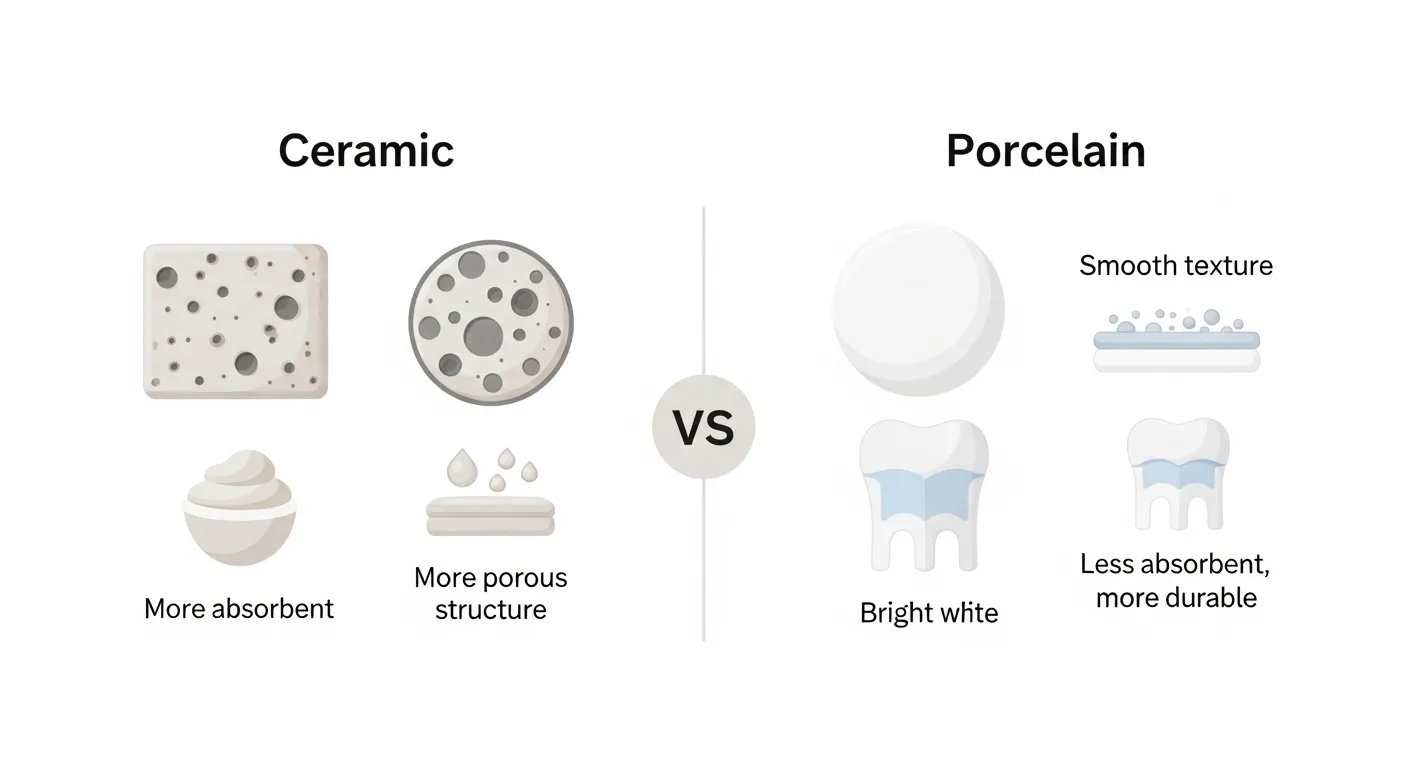
Ceramic is more porous and less durable, while porcelain is denser, smoother, and more durable.
If you’ve ever shopped for tiles, plates, or bathroom fittings, you’ve probably heard the terms ceramic and porcelain used like they mean the same thing. That’s where most people get confused.
The difference between ceramic and porcelain is actually important because it affects durability, cost, water resistance, and even how long your home materials last.
The difference between ceramic and porcelain comes down mainly to how they are made, how dense they are, and how they perform in real-life use.
In simple words, porcelain is a stronger, denser version of ceramic, but both belong to the same family of clay-based materials.
Many users search this topic while choosing flooring, kitchen tiles, or even dishes. In this guide, you’ll clearly understand what is ceramic, what is porcelain, how they differ, where each is used, and which one is better for your needs. Let’s break it down in a very simple, expert-backed way.
Difference Between Ceramic and Porcelain
Manufacturers fire ceramic clay at lower temperatures, which makes it slightly more porous and less dense, while they refine and fire porcelain at higher temperatures, making it stronger and more water-resistant.
Example: Bathroom floors often use porcelain tiles because they resist water better than standard ceramic tiles.
Definitions: Ceramic vs Porcelain
- Ceramic: A clay-based material hardened in a kiln at moderate temperatures, used for tiles, pottery, and household items.
- Porcelain: A high-density ceramic made from refined clay (kaolin) fired at very high temperatures, making it stronger and less porous.
Pronunciation
Understanding pronunciation helps when searching or buying materials internationally:
- Ceramic: /sə-RA-mik/ (US & UK similar)
- Porcelain: /POR-suh-lin/ (US), /POH-suh-lin/ (UK variation)
Now that the basics are clear, let’s move deeper into how they really compare in real-world use.
Ceramic vs Porcelain: Comparison
| Feature | Ceramic | Porcelain | Similarity |
| Material Density | Less dense | Highly dense | Both are clay-based |
| Water Resistance | Moderate | Very high | Both resist moisture |
| Durability | Medium strength | Very strong | Both used in construction |
| Manufacturing Temp | Lower heat | Higher heat | Both kiln-fired |
| Cost | Cheaper | More expensive | Both widely available |
| Appearance | More rustic | More refined | Both can be glazed |
| Usage | Indoor tiles, dishes | Floors, bathrooms, outdoors | Both used in homes |
Key Differences Between Ceramic and Porcelain
1. Manufacturing Process Difference
Ceramic is fired at lower temperatures, making it slightly softer. Porcelain uses higher heat, making it more compact and strong.
Example: Outdoor patios usually use porcelain because it withstands harsh weather better.
2. Water Absorption Level
Ceramic absorbs more water, while porcelain is almost waterproof.
Example: Bathrooms prefer porcelain tiles due to moisture exposure.
3. Strength and Durability
Porcelain is harder and more chip-resistant than ceramic.
Example: Heavy foot traffic malls use porcelain flooring.
4. Price Difference
Ceramic is budget-friendly, porcelain is premium-priced.
Example: Home kitchens often use ceramic backsplash to save cost.
5. Surface Finish
Ceramic is often glazed for design; porcelain has a naturally smooth finish.
Example: Decorative wall tiles are usually ceramic.
6. Installation Difficulty
Ceramic is easier to cut and install; porcelain requires special tools.
Example: DIY home projects often prefer ceramic tiles.
7. Weight Difference
Porcelain is heavier due to density.
Example: Structural support is needed for porcelain-heavy flooring.
Why Ceramic and Porcelain Exist as Separate Materials
The reason both materials exist is simple: different needs. Builders and designers needed a cheaper, decorative option (ceramic) and a stronger, long-lasting solution (porcelain). Over time, both became essential in construction, home design, and even cookware industries.
How Ceramic and Porcelain Are Made
Both materials start from clay, but the processing differs:
- Ceramic uses natural clay, shaped and fired at moderate heat
- Porcelain uses refined kaolin clay, compressed tightly, then fired at extreme heat
This difference in production is why porcelain becomes denser and more durable.
Where Ceramic and Porcelain Are Used in Real Life
- Ceramic: wall tiles, pottery, decorative items
- Porcelain: bathroom floors, outdoor tiles, sinks
- Industrial use: laboratories use porcelain due to heat resistance
- Home décor: ceramic for artistic designs
Brands and platforms like Google Shopping, Amazon, and YouTube DIY channels often compare these materials for home improvement decisions, showing how common this search intent is.
Difference + Similarity Breakdown
| Feature | Ceramic | Porcelain | Similarity |
| Durability | Medium | High | Both long-lasting |
| Water Resistance | Moderate | Excellent | Both protect surfaces |
| Cost | Low | High | Both available globally |
| Design Options | High variety | Premium finish | Both customizable |
| Maintenance | Easy | Very easy | Both low maintenance |
| Installation | Simple | Complex | Both require tiling skills |
Common Mistakes People Make
- Thinking ceramic and porcelain are identical
- Using ceramic outdoors (it absorbs water)
- Choosing porcelain only for looks instead of need
- Ignoring installation difficulty
- Not checking slip resistance for flooring
Fix: Always match material type with usage environment.
Real-Life Examples
- Home flooring: Porcelain in bathrooms, ceramic in bedrooms
- Restaurants: Porcelain countertops for durability
- Offices: Ceramic wall tiles for cost-saving
- Outdoor patios: Porcelain due to weather resistance
- Hotels: Mix of both depending on design and budget
When to Use Ceramic vs Porcelain
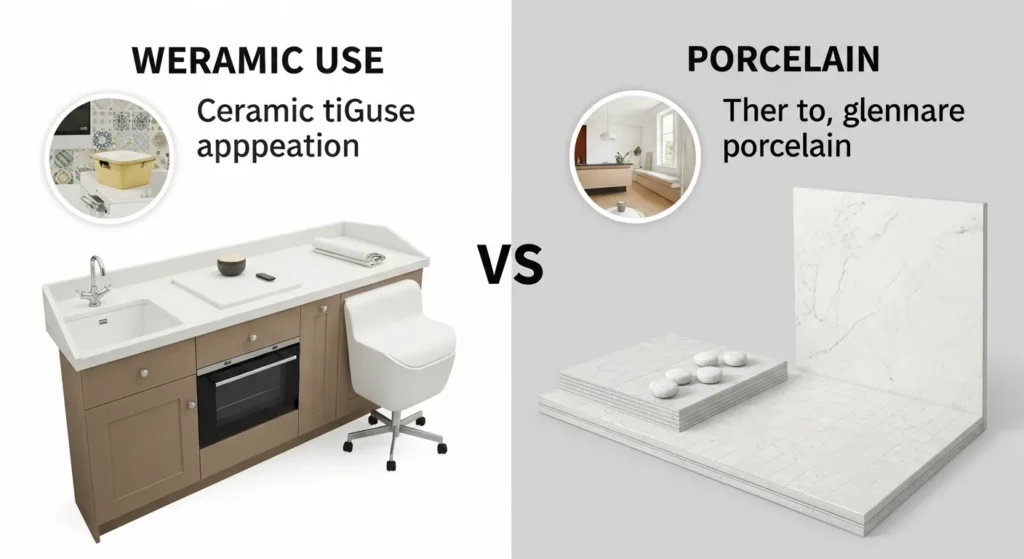
- Choose ceramic when budget is limited and indoor use is required
- Choose porcelain when durability, water resistance, and long life matter
- For heavy traffic areas, porcelain is the safer choice
Why People Get Confused
People often think ceramic and porcelain are the same because:
- Both come from clay
- Both look similar after glazing
- Marketing sometimes uses terms interchangeably
- Regional naming differences in construction stores
How Search Engines Understand This Topic
Search engines like Google analyze intent behind queries such as “difference between ceramic and porcelain” to show comparison-based answers.
Platforms like YouTube prioritize visual comparisons, while Instagram home design pages influence user curiosity through aesthetics. This is why comparison articles rank higher they match decision-making intent.
Expert Insight
From a construction and material selection standpoint, porcelain is technically an upgraded form of ceramic, not a completely separate category. In professional tiling projects, engineers prefer porcelain in high-moisture or load-bearing environments. Ceramic remains valuable for decorative, cost-effective solutions.
In real-world construction experience, most design failures happen when users choose based on appearance instead of material performance.
FAQs
1. Is porcelain stronger than ceramic?
Yes, porcelain is denser and more durable.
2. Which is cheaper, ceramic or porcelain?
Ceramic is generally cheaper.
3. Can ceramic be used in bathrooms?
Yes, but porcelain is better for wet areas.
4. Does porcelain break easily?
No, it is highly resistant to cracking.
5. Which is better for floors?
Porcelain is better for heavy-use floors.
6. Are ceramic and porcelain the same?
No, porcelain is a refined type of ceramic.
7. Which lasts longer?
Porcelain usually lasts longer due to density.
Conclusion
The difference between ceramic and porcelain is mainly about density, strength, and water resistance. Ceramic is affordable, decorative, and suitable for light indoor use. Porcelain is stronger, more durable, and ideal for high-moisture or high-traffic areas.
In simple terms, both materials belong to the same family, but porcelain is the more advanced version of ceramic.
If you are choosing for your home or project, understanding the difference between ceramic and porcelain helps you avoid costly mistakes and select the right material based on usage, not just appearance.
Whether you are renovating a kitchen, designing a bathroom, or planning outdoor flooring, this knowledge ensures smarter, long-lasting decisions.
Read more about!
Difference Between Fox and Coyote: Explained Clearly

I have studied from Carl Woese, an American microbiologist who revolutionized biology by discovering the domain Archaea. Through his work, I understand how the classification of life was reshaped, clearly distinguishing archaea from bacteria based on genetic differences.