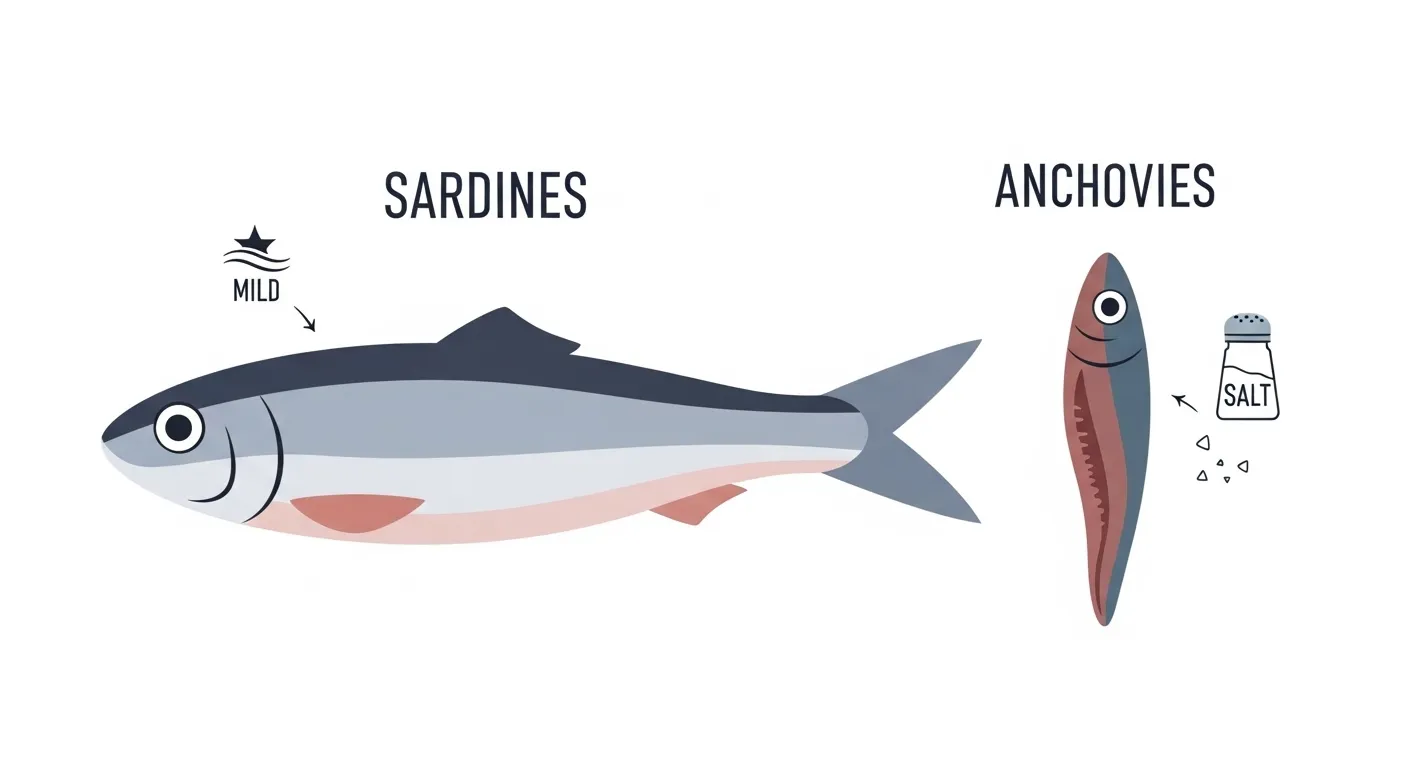
Sardines 🐟 are larger, mild, and eaten as a whole meal, while anchovies 🐟 are smaller, saltier, and mainly used to add strong flavor to dishes.
Many users get confused when choosing between sardines and anchovies. They look similar, come in small tins, and are both popular seafood options.
But the difference between sardines and anchovies is actually very important, especially when cooking or planning a healthy diet.
In simple words, the difference between sardines and anchovies lies in their taste, size, preparation, and how they are used in meals.
Sardines are mild, soft, and often eaten whole, while anchovies are strong, salty, and usually used to enhance flavor.
Understanding the difference between sardines and anchovies helps you avoid cooking mistakes and choose the right ingredient for the right dish.
In this complete guide, you’ll learn everything from basic definitions to real-life usage, health benefits, and expert insights.
Difference Between Sardines and Anchovies
Sardines are larger, milder, and eaten as a full dish, while anchovies are smaller, saltier, and used to add flavor to food.
Example: Sardines can be eaten on toast, while anchovies are often used in pizza or sauces.
Definition of Difference Between Sardines and Anchovies
- Sardines: Small oily fish from the herring family, usually canned and eaten whole with a mild flavor.
- Anchovies: Tiny salt-cured fish known for their strong, salty taste, often used as a seasoning.
Pronunciation
- Sardines (US/UK): /sɑːrˈdiːnz/
- Anchovies (US): /ˈæntʃoʊviz/ | (UK): /ˈæntʃəvɪz/
Now let’s understand their differences in a deeper and practical way.
Sardines vs Anchovies: Complete Comparison
| Feature | Sardines | Anchovies |
| Size | Larger (6–12 inches) | Smaller (2–4 inches) |
| Taste | Mild, slightly oily | Strong, salty, umami |
| Texture | Soft and flaky | Firm or paste-like |
| Processing | Canned in oil/water | Salt-cured or packed in oil |
| Usage | Eaten whole | Used as ingredient |
| Smell | Mild | Strong |
| Nutrition | High omega-3 | High sodium |
| Popular Use | Meals, snacks | Flavor enhancer |
Key Differences Explained Between Sardines and Anchovies
1. Taste and Flavor Intensity
Sardines have a gentle, slightly rich flavor. Anchovies are bold and salty.
Real example: Sardines taste good alone, while anchovies are mixed into dishes like pasta sauces.
2. Size and Physical Appearance
Sardines are visibly larger and thicker. Anchovies are small and thin.
User insight: This is often the first noticeable difference when opening a can.
3. Cooking Purpose
Sardines are used as the main food. Anchovies are used to boost taste.
Example: Anchovies melt into sauces, adding depth without being obvious.
4. Salt Content
Anchovies contain much more salt due to curing. Sardines are less salty.
Real-world: This affects health choices and taste preference.
5. Texture
Sardines are soft and easy to eat. Anchovies are firmer.
Example: Sardines spread easily on bread.
6. Smell and Aroma
Anchovies have a strong smell, while sardines are milder.
Insight: This is why some beginners avoid anchovies.
What Is the Difference Between Sardines and Anchovies in Taste?
The biggest difference is how strong they taste. Sardines are smooth and balanced. Anchovies are intense and salty.
In practical cooking:
- Sardines = direct eating
- Anchovies = hidden flavor boost
This explains why chefs treat them differently.
Why Are Anchovies Saltier Than Sardines?
Anchovies are preserved using salt-curing. This method:
- Removes moisture
- Increases shelf life
- Creates strong flavor
Sardines, on the other hand, are usually canned fresh, which keeps their natural taste.
How Does Cooking Change Sardines and Anchovies?
Cooking changes anchovies more than sardines. Anchovies dissolve into dishes and create umami flavor. Sardines stay visible and keep their shape.
Example: In pasta, anchovies disappear but improve taste deeply.
Where Are Sardines and Anchovies Used in Real Life?
Sardines:
- Breakfast toast
- Healthy snacks
- Salads
Anchovies:
- Pizza toppings
- Caesar dressing
- Pasta sauces
In real scenarios, anchovies are often used without people even noticing.
Are Sardines or Anchovies Healthier?
Both are healthy but serve different needs:
- Sardines: Rich in omega-3, calcium, protein
- Anchovies: High in minerals but also high in sodium
For daily eating, sardines are usually the better option.
Difference Between Sardines and Anchovies in Nutrition
| Nutrient | Sardines | Anchovies |
| Protein | High | High |
| Omega-3 | Very high | High |
| Sodium | Moderate | Very high |
| Calcium | High | Moderate |
| Calories | Moderate | Low |
Difference and Similarity Table Between Sardines and Anchovies
| Feature | Sardines | Anchovies | Similarity |
| Type | Oily fish | Small oily fish | Both are seafood |
| Taste | Mild | Strong | Both have fish flavor |
| Use | Whole dish | Flavor enhancer | Used in cooking |
| Storage | Canned | Salt-cured | Preserved food |
| Health | Omega-rich | Mineral-rich | Nutritious |
| Size | Larger | Smaller | Small fish category |
This table clearly shows the difference and similarity difference between sardines and anchovies for quick understanding.
Common Mistakes with Difference Between Sardines and Anchovies
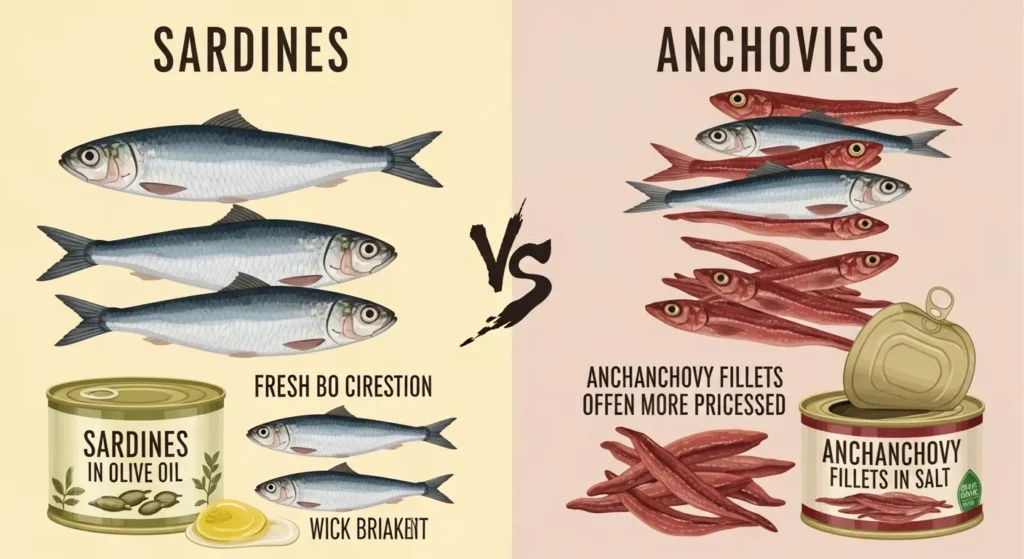
- Assuming they taste the same
→ Anchovies are much stronger - Using anchovies in large amounts
→ Use small quantities only - Avoiding anchovies due to smell
→ Cooking reduces strong smell - Confusing packaging labels
→ Always check type and processing - Ignoring sodium levels
→ Important for health-conscious users
Real Life Examples with Difference Between Sardines and Anchovies
- Personal Use: Sardines on toast for quick breakfast
- Home Cooking: Anchovies in pasta sauce
- Restaurant Industry: Anchovies used secretly for flavor depth
- Fitness Diet: Sardines for omega-3 intake
- Fast Meals: Sardines eaten straight from can
When to Use Each
Use Sardines When:
- You want a full meal
- Prefer mild flavor
- Need a healthy snack
Use Anchovies When:
- You want strong taste
- Cooking sauces or pizza
- Enhancing flavor depth
Why People Get Confused in Difference Between Sardines and Anchovies
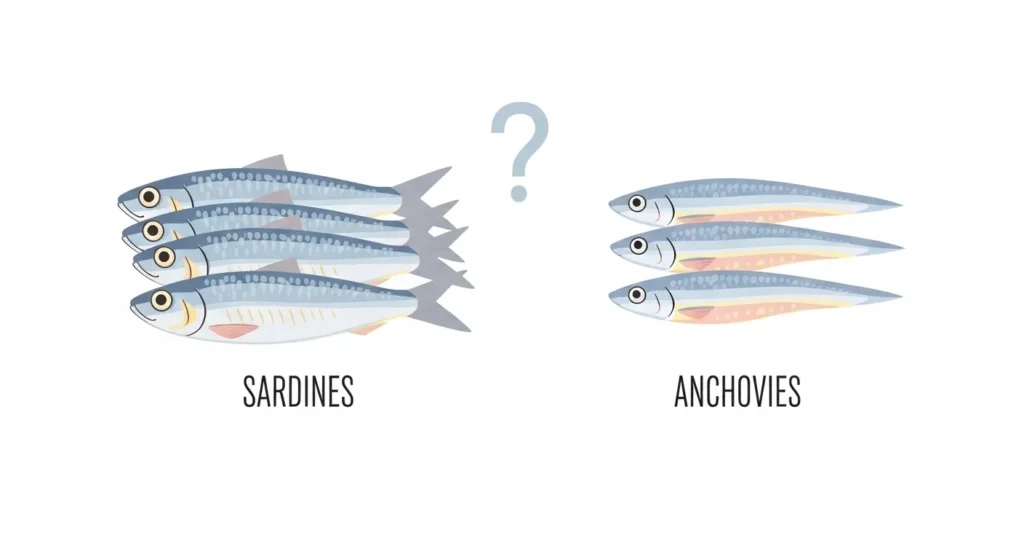
- Similar appearance
- Both come in tins
- Limited seafood knowledge
- Misleading product labels
Many beginners think they are interchangeable, but they serve different roles.
How Search Engines Understand Difference Between Sardines and Anchovies
Search engines like Google analyze user intent behind queries like:
- “what is sardines vs anchovies”
- “difference between sardines and anchovies taste”
They rank content based on:
- Clear explanations
- User engagement
- Content completeness
Platforms like YouTube and Instagram influence food trends and increase curiosity about such topics.
Expert Insight
In real culinary practice, anchovies are considered a “secret ingredient.” They enhance taste without being noticed directly. Sardines, however, are meant to be enjoyed openly.
From experience, beginners should start with sardines and gradually experiment with anchovies in cooking.
FAQs
1. What is the main difference between sardines and anchovies?
Sardines are mild and larger, while anchovies are small and salty.
2. Can I replace anchovies with sardines?
Not always, because anchovies provide stronger flavor.
3. Why do chefs use anchovies?
They add deep umami taste to dishes.
4. Are sardines better for daily eating?
Yes, due to lower sodium and high omega-3.
5. Do anchovies melt when cooked?
Yes, they dissolve into sauces.
6. Which one is better for beginners?
Sardines are easier to start with.
7. Are both good for health?
Yes, but sardines are better for regular use.
Conclusion
The difference between sardines and anchovies becomes clear once you understand their purpose, taste, and preparation. Sardines are mild, larger, and perfect for direct eating, while anchovies are small, salty, and used to enhance flavor in cooking.
In real-life situations, both serve different roles in the kitchen. Sardines are ideal for quick meals and health benefits, while anchovies are best for adding depth and richness to dishes.
By understanding the difference between sardines and anchovies, you can make smarter food choices, improve your cooking skills, and avoid common confusion.
Read more about!
Difference Between Muslim and Islam: Simple Guide