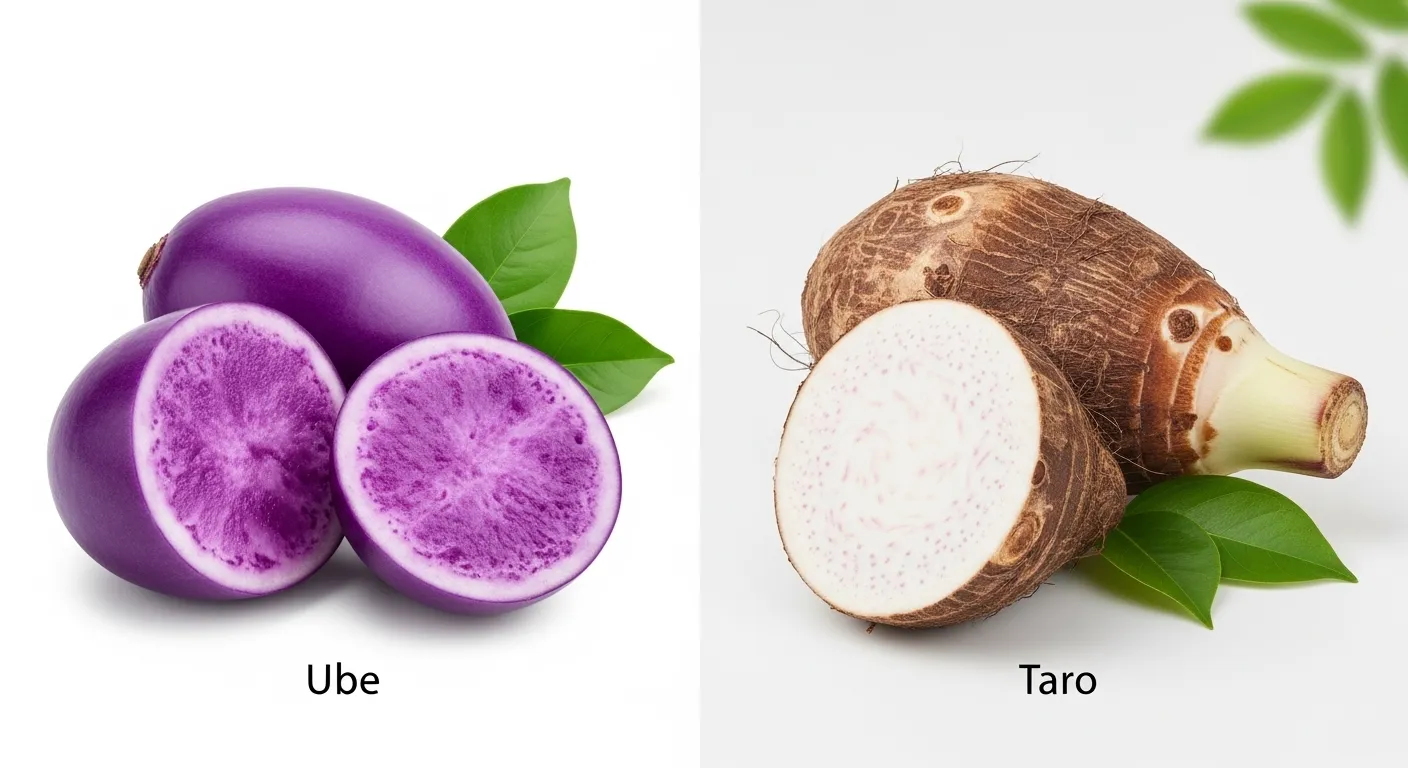
Ube 💜 is bright purple and sweet, while taro 🤍 is pale with speckles and has a more earthy flavor.
Many people confuse purple foods when they see desserts like ice cream, bubble tea, or cakes and wonder about the difference between ube and taro.
At first glance, they look similar because both have a purple shade, but in reality, they come from completely different plants with unique taste, texture, and cultural use.
Understanding the difference between ube and taro helps you choose better ingredients for cooking, baking, or ordering desserts.
In this guide, you’ll clearly understand what each one is, how they taste, why they are often mixed up, and where they are commonly used.
We’ll break down the difference between ube and taro in a simple, human way so you never confuse them again. Let’s make it easy, practical, and real-world useful.
🟢Difference Between Ube and Taro
Ube is a purple yam that is naturally sweeter and often used in desserts like cakes and ice cream.
Taro is a starchy root vegetable with a mild nutty flavor used in both sweet and savory dishes.
👉 Example: Ube is common in ube ice cream, while taro is used in bubble tea and chips.
Definition of Ube and Taro
- Ube: A purple yam native to the Philippines, known for its vibrant violet color and sweet, vanilla-like flavor.
- Taro: A root vegetable grown across Asia and Pacific regions, with a pale purple-white flesh and earthy, slightly nutty taste.
🗣️ Pronunciation
- Ube: /OO-beh/ (same in US & UK)
- Taro: US: /TA-roh/ | UK: /TAH-roh/
Now that we know how to say them correctly, let’s dive deeper into the real difference between ube and taro in practical life.
🟣 Difference Between Ube and Taro
| Feature | Ube | Taro | Similarity |
| Color | Deep purple | Light purple / white | Both can appear purple in food |
| Taste | Sweet, vanilla-like | Mild, earthy, nutty | Both have subtle natural sweetness |
| Texture | Soft and creamy when cooked | Slightly grainy and starchy | Both become soft when cooked |
| Origin | Philippines | Southeast Asia, Pacific | Both are tropical crops |
| Common Use | Desserts, ice cream, cakes | Bubble tea, chips, savory dishes | Both used in food industry |
| Natural Form | Usually grated or mashed | Used whole or sliced | Both require cooking before eating |
This table clearly shows the difference and similarity between ube and taro for quick understanding.
🧠 Key Differences Explained Between Ube and Taro
1. Botanical Family Difference
Ube is a yam, while taro is a root vegetable (corm).
👉 Example: Ube grows like a yam underground, while taro grows as a bulb-like root.
This is a core difference between ube and taro often missed online.
2. Flavor Profile Difference
Ube is naturally sweet and dessert-friendly.
Taro is neutral and adapts to sweet or savory dishes.
👉 Example: Ube milkshake tastes like vanilla dessert; taro milk tea tastes earthy and subtle.
3. Color Misconception
Many users confuse them due to purple color in processed foods.
👉 Example: Purple taro ice cream often uses food coloring, not real taro color.
4. Culinary Use Cases
Ube is mainly used in sweets.
Taro is used in both snacks and meals.
👉 NLP insight: “what is better for dessert ube or taro” is a common search intent.
5. Nutritional Difference
Ube is rich in antioxidants and carbs.
Taro provides fiber and minerals like potassium.
👉 Example: Health-conscious users prefer taro for balanced meals.
6. Texture After Cooking
Ube becomes creamy and smooth.
Taro stays slightly grainy but soft.
👉 This difference matters in baking and food texture design.
🍠 What is Ube?
Ube is a purple yam widely used in Filipino cuisine. It is famous for desserts like ube halaya, cakes, and ice cream. Its natural sweetness makes it ideal for baking and modern café culture promoted on platforms like Instagram and YouTube food trends.
🌱 What is Taro?
Taro is a starchy root vegetable used across Asia, Africa, and Pacific islands. It appears in bubble tea, chips, soups, and even traditional meals. On platforms like Meta food communities, taro is often discussed for its health benefits and versatility.
🧩 Why Ube and Taro Get Confused
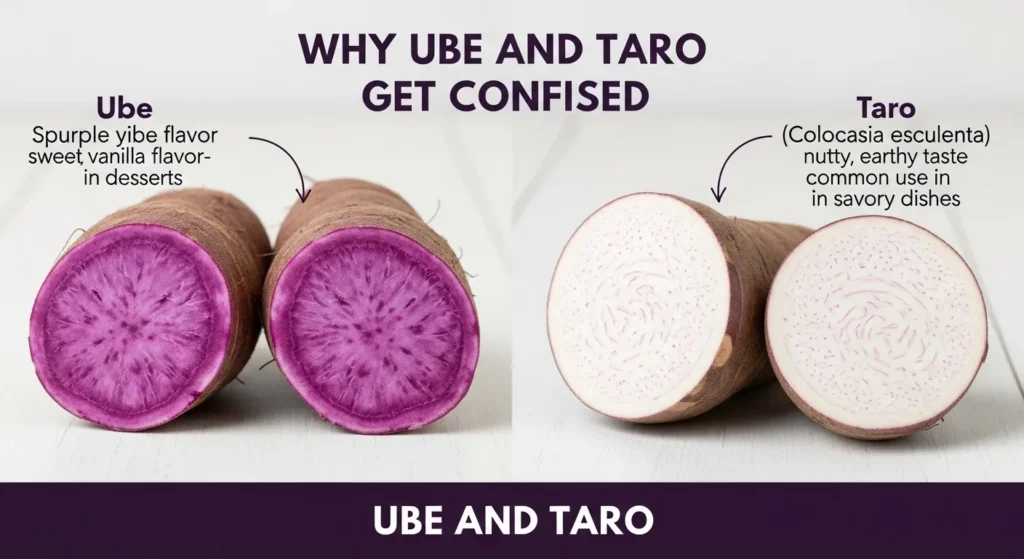
Many users think they are the same because:
- Both appear in purple desserts
- Both are used in bubble tea culture
- Social media filters exaggerate their color
- Cafés label products loosely for marketing
In reality, their biological structure and taste are very different.
🧠 How Search Engines Understand This Topic
Google identifies “ube vs taro” as a comparison intent query. It ranks content that:
- Clearly defines both terms
- Shows table comparison
- Explains culinary use
- Answers “what is difference between ube and taro”
Platforms like YouTube and Instagram also influence this trend through food videos and viral dessert content.
⚠️ Common Mistakes People Make
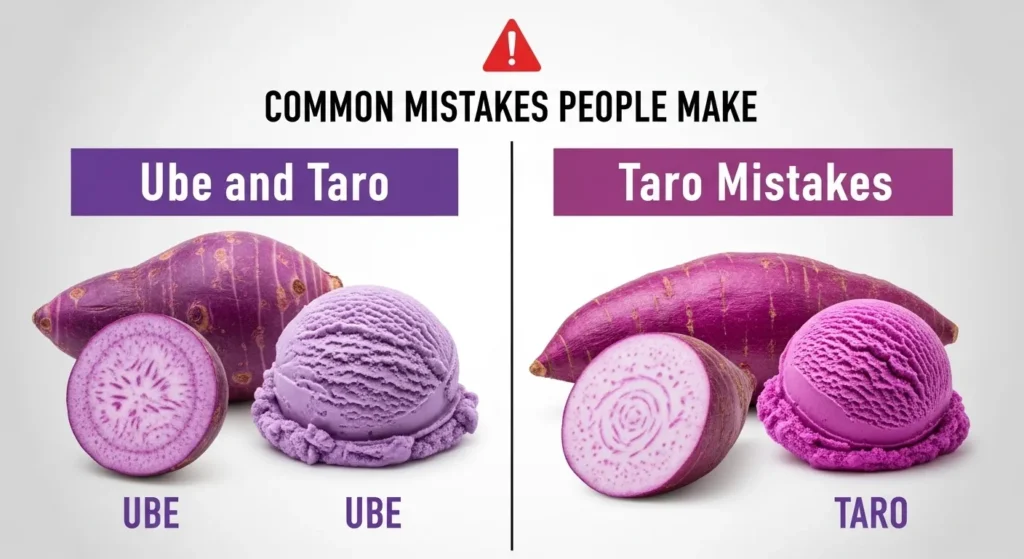
- Thinking taro is purple by nature
- Assuming both taste the same
- Confusing desserts in cafés
- Believing ube and taro are interchangeable
- Not understanding cooking differences
👉 Fix: Always check ingredient origin, not just color.
🍽️ Real-Life Examples
- Bubble tea shops using taro flavoring
- Ube cake trending on Instagram reels
- Vegan recipes using taro as starch base
- Desserts combining both for color effect
- Cafés labeling purple drinks incorrectly
🧭 When to Use Ube vs Taro
- Use ube when making desserts
- Use taro for drinks, snacks, and meals
- Use ube for visual appeal (social media marketing)
- Use taro for nutritional balance
❓ Why People Get Confused
- Similar purple visuals in processed food
- Marketing labels in cafés
- Lack of botanical knowledge
- Influence of TikTok & Instagram food trends
🔍 Expert Insight
As someone analyzing global food trends and nutrition content systems, one clear observation is that ube is becoming a “visual dessert ingredient,” while taro remains a “functional food ingredient.” In real culinary practice, chefs rarely substitute them because texture and flavor behavior differ significantly.
❓ FAQs
1. Is ube the same as taro?
No, ube is a yam while taro is a root vegetable.
2. Why does taro look purple sometimes?
Coloring or processing gives taro a purple appearance.
3. Which is sweeter, ube or taro?
Ube is naturally sweeter.
4. Can I substitute ube for taro?
Not recommended due to texture differences.
5. Is taro healthy?
Yes, it is rich in fiber and minerals.
6. Why is ube popular on Instagram?
Because of its vibrant purple color in desserts.
🧾 Conclusion
The difference between ube and taro is clear once you understand their origin, taste, and usage. Ube is a sweet purple yam mainly used in desserts, while taro is a versatile root vegetable used in both sweet and savory dishes.
Although they often look similar in cafés and social media food trends, their biological structure and flavor profiles are completely different.
In real-world cooking, choosing between them depends on your purpose ube for rich, sweet desserts and visual appeal, taro for balanced flavor and nutritional meals.
Understanding the difference between ube and taro helps you avoid confusion in recipes, ordering food, and even interpreting viral food content online. Once you know this distinction, you’ll never mix them up again.
Read more about!
Difference Between Sheetrock and Drywall: Explained Clearly