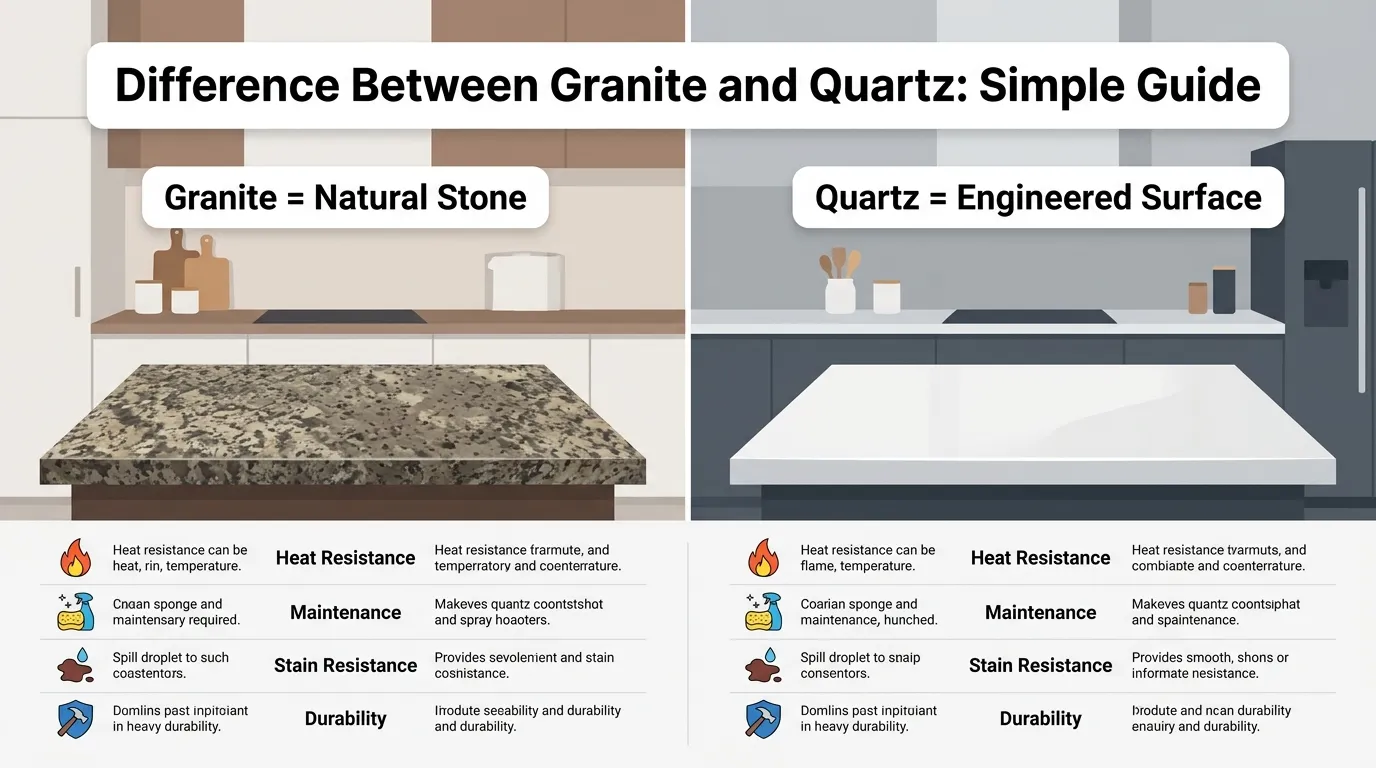
Granite is a natural stone with unique patterns, while ✨ Quartz is an engineered surface that offers easier maintenance and better stain resistance 🏡
Choosing between granite and quartz can feel confusing, especially when both look premium and durable. Many homeowners search for the difference between granite and quartz because the materials seem similar at first glance. But in real-world use, they behave very differently.
In simple words, granite is a natural stone, while quartz is an engineered surface made with crushed quartz minerals and resins. That one difference changes everything appearance, maintenance, durability, stain resistance, and even long-term value.
If you are remodeling a kitchen, upgrading a bathroom, or comparing countertop materials before buying, this guide explains the difference between granite and quartz clearly. You will learn how each material works, where it performs best, which option lasts longer, and why many modern homes in 2026 are shifting toward low-maintenance quartz surfaces.
Difference Between Granite and Quartz
The main difference between granite and quartz is that granite is 100% natural stone, while quartz is engineered using natural quartz particles mixed with resin.
- Granite offers unique natural patterns and high heat resistance.
- Quartz provides better stain resistance and easier maintenance.
Real Example
If you place a hot pan directly on granite, it usually handles the heat well. Quartz, however, may get damaged because of the resin content.
Definition of Granite and Quartz
- Granite: A natural igneous rock formed deep inside the earth. It is cut into slabs and polished for countertops, flooring, and construction use.
- Quartz: An engineered countertop material made from crushed quartz minerals, pigments, and polymer resin for a consistent and durable finish.
Example
Granite slabs have naturally random veining, while quartz surfaces often look more uniform and modern.
Pronunciation
| Term | US Pronunciation | UK Pronunciation |
| Granite | GRAN-it | GRAN-it |
| Quartz | KWORTS | KWORTS |
Now that the basics are clear, let’s understand the deeper differences that actually matter in everyday use.
Granite vs Quartz Comparison
| Feature | Granite | Quartz | Which Is Similar? |
| Material Type | Natural stone | Engineered stone | Both are premium countertop materials |
| Appearance | Unique natural patterns | Consistent modern designs | Both offer luxury aesthetics |
| Maintenance | Needs sealing | Low maintenance | Both require regular cleaning |
| Heat Resistance | Very high | Moderate | Both tolerate normal kitchen use |
| Stain Resistance | Lower if unsealed | Higher due to resin | Both resist minor spills |
| Durability | Extremely durable | Highly durable | Both last many years |
| Price | Varies by rarity | Usually more consistent | Both are premium-priced |
| Eco Impact | Natural extraction required | Manufactured process | Both have environmental considerations |
This table clearly shows the difference and similarity between granite and quartz for quick understanding.
Key Differences Explained Between Granite and Quartz
1. Natural vs Engineered Material
Granite comes directly from quarries. Every slab is naturally formed over millions of years.
Quartz is manufactured in factories using crushed minerals and resin. That means the color and texture can be controlled more precisely.
Real-Life Example
Most luxury villas use granite for a natural earthy look, while modern apartments often prefer quartz for clean aesthetics.
2. Maintenance Requirements
Granite usually needs sealing every 1–2 years because it is porous.
Quartz does not need sealing, making it easier for busy families.
Many users get confused here because both surfaces look polished. But internally, granite absorbs moisture more easily.
3. Heat Resistance
Granite handles high heat better than quartz.
Quartz can discolor or crack under extreme temperatures because resin reacts to heat.
Practical Use
If you cook daily with hot cookware, granite may perform better long term.
4. Design Consistency
Quartz offers predictable patterns and colors.
Granite slabs are naturally unique, meaning no two countertops look exactly the same.
That uniqueness is one reason granite remains popular in luxury architecture.
5. Cost Differences
Rare granite types can become very expensive.
Quartz pricing is often more standardized because manufacturing controls supply.
In practical use, installation complexity can affect both equally.
6. Stain Resistance
Quartz is generally more stain resistant.
Granite can stain from oil, coffee, or wine if not sealed properly.
This matters in family kitchens where spills happen regularly.
7. Resale Value
Both increase home value, but buyer preferences differ by market trends.
In 2026, many urban buyers prefer quartz because of its low maintenance and modern appearance.
Why Do People Compare Granite and Quartz So Often?
The comparison exists because both materials dominate the countertop industry.
Search engines like Google detect strong user intent around:
- countertop durability
- kitchen renovation
- maintenance costs
- luxury home upgrades
On platforms like Instagram and YouTube, interior designers frequently showcase quartz because it photographs well under modern lighting. Granite, however, still attracts buyers who want authentic natural stone aesthetics.
This user behavior shapes search trends and content ranking systems.
Which Is Better: Granite or Quartz?
The answer depends on how you use your space.
Choose Granite If You Want:
- Natural stone beauty
- Better heat resistance
- Unique countertop patterns
- Traditional luxury feel
Choose Quartz If You Want:
- Easy maintenance
- Modern design consistency
- Better stain protection
- Cleaner minimalist aesthetics
In real scenarios, families with children often prefer quartz because cleaning is simpler.
Difference Between Granite and Quartz in Kitchen Use
Granite in Kitchens
Granite performs extremely well in:
- high-temperature cooking
- outdoor kitchens
- heavy daily use
However, sealing is important to prevent stains.
Best For
Serious home cooks and traditional kitchens.
Quartz in Kitchens
Quartz is excellent for:
- modern kitchens
- busy households
- low-maintenance lifestyles
Because quartz is non-porous, bacteria and moisture penetration are reduced.
Best For
Minimalist homes and fast-paced lifestyles.
How Granite and Quartz Are Manufactured
How Granite Is Made
Granite forms naturally through volcanic activity beneath the Earth’s crust. Large blocks are quarried, sliced into slabs, and polished.
This natural formation creates irregular veining and mineral variation.
How Quartz Is Made
Quartz countertops combine:
- crushed quartz minerals
- polymer resin
- pigments
Manufacturers compress the mixture under high pressure to create durable slabs.
This engineering process allows color customization impossible with natural granite.
Common Mistakes With Granite and Quartz
| Mistake | Why It Happens | Correct Approach |
| Assuming both are natural stone | Similar appearance | Quartz is engineered |
| Putting hot pans on quartz | Lack of awareness | Always use trivets |
| Forgetting granite sealing | Maintenance confusion | Seal periodically |
| Using harsh cleaners | Wrong cleaning advice online | Use pH-balanced cleaners |
| Choosing based only on looks | Ignoring functionality | Match material to lifestyle |
Most beginners focus only on appearance. In practical use, maintenance matters much more over time.
Real-Life Examples With Granite and Quartz
1. Family Kitchen
A family with children often prefers quartz because juice, sauces, and spills clean easily.
2. Luxury Villa
Granite is commonly used in luxury homes where natural stone patterns become part of the interior design.
3. Commercial Office Pantry
Quartz is preferred because businesses want low-maintenance surfaces with modern aesthetics.
4. Outdoor BBQ Area
Granite works better outdoors because sunlight and heat affect quartz resin over time.
5. Interior Design Studio
Many designers use quartz samples for consistent branding and color matching across projects.
When to Use Granite vs Quartz
| Situation | Better Choice |
| Outdoor kitchen | Granite |
| Luxury natural appearance | Granite |
| Busy modern family | Quartz |
| Low maintenance priority | Quartz |
| Heavy heat exposure | Granite |
| Contemporary interiors | Quartz |
This decision becomes easier when you focus on lifestyle instead of trends.
Why People Get Confused Between Granite and Quartz
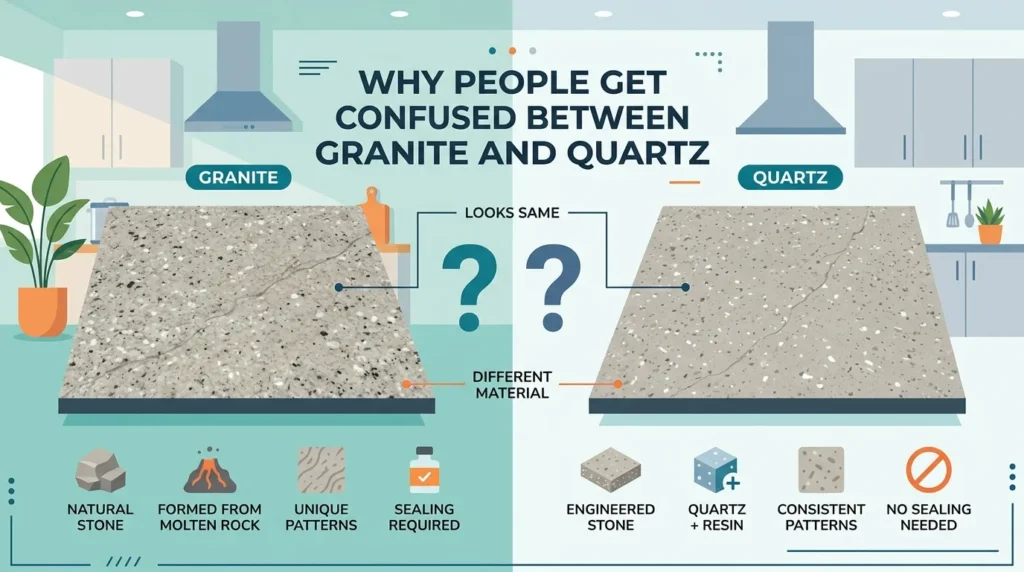
Several factors create confusion:
1. Similar Visual Appearance
Modern quartz designs imitate natural granite patterns very closely.
2. Marketing Language
Many countertop brands advertise quartz as “natural quartz stone,” which sounds similar to granite.
3. Social Media Influence
Platforms like Meta, Instagram, and Pinterest often use edited lighting that makes surfaces appear identical.
4. Lack of Material Knowledge
Most homeowners compare colors before understanding durability or maintenance.
How Search Engines Understand “Difference Between Granite and Quartz”
Search engines analyze user intent using semantic and NLP systems.
For this query, systems recognize users may want:
- buying advice
- countertop comparisons
- maintenance guidance
- renovation help
- cost analysis
That is why top-ranking content usually includes:
- comparison tables
- FAQs
- practical examples
- decision-based recommendations
Modern ranking systems reward content that solves the full problem instead of just defining terms.
Expert Insight: What Professionals Usually Recommend
Interior designers and countertop installers often recommend quartz for convenience and granite for authenticity.
In practical use:
- Quartz reduces maintenance headaches.
- Granite delivers unmatched natural character.
Most experienced contractors suggest matching the countertop to your lifestyle rather than blindly following trends.
For example:
- A rental property may benefit more from quartz.
- A custom luxury home may benefit more from granite.
That practical distinction matters more than online hype.
FAQs
Is granite better than quartz?
Granite is better for heat resistance and natural beauty, while quartz is better for low maintenance and stain resistance.
Which lasts longer, granite or quartz?
Both can last decades when maintained properly.
Does quartz crack easier than granite?
Quartz can crack under extreme heat, while granite handles heat better naturally.
Which countertop is easier to clean?
Quartz is easier because it is non-porous and does not require sealing.
Is granite more expensive than quartz?
Rare granite types can cost more, but pricing depends on design, thickness, and installation.
Can granite stain easily?
Yes, unsealed granite can absorb liquids and stains.
Why do modern homes use quartz more often?
Quartz matches modern interior trends and requires less maintenance.
Which is better for outdoor kitchens?
Granite performs better outdoors because sunlight can damage quartz resin.
Conclusion
Understanding the difference between granite and quartz becomes much easier once you focus on how each material behaves in real life. Granite is a natural stone known for heat resistance, unique patterns, and classic luxury appeal. Quartz, on the other hand, is engineered for consistency, easier maintenance, and better stain resistance.
There is no universal “best” option. The right choice depends on your lifestyle, cooking habits, cleaning preferences, and design goals.
If you want a natural, one-of-a-kind countertop with strong heat durability, granite is an excellent choice. If you prefer modern aesthetics and low-maintenance convenience, quartz may fit better.
Most importantly, avoid choosing based only on appearance. In daily use, factors like sealing, heat exposure, and maintenance often matter more than color alone.
For homeowners planning renovations in 2026 and beyond, both materials remain top-tier countertop solutions. The smartest decision is choosing the surface that matches your real-world needs rather than temporary design trends.
Read more about!
Difference Between JPG and PNG: Simple Guide