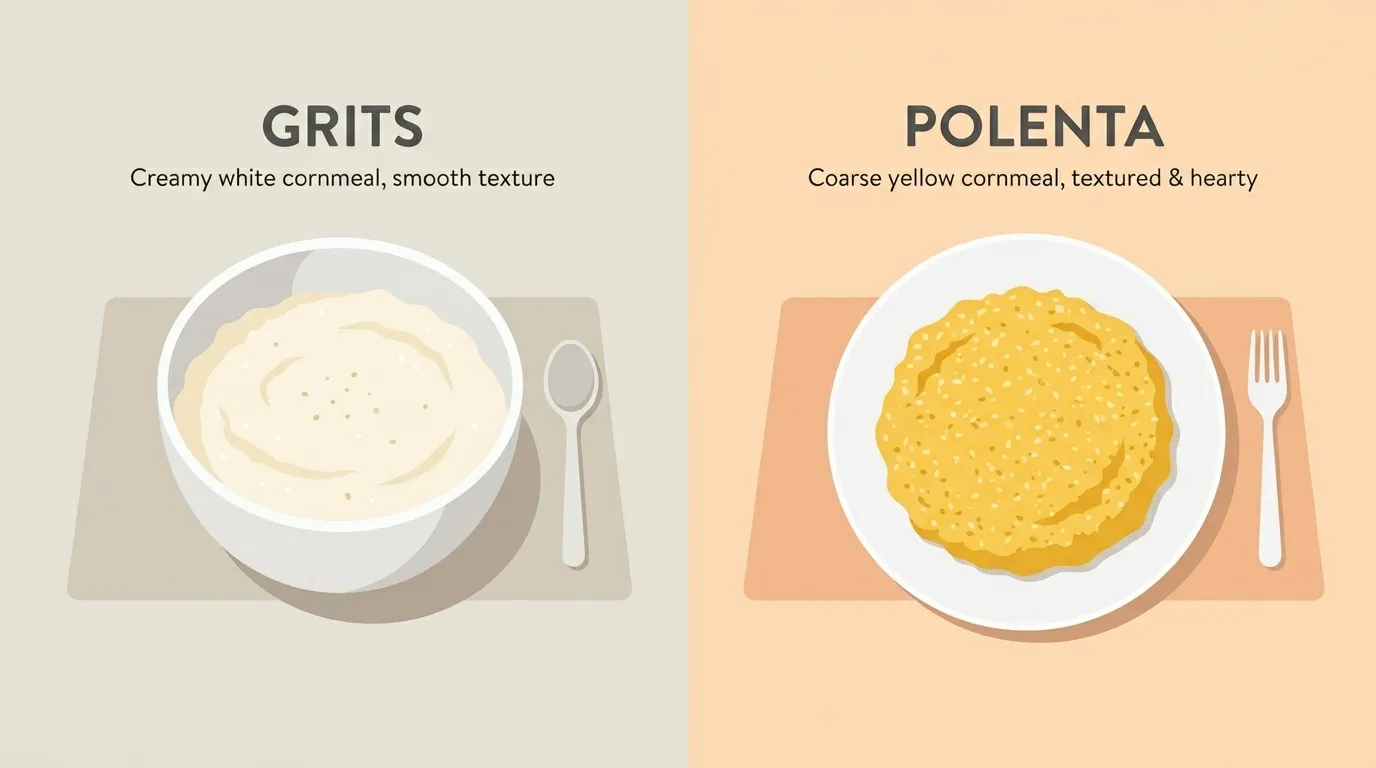
🍚 Grits are creamy Southern corn dishes, while polenta is a firmer Italian cornmeal dish with a richer corn flavor.
Many people get confused about the difference between grits and polenta because both dishes look similar, use ground corn, and are served hot and creamy. In simple words, they are close cousins but they are not exactly the same. The difference between grits and polenta mainly comes from the type of corn used, texture, flavor, and regional cooking traditions.
If you have ever searched “are grits and polenta the same?” or “can I substitute grits for polenta?”, you are not alone. Home cooks, food bloggers, and even restaurant menus often mix these two dishes together. That confusion is exactly why people search for the difference between grits and polenta on Google and YouTube every day.
In this guide, you will learn:
- What grits and polenta really are
- Their key differences and similarities
- Which one tastes better for certain recipes
- When to use each
- Common mistakes beginners make
- How search engines like Google understand this topic and user intent
By the end, you will not need another article.
Difference Between Grits and Polenta
The main difference between grits and polenta is the type of corn and texture.
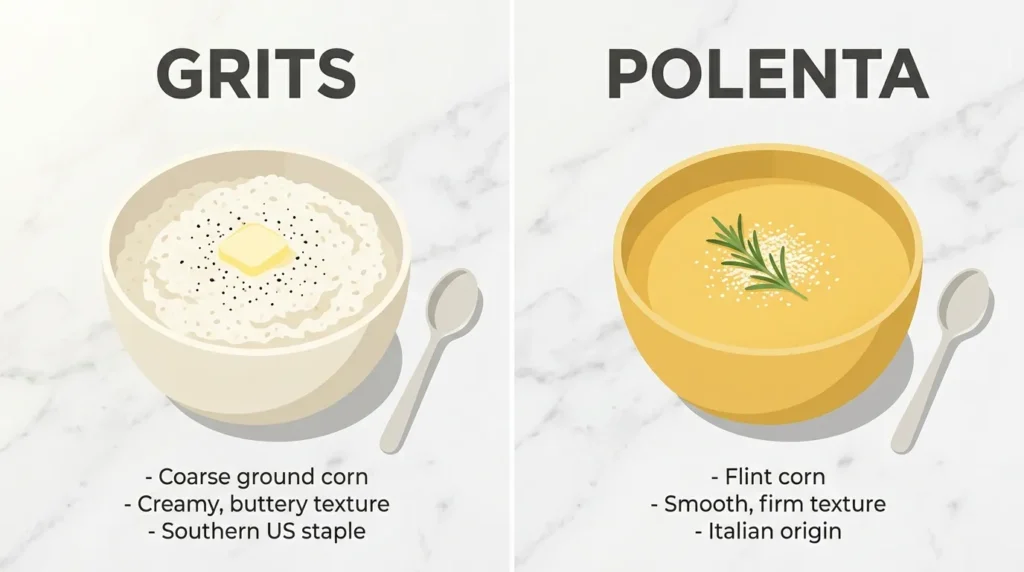
- Grits are usually made from white dent corn and are popular in the Southern United States. They taste softer and creamier.
- Polenta is made from yellow flint corn and comes from Italy. It has a firmer texture and a richer corn flavor.
Example:
A bowl of buttery shrimp and grits feels smooth and creamy, while grilled polenta slices feel firm and slightly chewy.
Definition of Difference Between Grits and Polenta
- Grits: A Southern American dish made from ground white corn, usually cooked into a creamy porridge.
- Polenta: An Italian cornmeal dish made from yellow corn that can be creamy or allowed to firm up for slicing.
Simple example:
- Breakfast bowl = often grits
- Italian side dish = usually polenta
Pronunciation
- Grits
- US: “grits”
- UK: “grits”
- Polenta
- US: puh-LEN-tuh
- UK: poh-LEN-tuh
Now that the definitions are clear, let’s understand why these two foods are constantly compared online and in real kitchens.
Difference Between Grits and Polenta
| Feature | Grits | Polenta | Similarity |
| Main Corn Type | Usually white dent corn | Usually yellow flint corn | Both use ground corn |
| Origin | Southern United States | Italy | Traditional comfort foods |
| Texture | Creamy and soft | Firm and slightly coarse | Both can be creamy |
| Color | White or pale yellow | Bright yellow | Corn-based appearance |
| Flavor | Mild and buttery | Stronger corn flavor | Warm and savory |
| Cooking Style | Often breakfast or shrimp dishes | Served grilled, baked, or creamy | Both work as side dishes |
| Common Pairings | Cheese, butter, shrimp | Meat sauces, mushrooms, cheese | Flexible ingredients |
| Consistency | Usually spoonable | Can become sliceable | Both absorb flavors well |
Key Differences Explained Between Difference Between Grits and Polenta
1. The Type of Corn Changes Everything
Grits are traditionally made from dent corn, while polenta uses flint corn. Dent corn is softer, so grits become creamy faster. Flint corn stays firmer after cooking.
In real cooking scenarios, this changes mouthfeel completely.
2. Regional Identity Matters
Grits are deeply connected to Southern American cooking. Polenta belongs to Italian cuisine.
Many users searching on Google ask:
- “Is polenta Italian grits?”
- “Are grits American polenta?”
The answer is partly yes, but culturally they developed differently.
3. Texture Is One of the Biggest Differences
Most beginners notice texture first.
- Grits = smoother
- Polenta = coarser and thicker
Restaurants often use this texture difference to match specific dishes.
4. Flavor Profile Is Different
Polenta usually has a stronger corn taste because flint corn is more robust.
Grits are milder, making them perfect for butter, cheese, and seafood recipes.
5. Cooking Methods Vary
Polenta is often cooled and sliced later. Grits are mostly eaten hot and creamy.
This is why chefs choose polenta for grilling and frying.
6. Color Creates Confusion
People assume yellow grits are polenta. That is not always true.
Some grits can also be yellow depending on processing.
7. Cultural Expectations Change Usage
In the United States, grits are comfort breakfast food. In Italy, polenta may replace pasta or bread.
That regional expectation shapes recipe choices online and on platforms like YouTube and Instagram.
What Is the Real Difference Between Grits and Polenta in Cooking?
In practical use, the difference becomes obvious during preparation.
Grits in Cooking
Grits absorb butter, milk, and cheese beautifully. Southern chefs often pair them with:
- Shrimp
- Bacon
- Eggs
- Sausage
The creamy texture creates comfort food.
Polenta in Cooking
Polenta works well for:
- Grilled slices
- Baked dishes
- Mushroom sauces
- Italian stews
Its firmer structure makes it more versatile for plating.
Can You Substitute Grits for Polenta?
Yes, but results change slightly.
When Grits Work as a Substitute
- Creamy dishes
- Soups
- Soft side dishes
When Polenta Works Better
- Grilled recipes
- Firm slices
- Baked casseroles
Most beginners can substitute one for the other in home cooking, but texture lovers will notice the difference immediately.
Why Does the Difference Between Grits and Polenta Exist?
This difference exists because of:
- Agricultural history
- Regional corn varieties
- Traditional cooking methods
- Cultural preferences
Italy historically used flint corn because it survived certain climates better. Southern American regions developed dent corn farming, leading to softer grits.
Food history shapes flavor more than many people realize.
Difference Between Grits and Polenta Nutrition Comparison
| Nutrition Factor | Grits | Polenta |
| Calories | Similar | Similar |
| Fiber | Moderate | Moderate |
| Protein | Low to moderate | Low to moderate |
| Gluten-Free | Usually yes | Usually yes |
| Fullness | Medium | Medium to high |
Both are naturally gluten-free unless processed in facilities with wheat contamination.
Health-conscious users searching on Google often compare:
- “Is polenta healthier than grits?”
- “Are grits bad for you?”
The truth depends more on toppings than the corn itself.
Butter, cheese, cream, and sauces affect calories more than the base grain.
Difference Between Grits and Polenta Taste
Taste is where personal preference becomes important.
Grits Taste
- Mild
- Creamy
- Buttery
- Comforting
Polenta Taste
- Earthier
- Strong corn flavor
- Slightly nutty
- Richer texture
Many chefs describe polenta as more rustic.
Why People Get Confused in Difference Between Grits and Polenta
1. Both Are Made From Corn
The visual similarity causes immediate confusion.
2. Restaurants Use Terms Loosely
Some menus use “polenta” because it sounds upscale.
3. Social Media Simplifies Food Terms
Platforms like Instagram and YouTube often label dishes incorrectly for engagement.
4. Grocery Packaging Creates Confusion
Many cornmeal products overlap in texture.
5. Recipes Online Mix Them Together
Bloggers sometimes substitute one without explaining texture differences.
Common Mistakes with Difference Between Grits and Polenta
| Mistake | Why It Happens | Fix |
| Assuming they are identical | Both use corn | Understand texture differences |
| Overcooking polenta | Beginners expect grits texture | Cook until slightly firm |
| Using instant products | Convenience products differ | Use stone-ground versions |
| Ignoring corn type | Packaging confusion | Check ingredient labels |
| Using wrong consistency | Recipe mismatch | Match texture to dish |
| Adding too much liquid | Corn absorbs slowly | Add liquid gradually |
Real Life Examples with Difference Between Grits and Polenta
1. Southern Breakfast
A restaurant serves creamy cheddar grits with eggs and bacon.
2. Italian Dinner
A chef plates grilled polenta with mushroom ragù.
3. Home Cooking
A beginner swaps grits for polenta in a casserole and notices softer texture.
4. Restaurant Menu Marketing
Upscale restaurants often label dishes as “polenta” for Italian branding.
5. Food Content Creators
YouTube cooking channels compare both dishes to attract search traffic.
When to Use Each
Use Grits When:
- You want creamy comfort food
- Making shrimp and grits
- Serving breakfast dishes
- You prefer softer texture
Use Polenta When:
- You want firm slices
- Grilling or baking
- Making Italian-style meals
- You enjoy stronger corn flavor
In practical cooking, texture goals matter more than strict labels.
Difference Between Grits and Polenta: Which Is Better?
Neither is universally better.
Choose Grits If:
- You love creamy Southern food
- You want quick comfort meals
- You enjoy buttery flavors
Choose Polenta If:
- You want versatility
- You prefer firmer texture
- You enjoy rustic Italian dishes
Most professional chefs keep both available because they serve different purposes.
How Search Engines Understand Difference Between Grits and Polenta and User Intent
Google’s modern ranking systems focus heavily on:
- Search intent
- Semantic meaning
- User satisfaction
- Entity relationships
When users search:
- “difference between grits and polenta”
- “grits vs polenta”
- “are grits the same as polenta”
Google understands this as a comparison-intent query.
Platforms like YouTube and Instagram also categorize these topics under:
- Food education
- Recipe content
- Culinary comparisons
Google’s Helpful Content System prefers articles that:
- Explain clearly
- Use real-world examples
- Cover beginner questions
- Include comparisons and tables
That is why complete topic coverage matters today more than keyword repetition.
Expert Insight
In professional kitchens, chefs usually select grits or polenta based on texture goals rather than strict tradition.
For example:
- Fine dining chefs often choose polenta because it plates beautifully.
- Southern comfort restaurants prefer grits for creamy consistency.
Most beginners focus only on ingredients, but experienced cooks know texture and cooking behavior matter more.
In real scenarios, stone-ground products usually deliver the best flavor because less processing preserves the corn’s natural taste.
Are Stone-Ground Grits Better Than Instant Grits?
Usually, yes.
Stone-ground grits:
- Have better texture
- Keep more corn flavor
- Taste less processed
Instant grits cook faster but often lose depth and richness.
The same idea applies to traditional polenta.
How Texture Changes the Entire Dish
Texture affects:
- Mouthfeel
- Sauce absorption
- Flavor intensity
- Restaurant presentation
This is why chefs obsess over grinding methods.
A creamy shrimp dish may fail with firm polenta, while grilled meat may pair better with structured polenta than soft grits.
Difference Between Grits and Polenta in Modern Food Trends
In 2026, food trends on social media continue blending global comfort foods.
Current trends include:
- Truffle polenta bowls
- Vegan cheesy grits
- Air-fried polenta fries
- Protein-rich breakfast grits
Food creators on YouTube and Instagram often adapt these traditional dishes for:
- Fitness meal prep
- Gluten-free diets
- Restaurant-style home cooking
This modern crossover increases search demand for comparison topics.
FAQs
Are grits and polenta the same thing?
No. They are similar corn-based dishes but use different corn types and textures.
Can I replace polenta with grits?
Yes, in many recipes. However, texture and flavor may change slightly.
Which tastes better, grits or polenta?
It depends on preference. Grits are creamier, while polenta has stronger corn flavor.
Are grits healthier than polenta?
Nutritionally, they are very similar. Toppings affect health value more.
Why is polenta yellow and grits white?
Polenta usually uses yellow flint corn, while grits often use white dent corn.
Can polenta be eaten for breakfast?
Yes. It can be served creamy with butter, milk, or eggs.
Why do restaurants call grits polenta?
Sometimes for branding, menu style, or Italian presentation.
Is polenta gluten-free?
Yes, pure polenta is naturally gluten-free.
What is the texture difference between grits and polenta?
Grits are softer and creamier. Polenta is firmer and slightly coarse.
Which cooks faster?
Instant versions cook quickly, but traditional stone-ground products take longer.
Conclusion
Understanding the difference between grits and polenta becomes much easier once you focus on three things: corn type, texture, and cultural origin. Grits are softer, creamier, and strongly connected to Southern American cooking. Polenta is firmer, richer in corn flavor, and rooted in Italian cuisine.
Many users searching “difference between grits and polenta” simply want to know whether they can substitute one for the other. In most home recipes, the answer is yes. But texture and cooking style still matter. Creamy breakfast dishes usually work better with grits, while grilled or baked recipes often benefit from polenta.
In real-world cooking, neither is better universally. Each serves a different purpose. Experienced cooks choose based on the final dish, not just the ingredient label.
The biggest takeaway is simple:
- Choose grits for comfort and creaminess
- Choose polenta for structure and bold corn flavor
Once you understand that core idea, the confusion disappears completely.
Read more about!
Difference Between Granite and Quartz: Simple Guide

I have studied from Carl Woese, an American microbiologist who revolutionized biology by discovering the domain Archaea. Through his work, I understand how the classification of life was reshaped, clearly distinguishing archaea from bacteria based on genetic differences.