🥩 Tallow comes from beef fat and is best for frying, while 🐷 lard comes from pork fat and works great for baking and soft pastries.
Many people search for the difference between tallow and lard because both are traditional cooking fats that look similar but work differently in real cooking.
Some use them for frying, while others prefer them for baking, skincare, or even keto diets. The confusion usually starts when recipes mention animal fat without explaining which one is best.
In simple words, the difference between tallow and lard comes down to the animal source, flavor, texture, nutrition, and cooking purpose.
Tallow comes mainly from beef fat, while lard comes from pork fat. Both have been used for centuries, but modern interest in ancestral eating, carnivore diets, and natural cooking oils has made them popular again in 2026.
In this guide, you will learn:
- what tallow and lard are
- how they differ
- which one is healthier
- when to use each
- cooking, baking, and frying differences
- why Google users often confuse them
This article is designed to fully explain the difference between tallow and lard in a practical and beginner-friendly way.
Difference Between Tallow and Lard
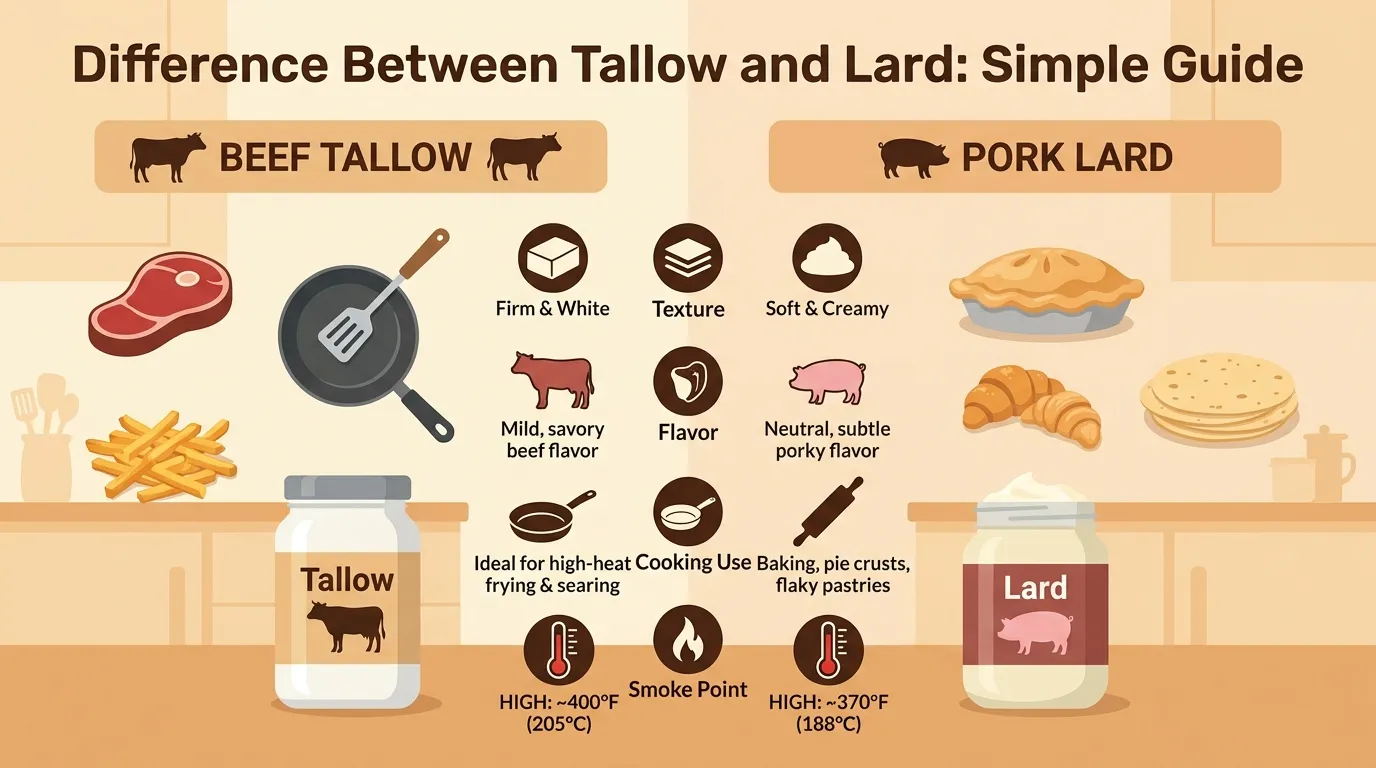
Tallow is rendered beef fat, while lard is rendered pork fat. Tallow has a firmer texture and beefy flavor, making it ideal for frying and high-heat cooking. Lard is softer and milder, which makes it popular in baking and pastries.
For example:
- French fries cooked in beef tallow taste richer and crispier.
- Pie crusts made with lard usually become softer and flakier.
Definition of Difference Between Tallow and Lard
- Tallow: A rendered fat mainly made from beef or mutton fat. It becomes solid at room temperature and is commonly used for frying, roasting, soap-making, and traditional cooking.
- Lard: A rendered fat made from pork fat. It has a softer texture and lighter flavor, making it common in baking, tortillas, pastries, and cooking.
Simple Example
A steakhouse may use tallow for deep frying fries, while a bakery may use lard to create flaky pie crusts.
Pronunciation
- Tallow
- US: “TAL-oh”
- UK: “TAL-oh”
- Lard
- US: “LARD”
- UK: “LARD”
Now that the basic meaning is clear, let’s understand the real-world difference between tallow and lard in cooking, nutrition, and modern food culture.
Difference Between Tallow and Lard Comparison
| Feature | Tallow | Lard | Similarity |
| Source | Made from beef fat | Made from pork fat | Both are animal fats |
| Texture | Harder and waxy | Softer and creamy | Both solidify at room temperature |
| Flavor | Rich beef flavor | Mild pork flavor | Both add richness to food |
| Best Use | Frying and roasting | Baking and pastries | Both used in cooking |
| Smoke Point | Higher smoke point | Slightly lower smoke point | Both handle heat well |
| Nutrition | More saturated fat | More monounsaturated fat | Both contain vitamins |
| Popular Diets | Carnivore, keto | Traditional baking diets | Both used in low-carb eating |
| Shelf Life | Usually longer | Slightly shorter | Both store well when sealed |
This table clearly shows the difference and similarity between difference between tallow and lard for quick understanding.
Key Differences Explained Between Tallow and Lard
1. Animal Source Matters
Tallow comes from cows or sheep, while lard comes from pigs. This affects taste, texture, and even cultural food preferences.
2. Flavor Profile Is Different
Tallow has a stronger savory flavor. Many users describe it as “meaty” or “beefy.” Lard is lighter and less noticeable in baked goods.
3. Cooking Performance Changes
Tallow performs better in high-heat frying because of its higher smoke point. Lard is preferred for flaky pastries.
4. Texture Affects Recipes
Lard creates soft dough and tender crusts. Tallow is firmer, so it works better for crispy foods.
5. Nutritional Makeup Varies
Tallow generally contains more saturated fat. Lard contains more monounsaturated fats, similar to olive oil.
6. Traditional vs Modern Usage
Historically, both were common before seed oils became popular. Today, many keto and carnivore communities on platforms like Google, YouTube, and Instagram discuss using animal fats again for natural cooking.
7. Smell and Aroma
Tallow smells richer during cooking. Lard has a milder aroma, especially when refined.
What Is Tallow Used For?
Cooking and Frying
Tallow is famous for:
- deep frying
- steak searing
- roasted vegetables
- crispy potatoes
In real restaurant scenarios, beef tallow gives fries a richer taste compared to vegetable oil.
Soap and Candle Making
Many natural skincare brands use tallow in soaps because it contains fatty acids that help moisturize skin.
Keto and Carnivore Diets
Modern low-carb communities often use tallow for:
- energy
- satiety
- cooking fats
What Is Lard Used For?
Baking
Lard is popular for:
- pie crusts
- biscuits
- tortillas
- pastries
Many professional bakers still prefer lard because it creates flaky textures that butter sometimes cannot match.
Everyday Cooking
Lard works well for:
- sautéing
- pan frying
- traditional dishes
Traditional Cuisine
In many cultures, pork fat is part of heritage cooking. Mexican cuisine, for example, commonly uses lard in authentic tortillas and refried beans.
Which Is Healthier: Tallow or Lard?
This is one of the most searched questions about the difference between tallow and lard.
The answer depends on diet goals and quality.
Tallow
Pros:
- stable for high heat
- rich in fat-soluble vitamins
- less processed than many seed oils
Cons:
- higher saturated fat
Lard
Pros:
- more monounsaturated fats
- softer fat profile
- good for baking
Cons:
- quality depends heavily on pig diet
In practical use, grass-fed tallow and pasture-raised lard are usually considered higher-quality options.
Difference Between Tallow and Lard in Cooking
| Cooking Task | Better Choice | Why |
| Deep Frying | Tallow | High smoke point |
| Pie Crust | Lard | Flaky texture |
| Steak Searing | Tallow | Rich flavor |
| Biscuits | Lard | Soft dough |
| Crispy Potatoes | Tallow | Better crunch |
| Traditional Baking | Lard | Neutral taste |
Why People Get Confused Between Tallow and Lard
Many users get confused because:
- both are rendered animal fats
- both are white or cream-colored
- both were replaced by vegetable oils in the 20th century
- modern social media trends use the terms interchangeably
On platforms like Meta and YouTube, influencers often discuss “animal fats” generally without explaining the differences clearly.
Another reason is grocery labeling. Some products simply say “rendered fat,” which creates confusion for beginners.
Common Mistakes With Tallow and Lard
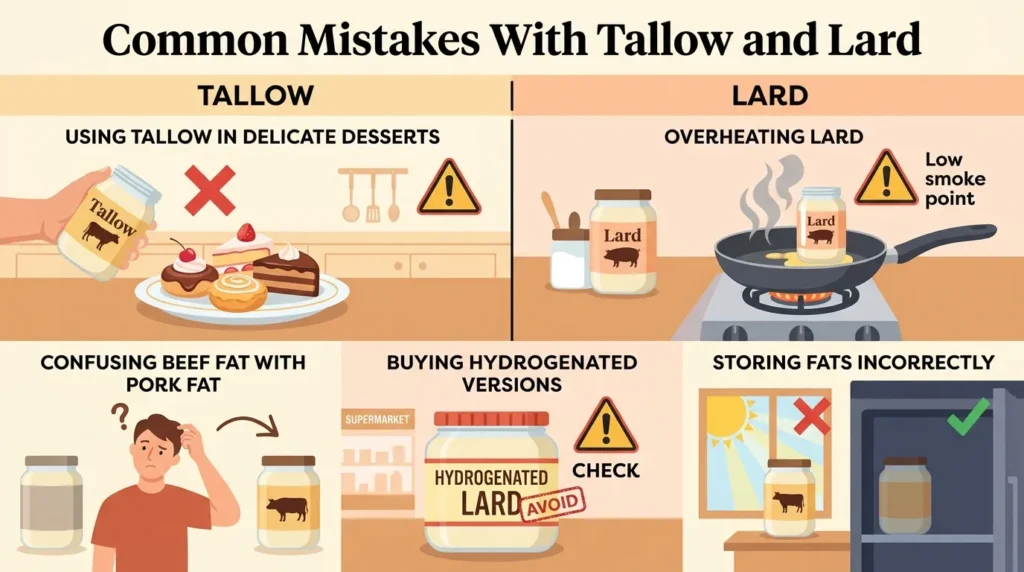
1. Using Tallow in Delicate Pastries
The strong flavor may overpower desserts.
2. Assuming All Lard Is Unhealthy
Modern high-quality lard can be minimally processed and nutrient-rich.
3. Ignoring Smoke Point
Using low-quality fats at high heat can affect taste and stability.
4. Buying Hydrogenated Versions
Some store-bought lard contains additives and trans fats.
5. Thinking They Taste the Same
In reality, experienced cooks notice clear flavor differences.
Real-Life Examples With Tallow and Lard
Personal Cooking
A home cook uses tallow to make crispy fries for family dinners.
Bakery Use
A pastry chef uses lard for flaky pie crusts.
Restaurant Industry
Steakhouses often use tallow for frying and grilling.
Keto Lifestyle
Many carnivore diet followers cook eggs in tallow for extra flavor and energy.
Traditional Food Business
Authentic tortilla makers still use lard for traditional texture and taste.
When to Use Each
Use Tallow When:
- frying food
- cooking steak
- roasting vegetables
- following carnivore diets
- wanting crispy texture
Use Lard When:
- baking pastries
- making tortillas
- creating flaky crusts
- wanting mild flavor
In simple words:
- tallow = stronger + crispier
- lard = softer + flakier
How Search Engines Understand Difference Between Tallow and Lard and User Intent
Search engines like Google analyze this keyword as:
- informational intent
- comparison intent
- food and nutrition intent
Google’s modern ranking systems in 2026 prioritize:
- clear definitions
- comparison tables
- real cooking examples
- user satisfaction
- topical completeness
That is why articles with shallow explanations often fail to rank well. Search systems now prefer content that explains:
- what the fats are
- why they differ
- how people use them
- which one fits specific cooking goals
Platforms like Instagram and YouTube also influence user behavior because food creators often revive traditional fats in modern cooking trends.
Expert Insight
In professional kitchens, the choice between tallow and lard is usually practical rather than emotional. Chefs often select fat based on:
- smoke point
- texture
- flavor intensity
- recipe structure
In real scenarios, tallow dominates high-heat cooking, while lard remains one of the best fats for pastry texture. Most beginners focus only on health debates, but experienced cooks care more about performance and taste balance.
FAQs
Is tallow healthier than lard?
Not always. Tallow has more saturated fat, while lard contains more monounsaturated fats.
Can I replace lard with tallow?
Yes, but flavor and texture may change.
Why does tallow taste stronger?
Because it comes from beef fat, which has a richer savory profile.
Is lard good for baking?
Yes. Many bakers prefer it for flaky pastries.
Which fat is better for frying?
Tallow usually performs better for deep frying.
Do keto diets use tallow or lard?
Both are used, especially in low-carb and carnivore diets.
Is rendered fat natural?
Yes, traditional rendered fats are minimally processed compared to many industrial oils.
Why did people stop using tallow and lard?
Vegetable oils became cheaper and heavily marketed during the 20th century.
Conclusion
Understanding the difference between tallow and lard is important for cooking, nutrition, and food quality. Although both are traditional animal fats, they serve different purposes in real kitchens. Tallow is firmer, richer, and excellent for frying or high-heat cooking. Lard is softer, milder, and perfect for pastries and baking.
Many users searching for the difference between tallow and lard simply want to know which fat fits their cooking style better. In practical use, there is no universal winner. The best choice depends on flavor preference, dietary goals, and recipe type.
As natural and ancestral cooking continues growing in 2026, both fats are becoming popular again among chefs, home cooks, keto followers, and traditional food lovers. Choosing high-quality, minimally processed versions matters more than blindly following food trends.
If you remember one simple rule, it is this:
- use tallow for crispy and savory cooking
- use lard for soft and flaky baking
That single distinction helps most beginners understand the real difference immediately.
Read more about!
Difference Between Coupe and Sedan: Simple Car Guide

I am Logan Brooks, a U.S.-based comparison writer and research-focused content creator. I specialize in explaining the differences between similar concepts in a clear and straightforward way. My content covers a wide range of topics, including science, technology, finance, language, and everyday life.
I enjoy turning complex information into simple comparisons that are quick and easy to understand. My goal is to help readers save time by highlighting the key differences in a clean and easy-to-read format. I believe that learning should be simple, practical, and accessible for everyone.