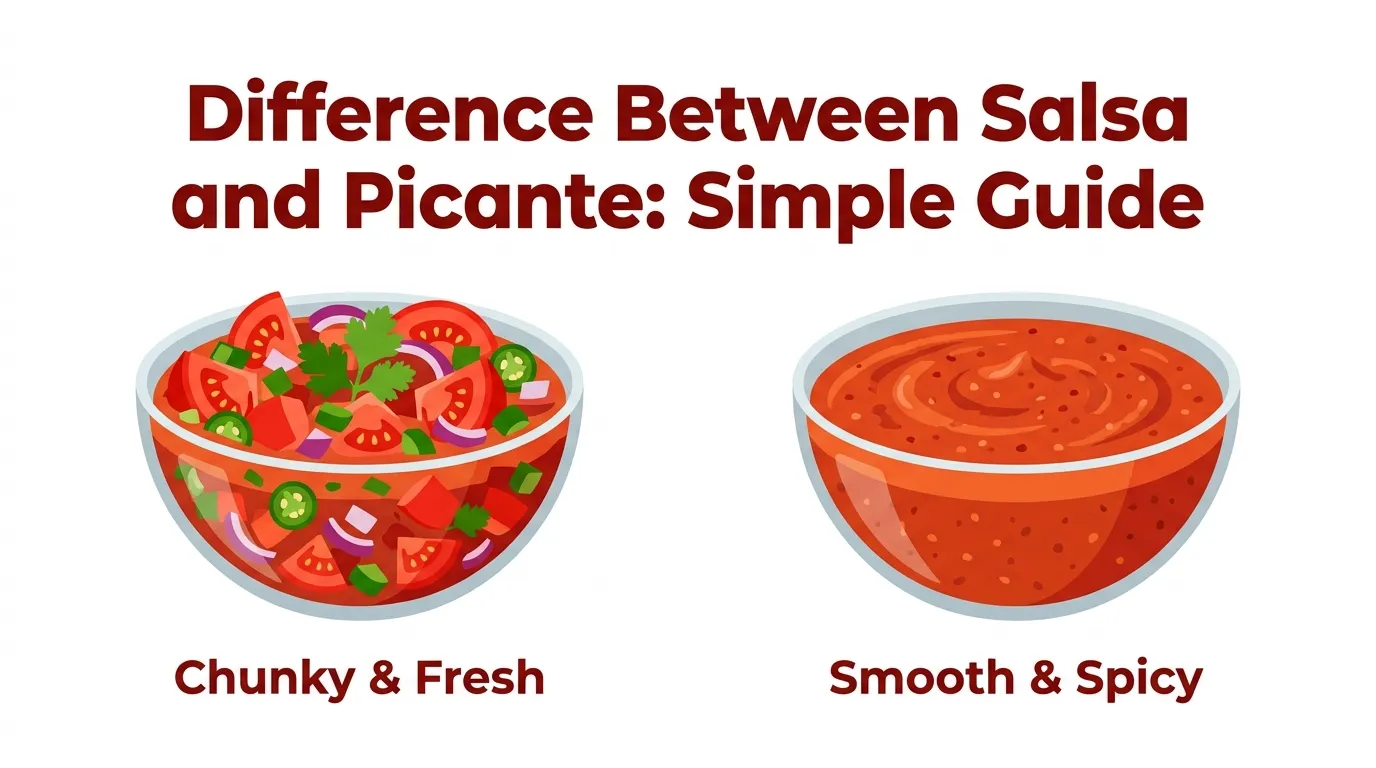
🌮 Salsa is chunky and fresh, while picante is smooth, thinner, and usually spicier 🔥
Many people search for the difference between salsa and picante because both sauces look similar and are often used with tacos, nachos, burritos, and Mexican-style meals.
In simple words, salsa is usually chunky and fresh, while picante sauce is smoother, thinner, and often spicier. That small difference changes the flavor, texture, and even the way food tastes.
The difference between salsa and picante also confuses shoppers because grocery brands sometimes market them in similar jars.
Some users think they are exactly the same thing. Others believe picante is simply a hotter salsa. The truth is more detailed than that.
In this complete guide, you will learn what salsa and picante are, how they taste, why they exist, when to use each one, and how food culture and modern search engines like Google understand this topic.
By the end, you will clearly understand the real difference between salsa and picante without needing another article.
Difference Between Salsa and Picante
The main difference between salsa and picante is texture and consistency.
- Salsa is thicker and chunkier with visible ingredients like tomatoes, onions, peppers, and cilantro.
- Picante sauce is smoother, thinner, and usually blended more finely for an even spicy flavor.
Real Example
If you dip tortilla chips into restaurant salsa, you often see tomato chunks and onion pieces. Picante sauce pours more like a spicy liquid over tacos or eggs.
Definition of Difference Between Salsa and Picante
- Salsa: A Mexican-style sauce made with chopped vegetables, peppers, herbs, and seasonings. It is commonly thick and chunky.
- Picante: A smooth spicy sauce made from blended tomatoes, chili peppers, vinegar, and spices. “Picante” means “spicy” in Spanish.
Simple Example
- Fresh chunky dip at a Mexican restaurant = salsa
- Smooth bottled taco sauce = picante
Pronunciation
Salsa
- US: SAHL-suh
- UK: SAL-suh
Picante
- US: pee-KAHN-tay
- UK: pee-KAN-tay
Now let’s understand the deeper difference between salsa and picante and why millions of food lovers still confuse them today.
Difference Between Salsa and Picante
| Feature | Salsa | Picante | Similarity |
| Texture | Chunky and thick | Smooth and thinner | Both are sauces |
| Spice Level | Mild to hot | Usually medium to hot | Both use peppers |
| Ingredients | Chopped vegetables | Blended ingredients | Tomatoes are common |
| Usage | Dip or topping | Pouring sauce | Used in Mexican-style foods |
| Flavor | Fresh and garden-like | Sharper and spicy | Both add flavor |
| Appearance | Visible vegetable chunks | Smooth consistency | Usually red-colored |
| Preparation | Often freshly made | Often processed or blended | Can be homemade |
| Best Use | Chips and nachos | Burritos and tacos | Served with meals and snacks |
This table clearly shows the difference and similarity between difference between salsa and picante for quick understanding.
Key Differences Explained Between Difference Between Salsa and Picante
1. Texture Changes Everything
The biggest difference between salsa and picante is texture.
Salsa has chopped vegetables you can see and feel. Picante sauce is blended into a smoother consistency.
Real-Life Example
Restaurant salsa stays on chips better because it is thick. Picante sauce pours easily into wraps and tacos.
2. Picante Usually Focuses More on Heat
Many picante sauces are designed to deliver stronger spice.
Salsa may focus more on freshness, herbs, and vegetable flavor balance.
User Intent Insight
People searching “which is hotter salsa or picante” usually want quick buying help before cooking or hosting guests.
3. Freshness vs Smooth Processing
Fresh salsa often uses raw ingredients like:
- tomatoes
- onions
- cilantro
- lime juice
Picante sauce is commonly blended and bottled for shelf stability.
Practical Use
Homemade salsa tastes fresher, while picante is easier for fast meals.
4. Salsa Works Better as a Dip
Because salsa is chunky, it pairs naturally with:
- tortilla chips
- nachos
- appetizers
Picante spreads more evenly across food.
5. Picante Pours More Easily
Smooth texture helps picante coat food evenly.
That is why many fast-food taco chains use picante-style sauces.
6. Flavor Experience Is Different
Salsa delivers layered flavor with vegetables and herbs.
Picante gives sharper spice and smoother heat distribution.
7. Regional Food Culture Influences Both
Traditional Mexican cuisine includes many salsa varieties.
Picante became more commercially popular in American Tex-Mex culture.
What Is Salsa and Why Is It So Popular?
Salsa is one of the world’s most recognized Mexican condiments.
The word “salsa” literally means “sauce” in Spanish. Over time, people began connecting the word with chunky tomato-based mixtures used in Mexican and Tex-Mex foods.
Why Salsa Became Popular
- Fresh flavor
- Natural texture
- Healthy image
- Easy homemade recipes
- Great for social gatherings
In real scenarios, many families prefer salsa because it feels homemade and fresh instead of heavily processed.
What Is Picante Sauce and How Does It Work?
Picante sauce was created to provide:
- smoother texture
- easier pouring
- stronger spice balance
It works especially well in:
- tacos
- burritos
- breakfast wraps
- enchiladas
- grilled meat recipes
Many beginners searching “what is picante sauce” are actually looking for a smoother salsa alternative.
Why the Difference Between Salsa and Picante Matters in Cooking
This difference matters more than many people realize.
In Practical Use
- Chunky salsa adds texture.
- Picante blends into recipes smoothly.
- Salsa highlights freshness.
- Picante spreads heat evenly.
Professional cooks often choose based on food structure rather than just spice level.
For example:
- Salsa improves presentation.
- Picante improves coating and consistency.
Difference Between Salsa and Picante in Restaurants vs Stores
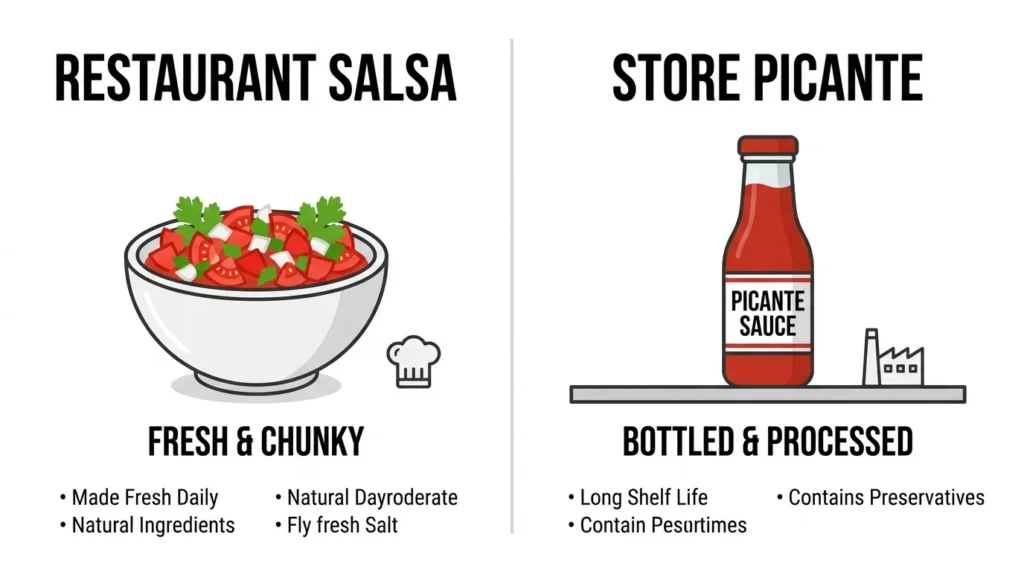
Many users get confused because restaurant salsa and store-bought picante look similar at first glance.
Restaurant Salsa
Usually:
- fresh
- chunky
- less processed
- handmade style
Grocery Store Picante
Usually:
- smoother
- bottled
- shelf stable
- more uniform in texture
Food brands shaped this difference heavily in modern grocery culture.
Why People Get Confused About Difference Between Salsa and Picante
Similar Ingredients
Both commonly contain:
- tomatoes
- peppers
- onions
- spices
Marketing Labels
Some companies use the words interchangeably.
Language Differences
“Picante” means spicy in Spanish, which causes confusion.
Regional Food Habits
Different areas use different names for similar sauces.
Visual Similarity
Both are usually red sauces served with Mexican-style foods.
Difference Between Salsa and Picante Similarity
| Feature | Salsa | Picante | Shared Similarity |
| Main Base | Tomato-heavy | Tomato-heavy | Both use tomatoes |
| Cuisine Type | Mexican/Tex-Mex | Tex-Mex/Mexican-inspired | Served in similar meals |
| Pepper Usage | Chili peppers | Chili peppers | Spice source is similar |
| Serving Style | Cold or room temp | Cold or warm | Used as condiments |
| Flavor Goal | Add freshness | Add heat | Enhance food flavor |
| Homemade Option | Very common | Also possible | Both easy to make |
| Color | Mostly red | Mostly red | Similar appearance |
This table clearly shows the difference and similarity between difference between salsa and picante for quick understanding.
Common Mistakes With Difference Between Salsa and Picante
| Mistake | Why It’s Wrong | Better Understanding |
| Thinking both are identical | Texture differs greatly | Salsa is chunkier |
| Assuming picante always means extremely hot | Heat level varies | Some are mild |
| Using salsa in thin recipes | Chunky texture changes consistency | Picante blends better |
| Believing all salsa is fresh | Some are processed too | Labels matter |
| Ignoring sodium levels | Bottled sauces vary | Check nutrition facts |
Real Life Examples With Difference Between Salsa and Picante
1. Personal Home Use
A family may use salsa during movie night because chunky dips work better with chips.
2. Fast Food Industry
Many taco chains prefer picante because smooth sauces spread evenly and reduce mess.
3. Restaurant Dining
Restaurants often serve fresh salsa to create a homemade feeling.
4. Meal Prep Cooking
Picante mixes more smoothly into marinades and slow-cooker meals.
5. Food Manufacturing
Large food companies prefer picante-style consistency because it stays stable in bottles.
When to Use Salsa vs Picante
Use Salsa When:
- you want chunky texture
- serving chips or nachos
- you enjoy fresh ingredients
- presentation matters
Use Picante When:
- you need smooth sauce
- making burritos or tacos
- adding spice to recipes
- cooking large batches
Easy Rule to Remember
- Chunky and fresh = salsa
- Smooth and spicy = picante
How Search Engines Understand Difference Between Salsa and Picante
Search engines like Google treat this keyword as a comparison-intent search query.
Users usually want:
- quick definitions
- side-by-side comparison
- buying guidance
- cooking examples
- texture explanation
Platforms like YouTube often rank recipe comparison videos because visual texture differences improve engagement. Meanwhile, Instagram and Meta food creators use short cooking clips to demonstrate chunkiness versus smooth consistency.
Modern systems reward content that:
- answers fast
- uses tables
- explains user intent
- includes real examples
- improves readability
That is why semantic and topical authority matter in 2026 content strategies.
Expert Insight on Salsa vs Picante
From a culinary perspective, salsa and picante are not competitors. They solve different food problems.
In professional kitchens:
- salsa adds freshness and texture contrast
- picante improves sauce coverage and spice consistency
Most beginners focus only on heat. Experienced cooks focus on:
- texture balance
- moisture level
- recipe compatibility
- serving style
In real-world cooking, choosing the right sauce can completely change the eating experience.
FAQs
Is picante sauce hotter than salsa?
Usually yes, but not always. Picante often focuses more on spice intensity.
Can picante replace salsa?
Yes, but the texture will be smoother and thinner.
Is salsa always chunky?
No. Some salsa styles are blended smooth.
Why is picante thinner?
Because the ingredients are blended more finely.
Which is better for tortilla chips?
Chunky salsa is usually better for dipping.
Is picante authentic Mexican food?
The word is Spanish, but commercial picante sauce became more popular in Tex-Mex food culture.
Can you cook with salsa?
Yes. Salsa works in soups, casseroles, tacos, and marinades.
What does picante mean in Spanish?
It means spicy or hot.
Why do grocery stores separate salsa and picante?
Because shoppers look for different textures and spice experiences.
Conclusion
Understanding the difference between salsa and picante becomes much easier once you focus on texture, flavor balance, and food usage. Salsa is generally chunkier, fresher, and ideal for dipping. Picante is smoother, thinner, and often designed for pouring or cooking.
Many users get confused because both sauces use similar ingredients like tomatoes and chili peppers.
However, in practical cooking, the consistency creates a completely different eating experience. Salsa delivers freshness and texture, while picante spreads spice more evenly across food.
The best choice depends on your meal and personal preference. If you enjoy visible vegetables and fresh flavor, salsa is usually the better option.
If you want smooth heat and easier sauce distribution, picante works beautifully.
Now that you understand the real difference between salsa and picante, choosing the right sauce for tacos, nachos, burritos, or recipes becomes simple and confident.
Read more about!
Difference Between Tallow and Lard: Simple Guide