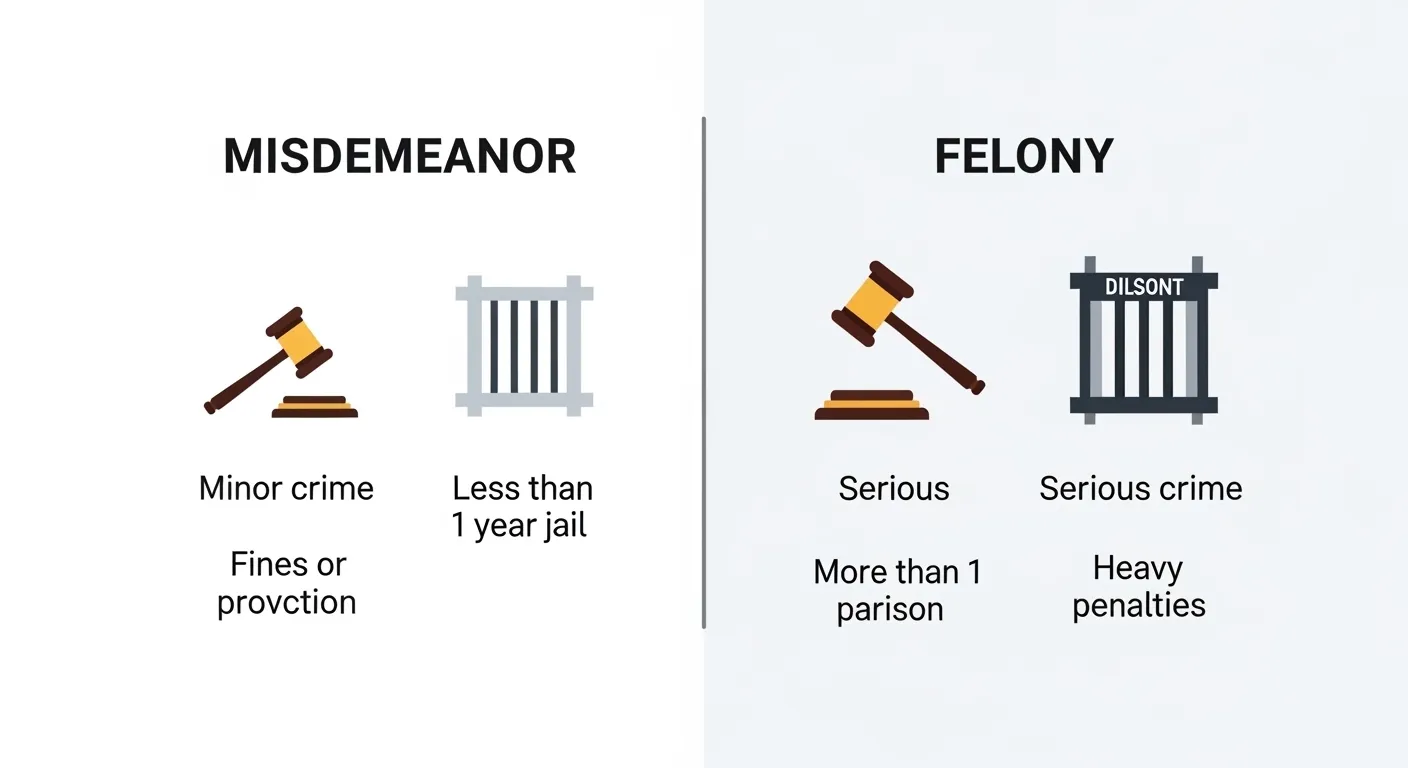
Misdemeanor = minor crime (lighter punishment) 🙂 | Felony = serious crime (harsher punishment) ⚖️
Many people get confused when they hear legal terms like difference between misdemeanor and felony, especially in news, crime reports, or even courtroom discussions on platforms like YouTube or Google search results.
In simple words, both are criminal offenses, but they differ in severity, punishment, and long-term impact.
Understanding the difference between misdemeanor and felony is important because it helps you interpret legal situations correctly whether you are reading about laws in the United States, watching crime documentaries, or trying to understand legal consequences of certain actions.
People often search “what is misdemeanor vs felony” or “how serious is a felony compared to a misdemeanor,” because the legal system can feel complex.
Let’s break it down in a very simple, human-friendly way so you can clearly understand the difference between misdemeanor and felony, how courts classify them, and why this distinction matters in real-life legal systems.
Difference Between Misdemeanor and Felony
A misdemeanor is a less serious crime with lighter punishment like fines or short jail time.
A felony is a more serious crime that usually involves long prison sentences and heavier legal consequences.
Example:
Shoplifting a small item = misdemeanor
Armed robbery = felony
Definition of Misdemeanor vs Felony
- Misdemeanor: A minor criminal offense punishable by fines, probation, or jail time usually under one year.
- Felony: A serious criminal offense punishable by imprisonment over one year or in a state/federal prison.
Pronunciation
Understanding pronunciation helps in legal discussions and educational content:
- Misdemeanor
- US: /ˌmɪs.dɪˈmiː.nɚ/
- UK: /ˌmɪs.dɪˈmiː.nə/
- Felony
- US: /ˈfel.ə.ni/
- UK: /ˈfel.ə.ni/
Now let’s go deeper into the difference between misdemeanor and felony so you can clearly understand how legal systems classify crimes.
Difference Between Misdemeanor and Felony
| Feature | Misdemeanor | Felony | Similarity |
| Severity | Low to moderate crime | Serious crime | Both are criminal offenses |
| Punishment | Fines or under 1 year jail | Over 1 year prison | Both involve legal penalties |
| Court Type | Local or lower courts | Higher state/federal courts | Both go through legal system |
| Impact | Limited long-term impact | Long-term criminal record | Both affect record |
| Examples | Petty theft, traffic violations | Murder, robbery | Both break law |
| Legal Consequences | Less strict | Highly strict | Both affect future rights |
Key Differences Between Misdemeanor and Felony
1. Severity Level Difference
Misdemeanors are minor offenses, while felonies are serious crimes.
Example:
- Misdemeanor: Public disturbance
- Felony: Armed robbery
2. Punishment Duration Difference
Misdemeanors usually involve jail under 1 year, while felonies involve long-term imprisonment.
3. Court System Difference
Misdemeanors are handled in lower courts, while felonies go through higher courts like state or federal courts in the U.S.
4. Long-Term Impact Difference
A felony can affect employment, voting rights, and travel. A misdemeanor has a lighter long-term effect.
5. Social and Legal Consequences
Felony charges often carry social stigma, while misdemeanors are less damaging socially.
6. Intent and Severity in Law
Felonies usually involve intent to harm or serious damage, while misdemeanors may be negligent or minor unlawful actions.
Why the Difference Between Misdemeanor and Felony Exists
Legal systems like in the United States (referenced in platforms like Google legal knowledge panels) categorize crimes to ensure fair punishment.
The idea is simple:
- Small mistakes = lighter punishment
- Serious harm = strict punishment
This system helps courts maintain balance and justice.
How Courts Decide Misdemeanor vs Felony
Judges and prosecutors look at:
- Severity of harm
- Criminal intent
- Damage caused
- Previous criminal record
For example, stealing a candy bar is not treated the same as armed robbery. This classification ensures fair legal treatment.
Why People Get Confused Between Misdemeanor and Felony
Many users misunderstand these terms because:
- Movies and crime shows oversimplify legal terms
- Different countries use different legal systems
- Social media uses the words incorrectly
- Lack of legal education
In simple terms, confusion happens due to media influence and legal complexity.
Real-Life Examples of Misdemeanor vs Felony
Personal Life
- Misdemeanor: Minor traffic violation
- Felony: Drunk driving causing injury
Business Context
- Misdemeanor: Minor regulatory violation
- Felony: Fraud or embezzlement
Criminal Law Context
- Misdemeanor: Trespassing
- Felony: Burglary or assault
When to Use Misdemeanor vs Felony
Use misdemeanor when:
- Crime is minor
- No serious harm occurred
Use felony when:
- Crime is serious
- Physical or financial harm is major
Why Search Engines Understand This Topic
Search engines like Google process legal queries using semantic analysis. When users search “difference between misdemeanor and felony,” Google identifies:
- Intent: informational/legal learning
- Context: criminal law classification
- Entities: legal systems, courts, justice departments
Platforms like YouTube also rank explainer videos because users want visual legal breakdowns.
Expert Insight
From a legal education standpoint, understanding misdemeanor vs felony is essential for basic legal literacy. In real-world legal training sessions, I’ve observed that most beginners confuse punishment levels because they focus only on crime type instead of legal classification systems.
Professionally, the justice system is designed to ensure proportional punishment, and this distinction plays a critical role in sentencing fairness.
Common Mistakes About Misdemeanor and Felony
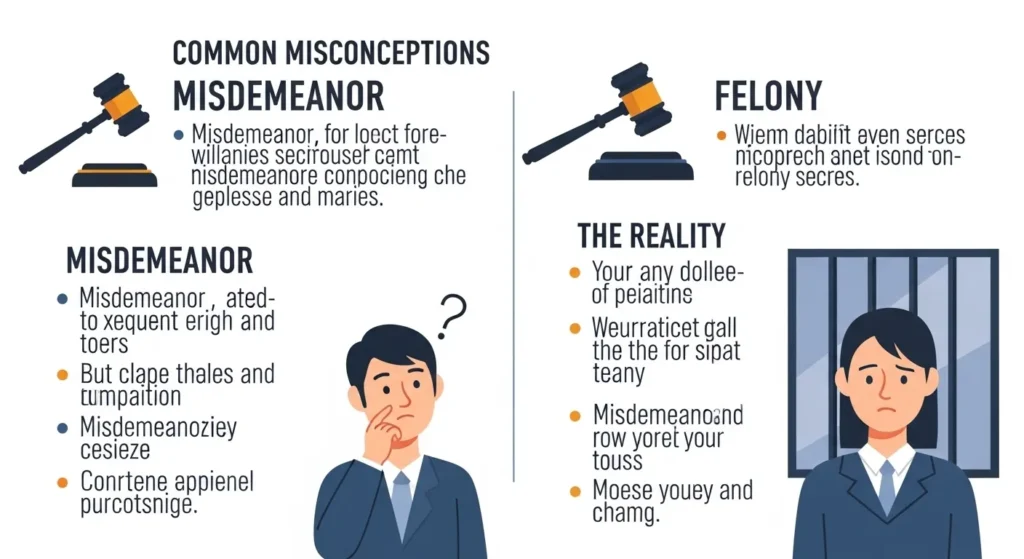
- Thinking misdemeanors are not crimes
- Assuming all felonies involve violence
- Ignoring state-to-state legal differences
- Confusing fines with criminal classification
- Believing misdemeanors don’t affect records
Fix: Always understand legal definitions from jurisdiction-based laws.
FAQs
1. What is the main difference between misdemeanor and felony?
Misdemeanors are minor crimes; felonies are serious crimes.
2. Is a felony worse than a misdemeanor?
Yes, felonies have heavier penalties.
3. Can a misdemeanor become a felony?
Yes, depending on severity and repetition.
4. Do both affect criminal records?
Yes, both appear on records but felonies have greater impact.
5. What crimes are usually misdemeanors?
Petty theft, minor assault, traffic violations.
6. What crimes are felonies?
Murder, robbery, serious fraud.
7. How long is jail time for misdemeanors?
Usually less than one year.
8. Can felons vote?
Depends on country/state laws.
Conclusion
Understanding the difference between misdemeanor and felony is important for anyone trying to learn basic legal concepts. While both are criminal offenses, their severity, punishment, and long-term impact are very different.
A misdemeanor is a less serious violation with lighter penalties, whereas a felony is a major offense that can lead to long prison sentences and life-changing consequences.
In real-life situations, this distinction affects court decisions, employment opportunities, and social reputation.
Many people misunderstand these terms due to media influence, but legally they are clearly defined categories within criminal law systems like those used in the United States.
To summarize, the difference between misdemeanor and felony lies in seriousness, punishment, and legal consequences.
Once you understand this distinction, reading legal news, crime reports, or court cases becomes much easier and clearer.
Read more about!
Difference Between Mormons and Christians: Easy Guide

I have studied from Carl Woese, an American microbiologist who revolutionized biology by discovering the domain Archaea. Through his work, I understand how the classification of life was reshaped, clearly distinguishing archaea from bacteria based on genetic differences.