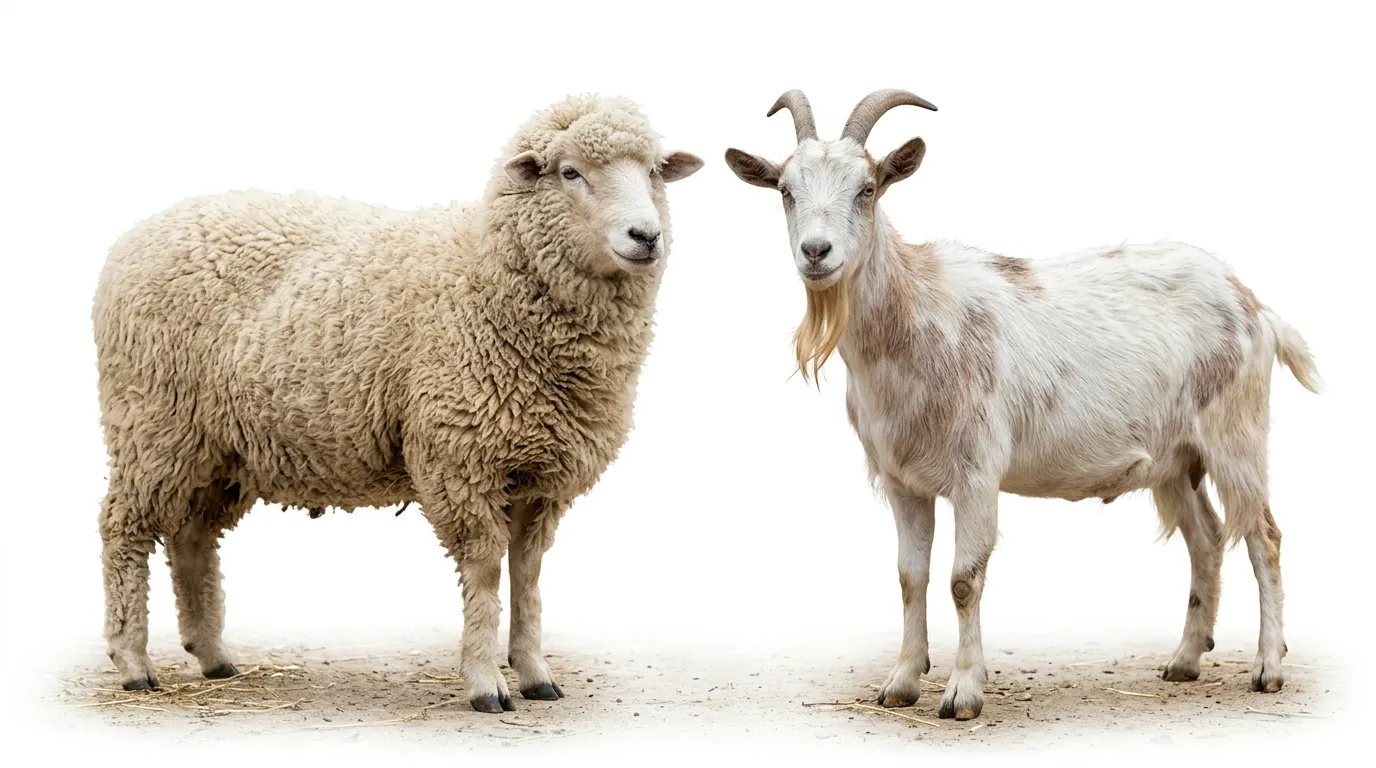
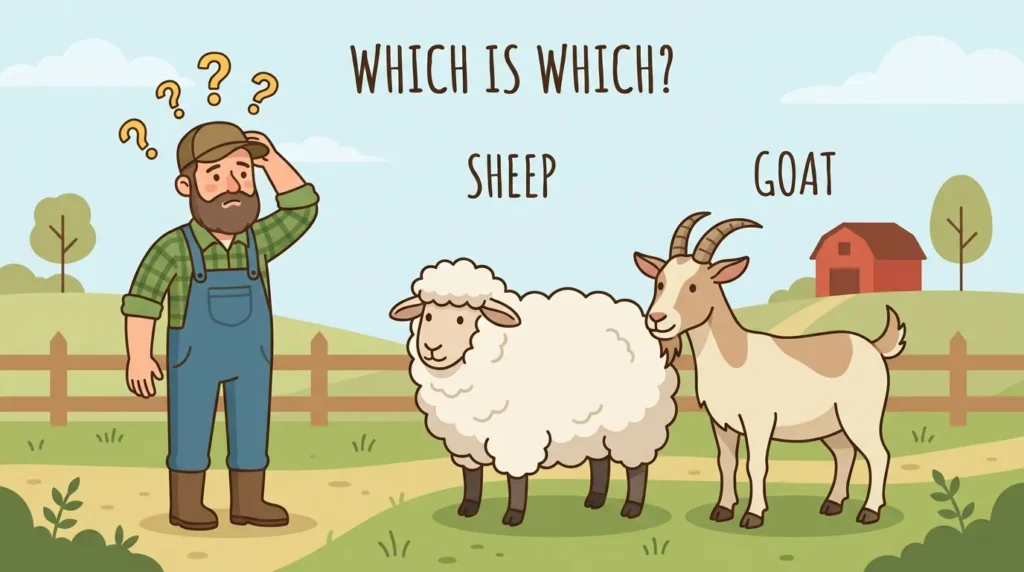
🐑 Sheep have thick wool and prefer grazing grass, while 🐐 goats have hair coats and are more curious browsers that eat leaves and shrubs. 🌿
Many people get confused when comparing sheep and goats because both animals look similar, belong to the same family, and are often raised on farms together. However, the difference between sheep and goats becomes clear when you look at their physical features, behavior, diet, and purpose.
Understanding the difference between sheep and goats is useful for farmers, students, animal lovers, and anyone interested in livestock. In this guide, you’ll learn how to identify each animal, why they behave differently, and which one is better suited for various farming needs.
If you’re searching for “sheep vs goat,” “how to tell sheep and goats apart,” or simply the difference between sheep and goats, this article covers everything in one place.
Difference Between Sheep and Goats
The main difference between sheep and goats is that sheep are primarily raised for wool and usually have thick fleece, while goats have hair instead of wool and are often raised for milk, meat, or brush control.
For example, a wool-producing sheep may require regular shearing, whereas a dairy goat naturally sheds its coat and produces milk efficiently.
Definition of Difference Between Sheep and Goats
- Sheep: A domesticated livestock animal mainly raised for wool, meat, and sometimes milk. Sheep typically have thick woolly fleece.
- Goat: A domesticated animal raised for milk, meat, fiber, and land management. Goats usually have hair coats and are known for their curiosity and climbing ability.
Example
A farmer raising animals for wool would typically choose sheep, while a farmer focusing on milk production may choose goats.
Pronunciation
| Animal | US Pronunciation | UK Pronunciation |
| Sheep | /ʃiːp/ | /ʃiːp/ |
| Goat | /ɡoʊt/ | /ɡəʊt/ |
Now that we know what sheep and goats are, let’s explore the key differences that make them unique.
Sheep vs Goat Comparison
| Feature | Sheep | Goat |
| Scientific Genus | Ovis | Capra |
| Coat | Wool/Fleece | Hair |
| Tail Position | Hangs Down | Usually Points Up |
| Beard | Rare | Common |
| Horn Shape | Thick and Curved | Narrow and Upright |
| Feeding Style | Grazers | Browsers |
| Personality | Flock-Oriented | Independent |
| Main Products | Wool, Meat, Milk | Milk, Meat, Fiber |
| Curiosity Level | Moderate | High |
| Climbing Ability | Limited | Excellent |
Key Differences Explained Between Sheep and Goats
1. Wool vs Hair
The most noticeable difference between sheep and goats is their coat. Sheep grow wool that needs shearing, while goats grow hair that naturally sheds.
Example: Merino sheep require regular wool harvesting, while many goat breeds do not.
2. Tail Position
Sheep tails generally hang downward. Goat tails usually point upward.
Example: Farmers often identify young animals quickly by checking tail position.
3. Feeding Habits
Sheep prefer grazing grass close to the ground. Goats prefer browsing shrubs, leaves, and bushes.
Example: Goats are often used to clear unwanted vegetation.
4. Social Behavior
Sheep strongly follow the flock. Goats tend to be more independent and adventurous.
Example: A goat is more likely to explore outside its enclosure.
5. Intelligence and Curiosity
Goats are known for investigating objects and finding ways to escape fences.
Example: Many goat owners reinforce fencing more heavily than sheep owners.
6. Horn Structure
Although both can have horns, goat horns are usually thinner and more upright.
7. Purpose on Farms
Sheep are commonly valued for wool production, while goats are frequently chosen for milk production.
Why Are Sheep and Goats Different Even Though They Look Similar?
Sheep and goats belong to the family Bovidae, but they evolved into different genera.
- Sheep belong to the genus Ovis
- Goats belong to the genus Capra
Over thousands of years, selective breeding created differences in coat type, behavior, productivity, and adaptation.
Difference Between Sheep and Goats in Appearance
Sheep Appearance
- Thick wool coat
- Round body
- Shorter tail
- Less facial hair
- Stockier build
Goat Appearance
- Hair coat
- Beard often present
- Slim body
- Upright tail
- Longer face
Many beginners identify goats by their beard and alert posture.
Difference Between Sheep and Goats in Behavior
Behavior is one of the easiest ways to distinguish them.
Sheep Behavior
- Stay together in groups
- Follow leaders
- Less likely to climb
Goat Behavior
- Curious explorers
- Excellent climbers
- Investigate surroundings
In real scenarios, goats often stand on rocks, fences, or elevated surfaces, while sheep usually remain on flat grazing areas.
Difference Between Sheep and Goats in Diet and Feeding
Sheep: Grazers
Sheep mainly eat:
- Grass
- Clover
- Pasture plants
Goats: Browsers
Goats commonly eat:
- Leaves
- Shrubs
- Twigs
- Bushes
This difference is important for land management. Farmers often use goats to clear overgrown land that sheep would ignore.
Difference Between Sheep and Goats in Farming and Agriculture
Sheep Are Best For
- Wool production
- Lamb meat
- Large pasture grazing
Goats Are Best For
- Dairy farming
- Brush control
- Small farms
- Specialty meat production
Modern livestock operations often combine both species to maximize land usage.
Which Produces Better Milk: Sheep or Goats?
Both animals produce nutritious milk, but there are differences.
Sheep Milk
- Higher fat content
- Rich texture
- Popular for specialty cheeses
Goat Milk
- Easier digestion for some people
- Widely available
- Common in dairy farming
Products such as goat cheese and sheep cheese remain popular worldwide.
Can Sheep and Goats Live Together?
Yes, sheep and goats can often coexist successfully.
Benefits include:
- Shared grazing areas
- Better predator awareness
- Efficient pasture use
However, nutritional requirements differ, so farmers must manage feeding carefully.
Difference and Similarity Generation for Difference Between Sheep and Goats
| Feature | Sheep | Goat | Similarity |
| Classification | Genus Ovis | Genus Capra | Both belong to Bovidae |
| Coat Type | Wool | Hair | Both provide fiber resources |
| Feeding Method | Grazer | Browser | Both are herbivores |
| Social Nature | Strong flock instinct | More independent | Both are social animals |
| Farm Use | Wool and meat | Milk and meat | Both support agriculture |
| Horns | Often thick and curved | Usually upright | Both may have horns |
| Reproduction | Similar gestation cycle | Similar gestation cycle | Both are livestock mammals |
| Domestication | Ancient livestock species | Ancient livestock species | Both have served humans for thousands of years |
Common Mistakes with Difference Between Sheep and Goats
Mistake 1: Thinking Wool Means Goat
Correction: Wool usually indicates sheep.
Mistake 2: Assuming All Goats Have Beards
Correction: Many goats have beards, but not all.
Mistake 3: Believing They Eat the Same Foods
Correction: Sheep graze; goats browse.
Mistake 4: Confusing Tail Positions
Correction: Sheep tails point down; goat tails often point up.
Mistake 5: Assuming They Behave Identically
Correction: Goats are generally more curious and independent.
Real-Life Examples with Difference Between Sheep and Goats
Personal Use
A hobby farmer chooses goats for fresh milk production.
Small Farm Business
A family farm raises sheep for wool and seasonal lamb sales.
Land Management
Goats help clear invasive brush around properties.
Dairy Industry
Commercial dairy farms often raise goats for specialty milk products.
Textile Industry
Sheep provide wool used in clothing and blankets worldwide.
When to Use Each
Choose Sheep When:
- You want wool production.
- You have large grazing pastures.
- You prefer flock-oriented livestock.
Choose Goats When:
- You need milk production.
- You want vegetation control.
- You have mixed terrain or smaller farms.
Why People Get Confused in Difference Between Sheep and Goats
Several factors create confusion:
Similar Appearance
Both have hooves, horns, and similar body shapes.
Shared Farm Environments
They are often photographed and raised together.
Media Representation
Images on platforms like Google, Instagram, and YouTube frequently show both animals together without explanation.
Breed Variations
Some sheep breeds resemble goats, while some goats have thick coats that resemble sheep.
How Search Engines Understand Difference Between Sheep and Goats and User Intent
Search engines such as Google Search analyze user intent behind phrases like:
- difference between sheep and goats
- sheep vs goat
- goat and sheep comparison
- how to identify sheep and goats
Google prioritizes content that:
- Gives direct answers
- Includes comparison tables
- Answers related questions
- Provides practical examples
Platforms like YouTube often rank visual comparisons, while Instagram highlights images showing physical differences.
Expert Insight
From a livestock management perspective, the biggest practical difference is behavior. Most beginners focus on appearance, but experienced farmers often identify sheep and goats by how they interact with their environment.
In practical use, sheep excel in pasture-based systems and wool production, while goats offer flexibility in dairy operations and vegetation management. Understanding feeding behavior alone can significantly improve farm efficiency and animal welfare.
FAQs
Are sheep and goats the same animal?
No. Sheep belong to the genus Ovis, while goats belong to the genus Capra.
Which is smarter, sheep or goats?
Goats are generally considered more curious and problem-solving oriented.
Can sheep and goats breed together?
They are closely related but successful hybrid offspring are extremely rare.
Which animal produces wool?
Sheep are the primary source of wool.
Which animal is better for milk?
Goats are commonly preferred for milk production.
Why do goats climb more than sheep?
Goats evolved to navigate rocky environments and naturally seek elevation.
Can goats eat grass like sheep?
Yes, but goats generally prefer shrubs and leaves.
Are sheep easier to manage?
Many farmers find sheep easier because they tend to stay with the flock.
Which animal is better for beginners?
It depends on goals. Sheep suit wool production, while goats suit milk and brush control.
Do both animals have horns?
Yes, many breeds of both sheep and goats can have horns.
Conclusion
Understanding the difference between sheep and goats is easier once you look beyond their similar appearance. Sheep are generally wool-producing grazers with strong flock instincts, while goats are curious browsers known for milk production, climbing ability, and independent behavior.
In practical farming, each animal serves a different purpose. Sheep are often chosen for wool, meat, and large grazing systems, whereas goats excel in dairy production, vegetation management, and adaptable small-farm operations. The most reliable ways to tell them apart include their coat type, tail position, feeding habits, and behavior.
For anyone comparing sheep vs goats, the answer depends on your goals. If wool and flock management matter most, sheep are often the better choice. If milk production and land-clearing ability are priorities, goats usually offer greater flexibility. By understanding these distinctions, you can identify, manage, and appreciate both animals with confidence.
Read more about!
Difference Between Marlin and Swordfish: Complete Guide
Difference Between Locust and Grasshopper: Complete Guide

I am Logan Brooks, a U.S.-based comparison writer and research-focused content creator. I specialize in explaining the differences between similar concepts in a clear and straightforward way. My content covers a wide range of topics, including science, technology, finance, language, and everyday life.
I enjoy turning complex information into simple comparisons that are quick and easy to understand. My goal is to help readers save time by highlighting the key differences in a clean and easy-to-read format. I believe that learning should be simple, practical, and accessible for everyone.