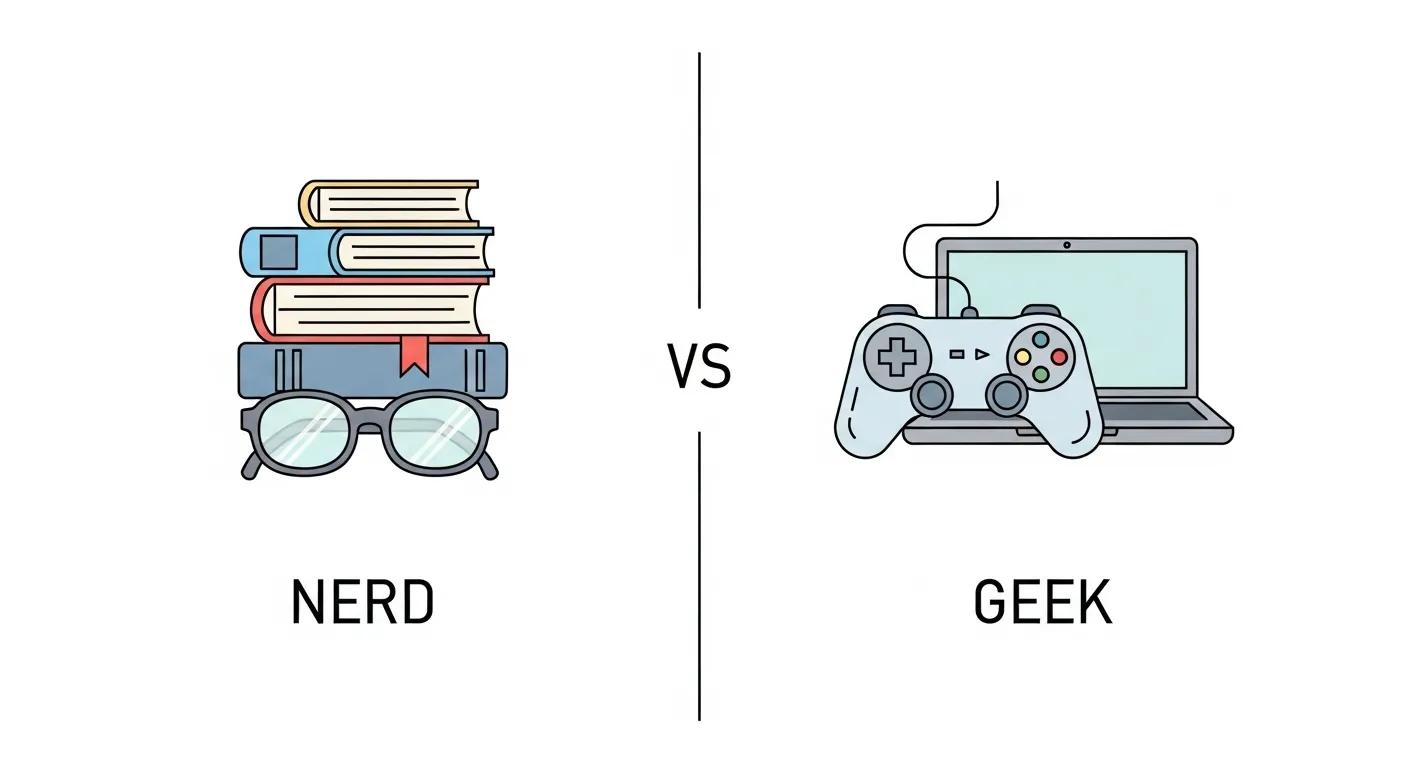
A nerd loves learning and academics 📚, while a geek is passionate about specific hobbies or tech 🎮.
In a school computer club, two students worked on different things. One student spent hours solving math problems and reading science books. Another student loved video games, comics, and new gadgets.
Some classmates called the first student a nerd and the second a geek. Many people thought the words meant the same thing, but they were a little different.
This moment shows the difference between nerd and geek. Both words describe people with strong interests, but their focus is not the same. A nerd usually loves learning and academic subjects. A geek usually loves hobbies like technology, games, movies, or comics.
Understanding the difference between nerd and geek helps people use the words correctly. The difference between nerd and geek also shows how interests shape personality and culture today.
🔑 Key Difference Between the Both
The main difference is simple.
Nerd: Focuses on study, knowledge, and academic learning.
Geek: Focuses on hobbies, pop culture, or technology.
🌍 Why Their Difference Is Important for Learners and Experts
Learners need to understand how language describes people and interests. Experts in sociology, education, and media also study these labels. These words show how society views intelligence, hobbies, and culture. Knowing the difference helps people respect different interests and talents.
🔊 Pronunciation
Nerd
- US: /nɜːrd/
- UK: /nɜːd/
Geek
- US: /ɡiːk/
- UK: /ɡiːk/
Now let us explore the difference between nerd and geek in detail.
⚖️ Difference Between Nerd and Geek
1. Main Interest
Nerd: Loves academic knowledge.
Examples:
- A student studies physics for fun.
- Someone reads science books daily.
Geek: Loves hobbies and pop culture.
Examples:
- A person collects comic books.
- Someone enjoys video game technology.
2. Focus Area
Nerd: Focus on study subjects.
Examples:
- Mathematics competitions.
- Science experiments.
Geek: Focus on entertainment or technology.
Examples:
- Watching sci-fi movies.
- Building gaming computers.
3. Social Behavior
Nerd: Often quiet and serious.
Examples:
- Prefers studying alone.
- Enjoys reading in libraries.
Geek: More expressive about hobbies.
Examples:
- Talks excitedly about games.
- Shares fan theories with friends.
4. Popular Interests
Nerd: Education and research.
Examples:
- Academic clubs.
- Science projects.
Geek: Pop culture and fandom.
Examples:
- Comic conventions.
- Technology expos.
5. Work Fields
Nerd: Often enters academic careers.
Examples:
- Scientist.
- Research scholar.
Geek: Often works in tech or creative fields.
Examples:
- Game developer.
- Software designer.
6. Lifestyle
Nerd: Focused on learning.
Examples:
- Reading textbooks at home.
- Practicing math puzzles.
Geek: Focused on hobby communities.
Examples:
- Online gaming groups.
- Fan discussion forums.
7. Cultural Image
Nerd: Seen as intellectual.
Examples:
- Top student in class.
- Quiz competition winner.
Geek: Seen as passionate fan.
Examples:
- Comic collector.
- Gadget enthusiast.
8. Learning Style
Nerd: Deep academic learning.
Examples:
- Researching theories.
- Writing academic papers.
Geek: Learning through hobbies.
Examples:
- Learning coding through games.
- Understanding gadgets by using them.
9. Public Perception
Nerd: Sometimes seen as overly serious.
Examples:
- Focus on study all day.
- Little interest in social trends.
Geek: Seen as enthusiastic fan.
Examples:
- Loves discussing favorite shows.
- Collects themed items.
10. Modern View
Nerd: Respected for intelligence.
Examples:
- Successful scientists.
- Skilled engineers.
Geek: Respected for passion and creativity.
Examples:
- Tech innovators.
- Gaming creators.
⚙️ Nature and Behaviour of Both
Nature of Nerd
Nerds usually focus on academic knowledge. They enjoy learning complex ideas. Their behavior is calm and thoughtful.
Nature of Geek
Geeks usually show excitement about hobbies. They enjoy sharing interests with others. Their behavior is energetic and passionate.
❓ Why People Confuse Nerd and Geek
Many people think these words mean the same thing. Both describe people with strong interests. Movies, media, and social networks often mix the terms. Because of this overlap, the difference becomes unclear.
Difference and Similarity Between Nerd and Geek
| Feature | Nerd | Geek | Similarity |
| Focus | Academic learning | Hobbies and pop culture | Both show deep interest |
| Behavior | Quiet and study-focused | Enthusiastic about hobbies | Both passionate |
| Interests | Science, math, research | Games, comics, tech | Both knowledge driven |
| Image | Intellectual | Fan or hobby expert | Both unique personalities |
🎯 Which Is Better in What Situation?
Nerd
Being a nerd is helpful in academic environments. Schools, research labs, and universities value deep learning. Nerds often succeed in science, engineering, and research fields. Their curiosity helps them solve complex problems.
Geek
Being a geek is useful in creative and technology spaces. Geeks bring passion and innovation. Many successful programmers, designers, and game developers started as geeks. Their enthusiasm helps build new ideas and communities.
🧠 Nerd and Geek in Metaphors and Similes
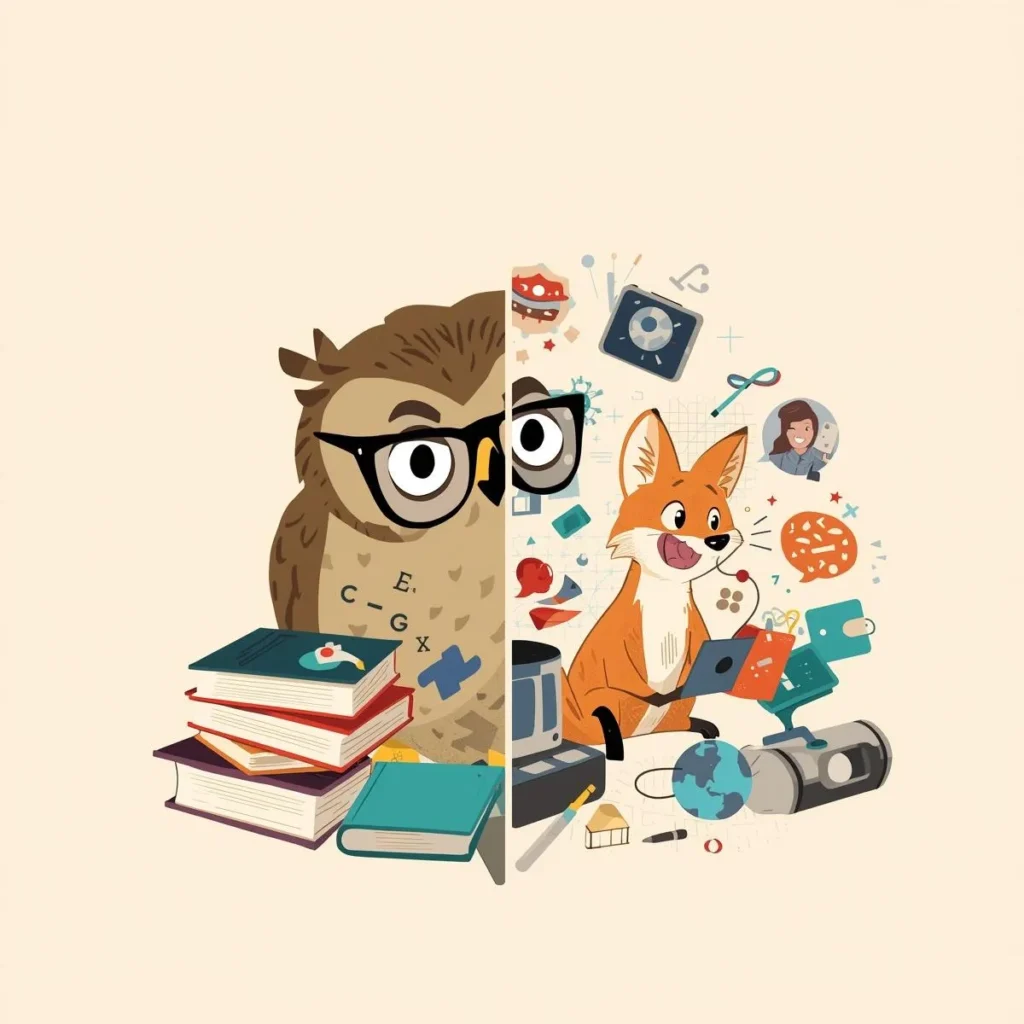
Nerd metaphor
Example:
- He was a math nerd, like a detective solving puzzles.
Geek metaphor
Example:
- She was a tech geek, like a wizard with gadgets.
🎭 Connotative Meaning
Nerd
- Positive: intelligence, dedication
Example: - The science nerd solved the complex problem.
Geek
- Positive: passion and expertise in hobbies
Example: - The gaming geek knew every detail about the game.
Both words were once negative but are often positive today.
💬 Idioms or Proverbs Related
“Knowledge is power.”
Example:
- The nerd believed knowledge is power.
“Follow your passion.”
Example:
- The geek followed his passion for technology.
📚 Works in Literature
- Ready Player One Science fiction, Ernest Cline, 2011
- The Martian Science fiction, Andy Weir, 2011
- Ender’s Game Science fiction, Orson Scott Card, 1985
🎬 Movies Related to Nerd or Geek Culture
- The Social Network (2010, USA)
- Revenge of the Nerds (1984, USA)
- Ready Player One (2018, USA)
❓ Frequently Asked Questions
1. Are nerd and geek the same?
No. Nerds focus more on academics, while geeks focus on hobbies or pop culture.
2. Which word is older?
The word “nerd” appeared earlier in popular culture.
3. Can a person be both?
Yes. Many people are both nerds and geeks.
4. Are these words negative?
Today they are often positive or neutral.
5. Which word relates more to technology?
Geek is more commonly used for technology fans.
🌱 How Nerd and Geek Are Useful for Surroundings
Nerds and geeks help society grow. Nerds create knowledge through research and study. Geeks bring creativity and innovation in technology and entertainment. Together they build progress in science, culture, and technology.
🏁 Final Words for Both
Nerd represents deep academic learning and intellectual curiosity.
Geek represents strong passion for hobbies, technology, and pop culture.
Both identities celebrate curiosity and creativity.
🧾 Conclusion
The difference between nerd and geek lies mainly in their focus. Nerds are usually interested in academic subjects like science and mathematics. Geeks are passionate about hobbies such as technology, games, and pop culture. Today, both words often carry positive meanings. They describe people who care deeply about what they love. Understanding the difference between nerd and geek helps us respect different talents and interests. Both groups contribute to innovation, creativity, and knowledge in modern society.
Read more about!
Difference Between Mean and Average: Simple Explanation

I am Logan Brooks, a U.S.-based comparison writer and research-focused content creator. I specialize in explaining the differences between similar concepts in a clear and straightforward way. My content covers a wide range of topics, including science, technology, finance, language, and everyday life.
I enjoy turning complex information into simple comparisons that are quick and easy to understand. My goal is to help readers save time by highlighting the key differences in a clean and easy-to-read format. I believe that learning should be simple, practical, and accessible for everyone.